
Google’s A24 Deal Is Less About a Film Library Than the Production Pipeline
By DaMarko GianCarlo
Hollywood has always been remembered through its stories. Every generation can point to the films that defined an era, the performances that became iconic, and the directors who changed the language of cinema. Yet the industry’s greatest transformations have rarely begun with the stories themselves. They have begun with the systems that made new kinds of storytelling possible.
That is why Google’s reported investment in A24 deserves to be understood as more than a financial partnership.
At first glance, the deal looks like another technology company expanding into entertainment. But the structure of the reported agreement suggests a different ambition. Google is not acquiring A24’s film library or repositioning itself as a traditional Hollywood studio. Instead, the partnership is centered on developing AI-assisted tools that support filmmakers throughout production and distribution. The investment is focused on improving the process of filmmaking rather than owning its past.
That distinction is easy to overlook, but it changes the story entirely.
For decades, Hollywood has competed by accumulating intellectual property. Success was measured by the strength of a studio’s library, the longevity of its franchises, and the exclusivity of its distribution. Technology companies competed somewhere else. They built the cameras, software, cloud infrastructure, and platforms that enabled creative industries to operate.
Those worlds are no longer separate.
The next competitive advantage may not come from owning more stories. It may come from building the environment in which stories are created.
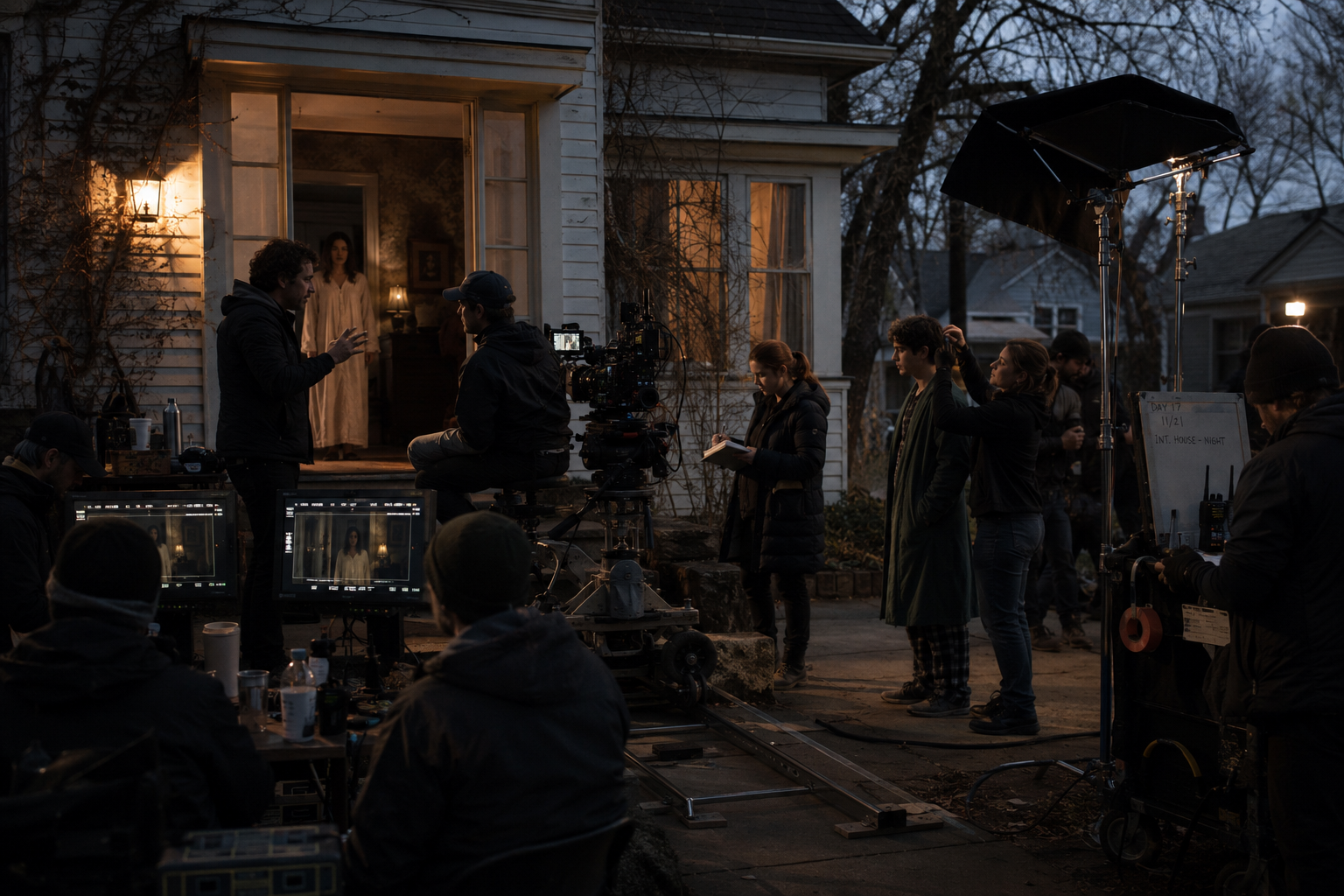
Every film audiences love exists because of thousands of invisible decisions that happen long before the camera rolls. Scripts evolve through revisions. Scenes are visualized before they are photographed. Productions coordinate hundreds of people across departments. Editors reshape narratives long after principal photography ends. Distribution determines how and where audiences encounter the finished work.
None of those systems are visible to the audience.
All of them shape what ultimately reaches the screen.
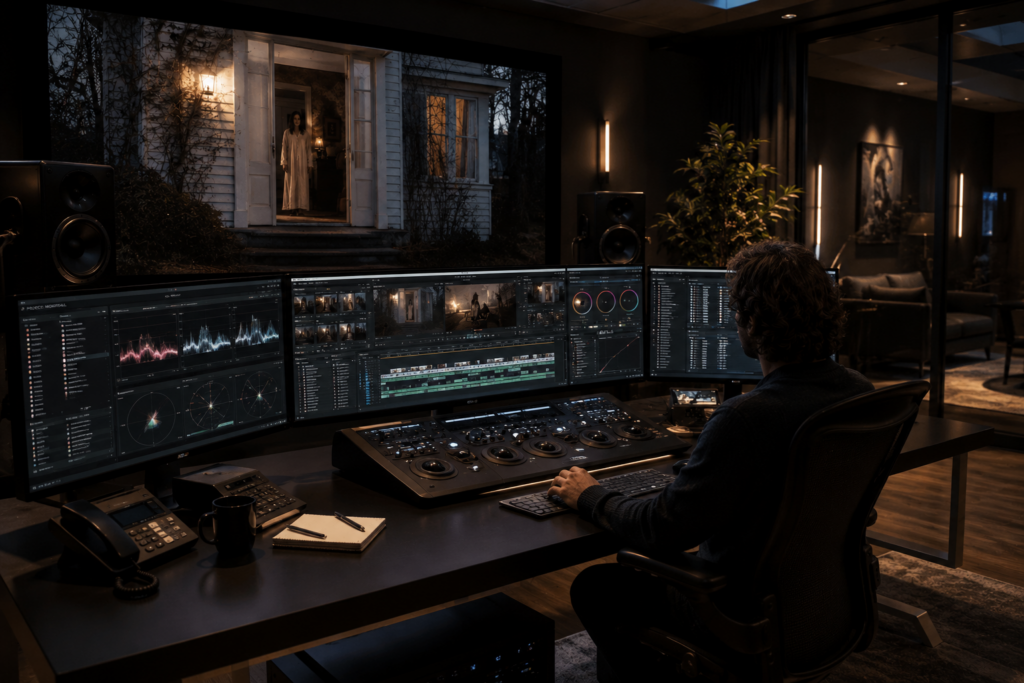
The public often imagines creativity as inspiration. Professionals understand that creativity is also workflow. Every technological breakthrough that has permanently changed filmmaking has reduced the distance between an idea and its execution. Film stock expanded what cameras could capture. Nonlinear editing gave filmmakers the freedom to rethink structure after production. Cloud collaboration allowed productions to function across continents without being in the same room.
These innovations did not replace artists.
They expanded what artists were capable of creating.
That perspective also reframes the conversation around artificial intelligence.
Much of the public debate has focused on whether AI will replace writers, directors, editors, or actors. Those questions assume AI’s greatest value lies in producing creative work. Google’s reported partnership with A24 points toward a different possibility.
Artificial intelligence may prove most valuable not because it creates stories, but because it removes friction from the creative process itself.
If filmmakers can iterate faster, test ideas earlier, coordinate productions more efficiently, and spend less time navigating repetitive technical work, AI becomes something fundamentally different. It becomes infrastructure. Like every major production technology before it, its greatest influence may come from expanding what creative people are able to accomplish rather than competing with them.
History suggests that the tools which reshape creative workflows often outlast the individual works they help produce. Audiences remember the films. Entire industries are transformed by the systems beneath them.
That is the larger implication of Google’s reported investment in A24.
Studios have historically competed to own stories.
Technology companies are increasingly competing to build the systems through which stories are imagined, developed, produced, and distributed.
Those are fundamentally different businesses, but they are beginning to converge.
The next chapter of Hollywood may not be defined by the company with the largest film library. It may be defined by the company that builds the invisible layer every filmmaker eventually depends on.
Not every technological shift becomes a cultural revolution.
But every cultural revolution begins with a change in infrastructure.
Related Posts

Hyundai, Kia, and Samsung Electronics Join Forces for Seamless Integration of Mobility and Residential Environments
Hyundai and Kia Corporation have officially inked a significant agreem

Madden NFL 26 Goes Big: QB DNA, Switch 2 Debut & Next-Level NFL Realism
AI Meets the Gridiron

SMART Unveils Innovative Inclusion Solution and Global Research to Support Neurodiverse Learners
SMART Unveils Innovative Inclusion Solution

YES Network and MSG Networks Unite to Create Gotham Advanced Media and Entertainment (GAME): A Cutting-edge Technology, Sports, and Entertainment Streaming Collaboration
YES and MSG Networks have jointly established Gotham Advanced Media a
GoPro Takes Audiences Inside the Storm with “Twisters”
GoPro Brings You into the Eye of the Storm TWISTERS movie