

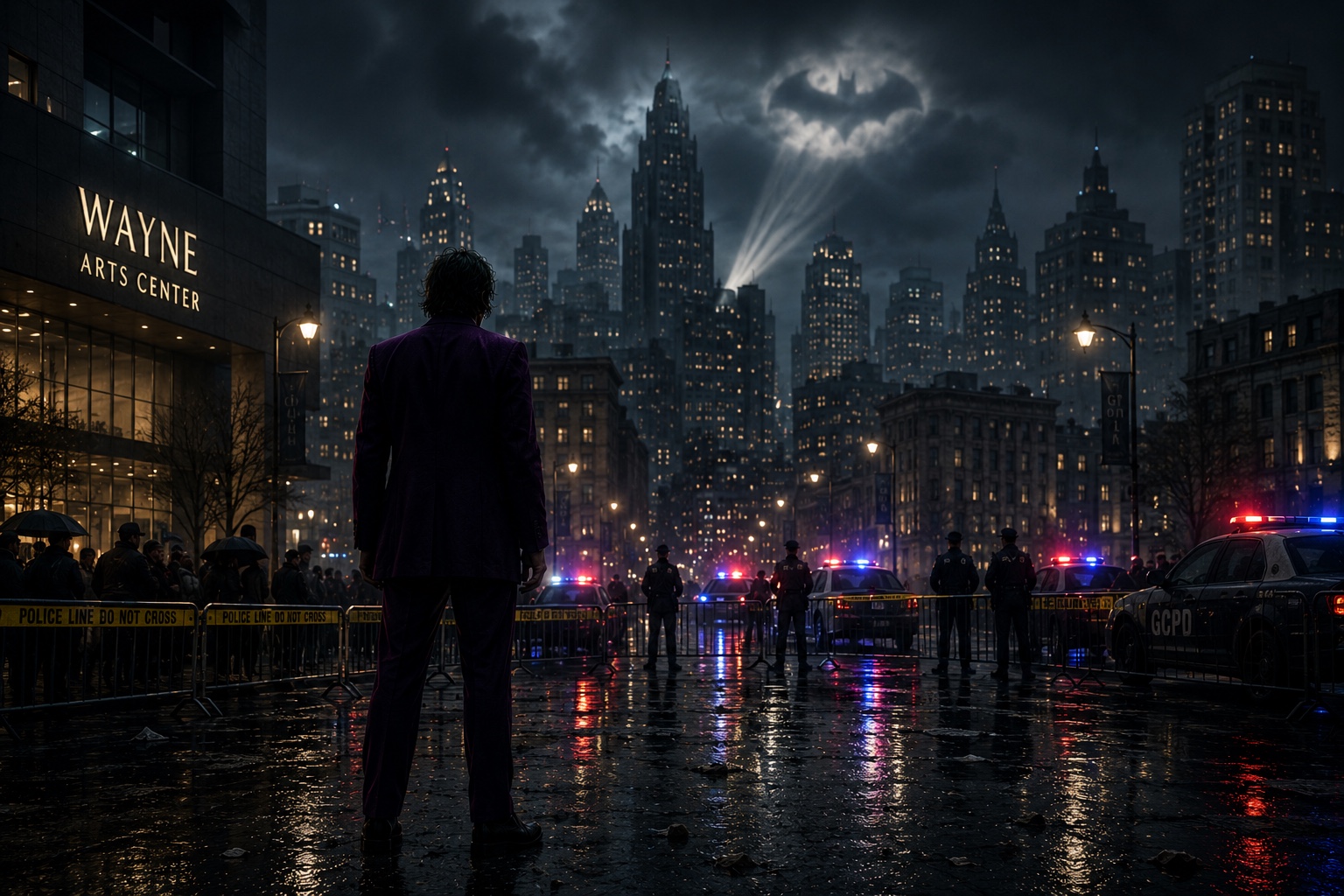
The Joker Has Always Needed Batman More Than Batman Needed the Joker
By Kyra Greene
For generations, we have understood Batman and the Joker as opposites.
One represents hope. The other embraces despair. One believes people can choose to become better. The other insists everyone eventually becomes worse. Their conflict has become so familiar that it feels almost elemental, as if these two characters were destined to chase one another forever.
But perhaps we have mistaken opposition for understanding.
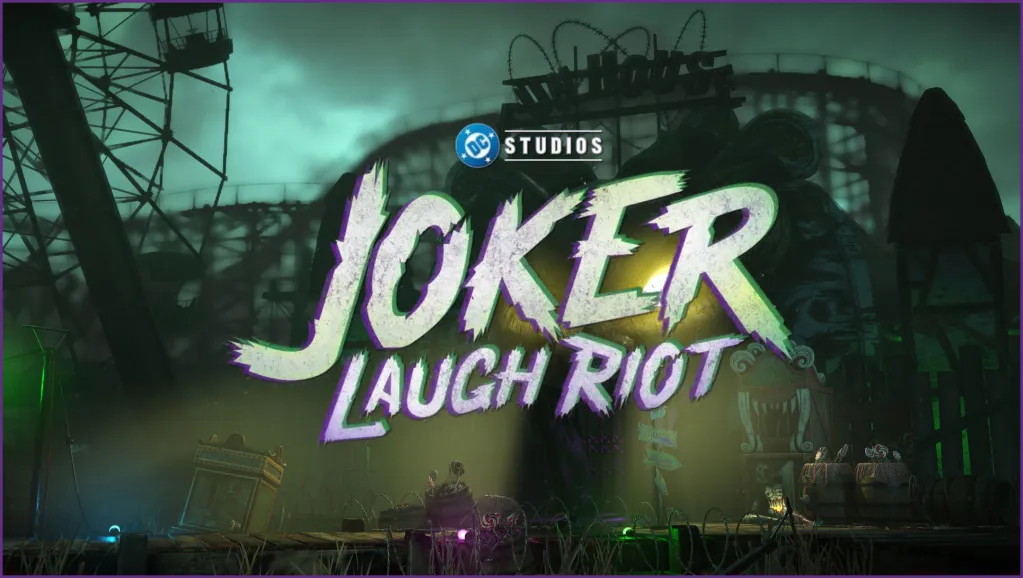
The announcement of Joker: Laugh Riot, DC Studios’ first anime series, begins with a premise that quietly changes everything. Batman is dead, and the Joker begins searching for whoever killed him. It sounds like the beginning of a murder mystery. Yet beneath that mystery lies a far more profound question.
What happens when the person you’ve spent your entire life trying to change is no longer there?
The answer may reveal more about the Joker than any origin story ever could.
For decades, audiences have assumed the Joker wants to defeat Batman.
His actions suggest something else entirely.
The Joker has never chased power with any lasting conviction. He has never cared much for ruling Gotham, building an empire, or accumulating wealth. Those things have always been temporary. Disposable. What has remained constant is Batman.
Every elaborate scheme, every impossible moral dilemma, every carefully orchestrated act of violence has ultimately been directed toward a single audience.
Batman.
Not because the Joker simply hates him.
Hatred is too small an explanation for a relationship that has endured for generations.
The Joker needs Batman because Batman represents the one truth he has never been able to erase.
That goodness can survive suffering.
Every confrontation has been another attempt to prove otherwise.
If Batman kills, then morality was only temporary.
If Batman abandons his principles, then hope was always an illusion.
If Batman finally chooses revenge over justice, then the Joker no longer has to explain his own choices.
Batman has never simply been standing in the Joker’s way.
He has been the evidence standing against the Joker’s entire philosophy.
That is why the Joker has never truly wanted Batman to disappear.
He wanted Batman to surrender.
There is an enormous difference.
One ends the game.
The other validates everything the Joker has ever believed about humanity.
Viewed through that lens, Joker: Laugh Riot becomes something far more interesting than another reinterpretation of a familiar villain.
Batman is gone.
The experiment is over.
For the first time, there is no incorruptible figure left to challenge. No moral code left to dismantle. No audience left for the performance.
The Joker is left with the one person he has spent his entire life avoiding.
Himself.
It is here that the story quietly leaves Gotham and enters something far more universal.
Human beings build identity in many different ways. Some build it through values. Others through family, faith, work, or creativity.
But there is another way to construct an identity.
Some people build themselves almost entirely through opposition.
They know what they reject.
They know what they resent.
They know exactly who they are fighting.
Yet they rarely ask who they are without the fight.
Over time, resistance becomes routine.
Routine becomes purpose.
Purpose becomes identity.
It happens more often than we recognize.
A lifelong competitor retires and discovers the rivalry had become part of who they were.
A political movement achieves its objective and struggles to define itself beyond the cause.
A career ends. A relationship dissolves. A conflict that quietly organized someone’s life finally disappears.
The loss is not simply external.
It is internal.
Without realizing it, they had built themselves around the thing they believed they were trying to overcome.
Perhaps that has always been the Joker’s tragedy.
He believed Batman was preventing him from becoming free.
In reality, Batman may have been the structure holding his identity together.
Batman never needed the Joker to understand who he was. Bruce Wayne’s purpose existed long before the Clown Prince of Crime arrived. His mission was born from grief, shaped by discipline, and sustained by an unwavering belief that one person’s choices can still matter.
The Joker’s purpose has often been far less independent.
Without Batman, every joke loses its audience.
Every scheme loses its witness.
Every argument loses the only person willing to answer it.
Without Batman, the Joker doesn’t simply lose his greatest enemy.
He loses the mirror he has mistaken for himself.
Perhaps that is the real tragedy hidden inside this premise.
We often believe identity is discovered by looking inward.
Just as often, it is revealed by the people who refuse to become what we expect them to be.
For the Joker, Batman has always been that person.
Every refusal to kill.
Every refusal to compromise.
Every refusal to surrender.
Each one became another reminder that the Joker’s understanding of humanity was incomplete.
Batman wasn’t merely the hero standing against him.
He was the living contradiction the Joker could never erase.
That is why Batman’s death matters.
Not because Gotham loses its protector.
Not because another villain gains an advantage.
But because the Joker loses the last person capable of proving him wrong.
That is what gives Joker: Laugh Riot the opportunity to become something far greater than another superhero adaptation.
It can become a story about the fragile ways people construct identity, and about what happens when the person who quietly defined your life is suddenly gone.
Most people will never wake up in Gotham searching for Batman’s killer.
But nearly everyone will eventually lose the career that gave them purpose, the rivalry that sharpened them, the relationship that shaped them, or the conviction they organized their life around.
When that moment comes, the question is not what has disappeared.
The question is who remains.
If Joker: Laugh Riot fully embraces that truth, it will do something rare. It won’t simply tell a new story about Batman and the Joker.
It will remind us that the greatest battles are not always fought against another person.
Sometimes they begin the moment we are forced to discover who we are without them.
Related Posts
Fresh, Bold, and For Everyone: AMP Launches TONE at Target
Any Means Personal
Travis Scott’s Paramount Deal Shows Hollywood Is Expanding Where Intellectual Property Begins
The business of building creative worlds

‘What If…? Venom’ Unleashes the Symbiote on Wolverine, She-Hulk, Loki, and Other Marvel Icons
'What If...? Venom' Unleashes the Symbiote
Ryan Coogler’s Creative Infrastructure
From film school collaborations to the Oscars

Dwayne Johnson Is Taking Project Rock Beyond Under Armour
A celebrity partnership ends. The brand moves forward.

FIFA’s Sponsorship Rules Are Creating a New Category of Ambush Creativity as Levi’s, Gillette and Heinz Score Without Sponsorship
The system created a new kind of marketing