

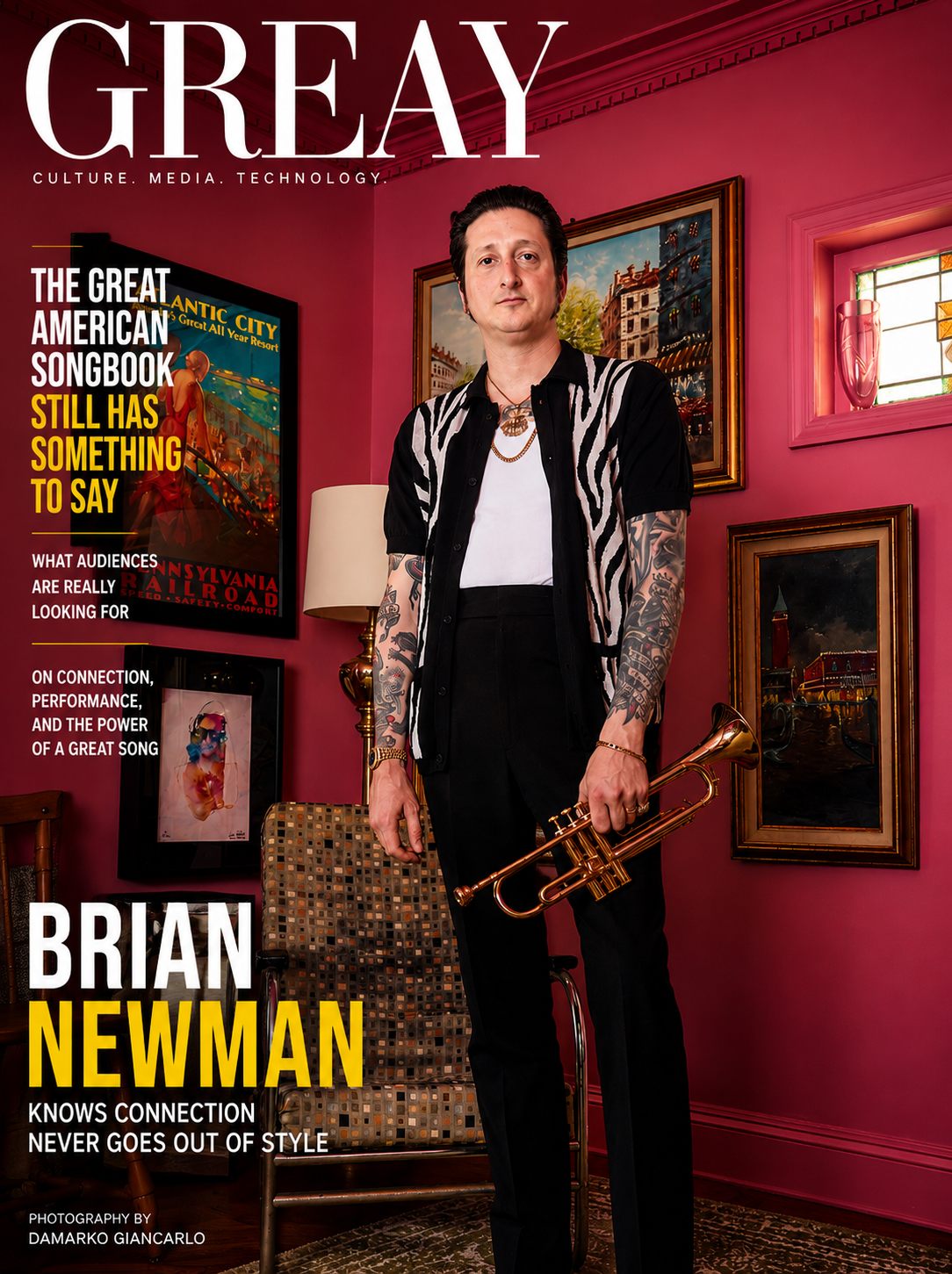
Brian Newman on Why Great Music Should Never Feel Exclusive
By Kyra Greene
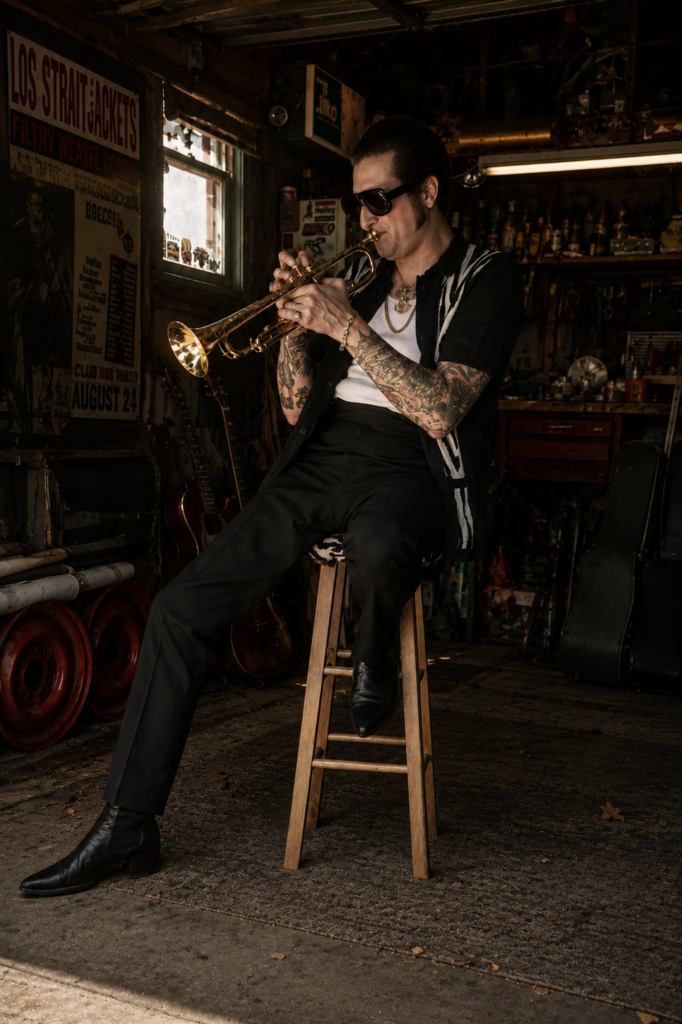
Brian Newman has spent much of his career bringing people into rooms they may not have expected to enter. Whether performing alongside Tony Bennett, sharing stages with Lady Gaga, leading a band in a packed New York club, or introducing a new audience to the Great American Songbook, his approach has remained remarkably consistent: make the music feel personal. That philosophy sits at the heart of Songs for Lonely Lovers, a collection of timeless standards that explores love, heartbreak, longing, and connection through songs that continue to endure because the emotions behind them never disappear. For Newman, music has never been about preserving the past. It has always been about creating a moment where people can forget their worries, feel understood, and leave a little closer to one another than when they arrived.
GREAY: Your new album, Songs for Lonely Lovers, arrives at a moment when people are more digitally connected than ever, yet loneliness remains a defining part of modern life. What drew you to explore that theme now, and what does loneliness mean to you today?
Brian Newman: I just always gravitated toward the deeper songs of the Great American Songbook and the themes that underlie all of our lives. Whether we look happy on social media is not always the real story.
Although I definitely think that digital connection at all our fingertips can create loneliness, social anxiety, and all sorts of other problems, it’s also a chance to connect with people and your listeners in a deeper way than ever before.
These 80-90 year old songs feature a collection of the greatest songwriters in history and these words still hold true today in this modern world. If I can make someone forget about their daily trials and tribulations if only for 90 minutes then my soul is replenished and I’ve done my job.
GREAY: The songs on this album were written in different eras, for different audiences, yet they continue to resonate. What do these standards understand about human emotion that allows them to endure across generations?
Brian Newman: Love is all you need, right? Like The Beatles sang.
I think these songs still resonate throughout all the years they’ve been sung and recorded by countless masters because the lyrics truly hold weight, and these old love songs never go out of style. Whether it’s love lost, gained, wanted or otherwise it’s always about love.
You’d have a hard time finding one song in the history of music that didn’t deal with some aspect of love.
My last record was full of modern rock and pop songs that were only 30-50 years old. To me Nirvana and Cole Porter are both part of the Great American Songbook. With this album, I wanted to get back to the roots of this music in that old-school way.
GREAY: You occupied a unique position between Tony Bennett’s final chapter and Lady Gaga’s continued evolution as an artist. What did witnessing those two very different journeys teach you about artistic longevity?
Brian Newman: I learned so much from just being within 30 feet of Tony the last ten years of his career.
When I was a young musician I was always emulating him and trying to sing his songs. I saw him in concert in my hometown when I was around 16. So to be able to make records, tour and be onstage with him was the absolute dream for me.
They say to never meet your heroes, but his talent, kindness and humility were inimitable. I know that his way of treating people, coupled with his deep knowledge steeped in tradition, was key to his longevity.
I’d say 90 percent of the greats that I’ve been able to meet and work with have all had these qualities. It makes it so much easier to make music. I mean, we’re not making vaccines or curing cancer. It’s just music.
There’s so many great stories about this era that I’ll never forget, but one that I always think about was the first time I got to meet Tony.
Gaga was on top of the world and she was dropping in to sing at some of my New York City shows at the time. She had called me to play the Robin Hood Gala with her and afterwards someone says in the dressing room, “Mr. Bennett would like to say hello.” Both of our jaws just dropped.
We were just so in awe that we would get to meet him, let alone begin years of music together. Every time I went to rehearsal, the studio, a taping, or a show I always had butterflies and a deep desire to make him proud of us and do the music justice.
GREAY: You’ve spent years introducing audiences to jazz in places where they may not have expected to encounter it. How do you earn someone’s attention when they didn’t walk into the room expecting to become a jazz listener?
Brian Newman: I always strived to be an entertainer.
I learned over the years that aiming only for a jazz audience wasn’t the small pond I wanted to be swimming in.
I don’t believe you have to change the content to make this music accessible to everyone; it’s all how you present it to your audience.
Traditional Pop or the Great American Songbook has informed all of the music we listen to today. This music is truly timeless and gaining the attention of a non-jazz listener depends entirely on the presentation.
It’s only music. It’s supposed to be fun, maybe a little sad, uplifting but always transformative. Taking the audience to another place and letting them forget about the BS everyone has to deal with in life.
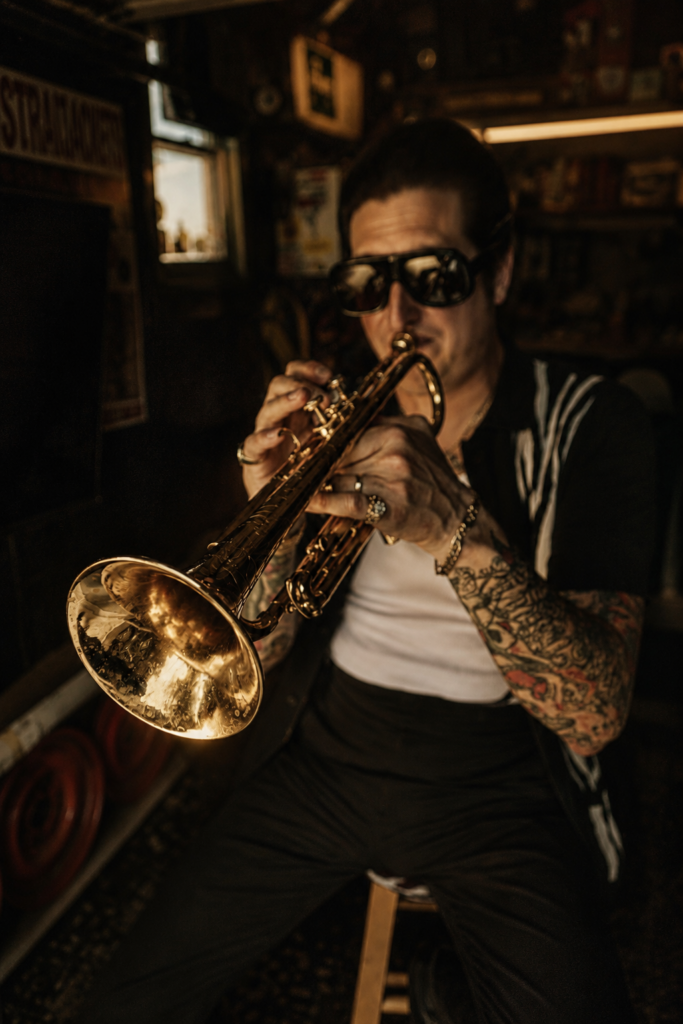
GREAY: Nightlife has long been a place where culture is tested before it reaches the mainstream. Having spent much of your career performing after dark, what have you observed about the way audiences have changed over the last decade?
Brian Newman: Like Willie Nelson said in his hit song he wrote for Ray Price, “Oh The Nightlife, it ain’t no good life, but it’s my life.”
I absolutely love the late-night vibes, and I always have. Whether it’s at a small club or the biggest stages, there is no feeling better than being free and in the moment with amazing musicians.
Things have definitely changed over the past decade but I think at the end of the day people still just want to hear great live music.
No AI or technology can make someone feel the way a real show can.
GREAY: Many people describe jazz as a genre, but your career suggests it can also function as an experience. Whether in a New York club, a luxury hotel, or a Las Vegas theater, how does the environment shape the way music is received?
Brian Newman: It’s always been about the audience and the show for me.
Honestly, I don’t think the word “jazz” truly represents what we do. People may have a preconceived notion of what jazz is and avoid those shows because they have never heard it played in a way that was accessible to them.
I can play the ‘jazziest’ song ever in a way that will still have non-jazz listeners digging it.
I respect the tradition while taking it to the next level in my own authentic way.
GREAY: Improvisation sits at the heart of jazz. In a world increasingly shaped by algorithms, automation, and predictability, what does improvisation still teach us about being human?
Brian Newman: I always say to the audience that these songs we’re playing are all just vehicles for our improvisation.
I love to play songs that lend themselves to an interpretation different from the original.
I think that we improvise as humans every day and don’t even realize it. Our minds constantly make split-second decisions that dictate our daily lives.
GREAY: You’ve dedicated much of your career to the Great American Songbook. Why do you believe these songs continue to find new audiences while so much of modern culture moves at a faster pace?
Brian Newman: Life definitely moves faster and faster, but these songs are timeless and the feelings they evoke in the listeners speak directly to our basic human needs.
I think you can’t just play the songs. You have to make them your own. Make the listeners believe that those lyrics really happened to you.
If the audience had a blast, then I did my job.
GREAY: As a bandleader, your role extends beyond your own performance. What have you learned about leadership, trust, and collaboration from standing in front of a band night after night?
Brian Newman: Being a good leader is about caring about the others around you and making them feel comfortable in all aspects.
If you don’t, the music suffers the most.
If everybody’s happy, fed, drank, well paid, and treated fairly, the audience can tell the band is having a good time and they in turn have a good time.
I continue to surround myself with musicians who are better than me. Learning from them every night.
When you know the cats around you on a deeper level it makes it that much easier to make music that everyone can enjoy.
GREAY: You’ve spent years performing in spaces where hospitality, entertainment, and music converge. As luxury hotels, private clubs, and destination venues increasingly invest in live performance, do you think audiences are searching for experiences that feel more personal and less transactional?
Brian Newman: As I move through all these circles, it all comes down to authentic experiences.
Whether it’s the Jazz Club at Aman or the little secret speakeasy I play on Monday nights in New York, the same techniques are applied.
I always give the same level of intensity no matter the venue or crowd.
To be able to bring the reluctant crowd into the arms of the music and have them just enjoy themselves and let go is something I strive for every night.
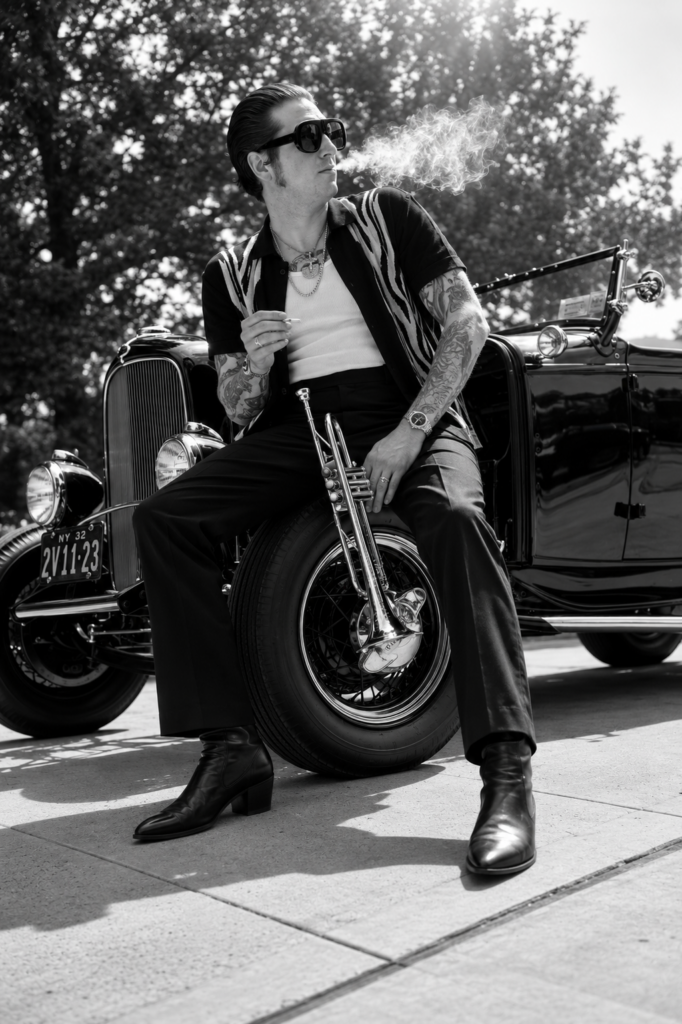
GREAY: You’ve built a career around an art form that many predicted would become increasingly niche. What do people consistently misunderstand about jazz and the audience that continues to embrace it?
Brian Newman: I think it all comes down to how you present the music.
Jazz clubs back in the day didn’t have a quiet policy. They were partying to this music. It was the pop music of the day. It was cutting edge and exciting.
I try my damnedest to get back to that vibe and feeling every show.
If we can do that more, more people will be turned on to this beautiful tradition.
GREAY: When listeners finish Songs for Lonely Lovers, what conversation do you hope continues after the music stops, and what do you hope they understand about where you are in your artistic journey today?
Brian Newman: I just hope you all dig it.
Something to laugh and cry to. For heartbreak and healing. To love and let go.
Life is always about change just like music. Every album is just a photograph of that band in that moment.
The day after the recording, we’re already onto the next.
We already recorded the next few albums and I can’t wait to make more music and bring more smiles and joy to the world.
Let’s GO!
Spending time with Newman, one thing becomes clear: he measures success differently than most. Not by accolades, headlines, or even the remarkable career that has placed him alongside some of music’s most celebrated figures. Instead, he measures it in the experience itself—the laughter shared across a room, the audience that leaves feeling lighter than when they arrived, the stranger who discovers a song that suddenly feels like it was written for them. That belief runs through every answer, every performance, and every note on Songs for Lonely Lovers. Long after the music ends, Newman remains committed to the same simple idea that has guided him from the beginning: connection never goes out of style.
https://www.joymachinerecords.com/artists/briannewman
Photography DaMarko GianCarlo @Damarkogiancarlo
Words By Kyra Greene @noteasybingreen
Produced By The GREAY firm @greayfirm & Firstsight International @firstsight.intl
Shot On Location in Brooklyn
Related Posts

Garmin’s fēnix 8 Series: A Game-Changer for Multi-Sport Athletes
Garmin adds AMOLED displays to fēnix 8 Series.
Jude Bellingham Joins Louis Vuitton as Newest “Friend of the House”
Jude Bellingham Is Louis Vuitton's Newest "Friend of the House".

Rosé of Blackpink Stuns in Puma Palermo Debut: A Fashion-Forward Fusion
Blackpink’s Rosé rocks Puma Palermo in first campaign

Game Informer Shuts Down After 33 Epic Years in the Industry
‘Game Informer’ Shut Down by GameStop
From Incredible to Infernal: The Hulk’s Most Terrifying Evolution Yet
Bruce Banner vs. His Worst Nightmare—Himself

Marvel and Coca-Cola Unveil Exclusive Comic Book Variant Covers
New Coca-Cola Variant Covers hit stands