

The All-American Rejects Aren’t Promoting an Album: They’re Building a Vertical Series

By Kyra Greene
For most of the modern music industry, promotion followed a familiar rhythm.
An artist released a single. A music video followed. Interviews, performances, and tour dates carried the momentum forward.
The All-American Rejects have chosen a different route.
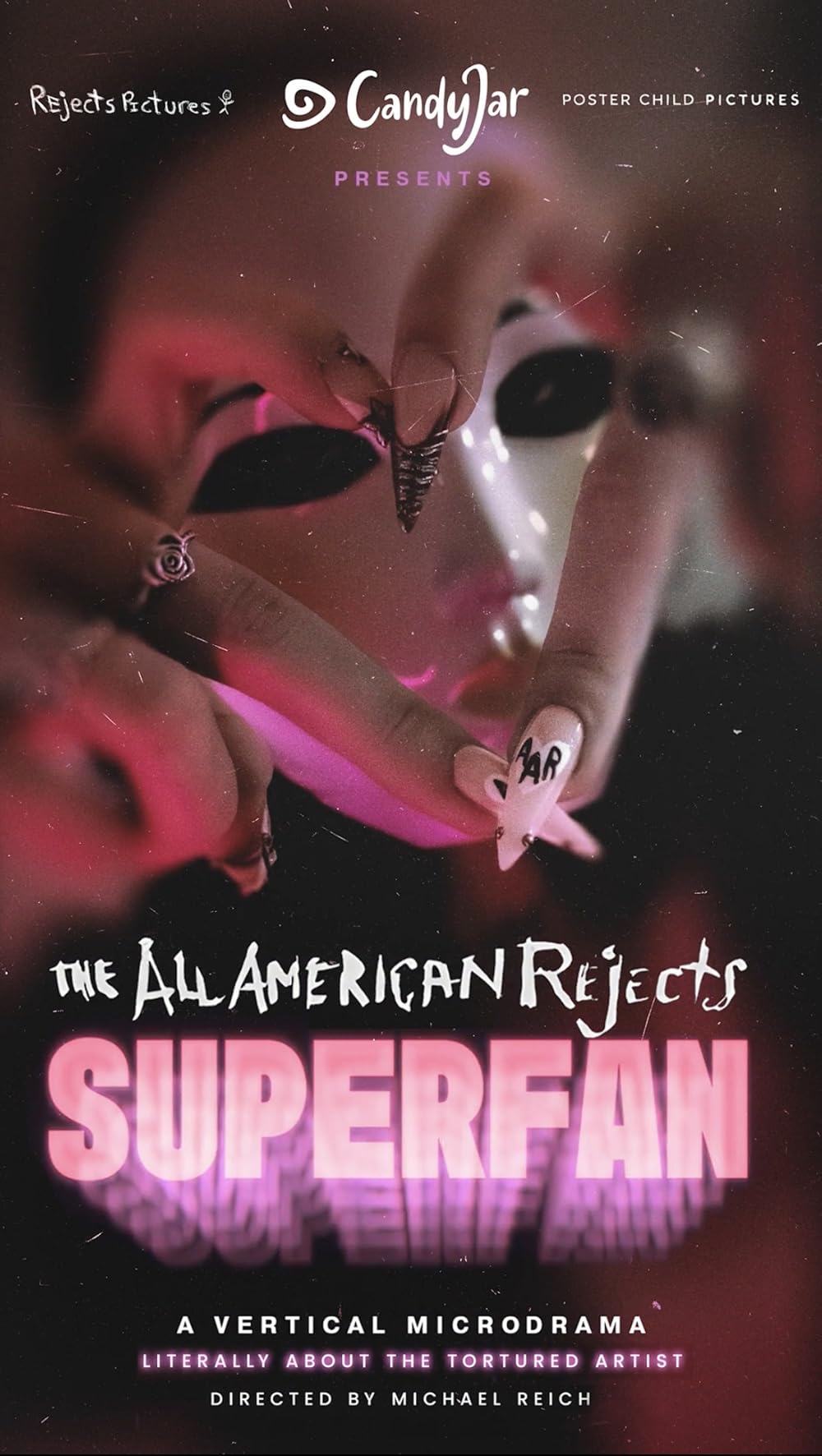
To support Sandbox, the band’s first studio album in more than fourteen years, they launched SuperFan, a 31-episode vertical microdrama distributed through the mobile platform CandyJar. The series follows an obsessive fan who kidnaps the band and broadcasts the chaos online, turning an album rollout into an episodic narrative experience.
At first glance, the project feels unconventional.
At second glance, it feels inevitable.
The rise of vertical entertainment has created a new category of storytelling built specifically for the phone. These series are short, serialized, and designed around the habits of mobile audiences who increasingly consume entertainment in moments that once belonged to social media scrolling.
What makes SuperFan notable is not simply that a band created a microdrama.
It’s that the project blurs the line between music promotion and entertainment itself.
For decades, artists used stories to support music. Today, music can be used to support a story.
The distinction may seem subtle, but it reflects a larger shift happening across media.
As audiences spend more time inside mobile ecosystems, creators are building experiences that are native to those environments rather than adapting older formats to fit them. Television became streaming. Streaming became social. Social is increasingly becoming serialized.
Microdramas sit at the center of that transition.
They are not replacing television, film, or music videos. They are creating a new lane that borrows elements from all three.
The All-American Rejects understood that opportunity.
Instead of asking audiences to watch a three-minute music video, they created a narrative world that unfolds across thirty-one episodes. The audience returns not just for a song, but for a story.
That approach reflects a growing reality within entertainment. Attention is no longer captured by a single moment. It is sustained through ongoing engagement.
The most revealing image associated with this shift is not the SuperFan poster itself.
It’s the person sitting on a couch on a quiet Saturday night, phone in hand, watching a vertical series unfold one episode at a time.
That behavior is becoming increasingly common.
The device once used primarily for communication has become a movie screen, a television network, a streaming platform, and now a venue for serialized storytelling.
SuperFan may have begun as an album campaign.
But the larger story is that artists are starting to embrace the language of mobile entertainment itself.
The All-American Rejects aren’t simply promoting new music.
They’re participating in the construction of a new format.
And for an industry constantly searching for the next way to reach audiences, that may prove more significant than the album release that inspired it.
Related Posts

How AI Maps Are Becoming the Visa Network of the Real World
By Brian k. Neal On any given evening in a modern city, millions of sm

Samsung and Technogym Team Up to Revolutionize At-Home Fitness with New App for 2024 Smart TVs
Samsung TVs Boost Home Fitness Offerings With Technogym App

Illuni Marks the Dawn of Virtual Socialization’s New Era with Global Debut of Moii
Moii, a virtual platform that revolves around avatar-based social conn

CANVAS: The Future of Integrated TV Sound That Doesn’t Compromise on HiFi
The Only Soundbar That Sounds Like Real HiFi

Technogym Ecosystem Unveiled: The Singular AI-Powered End-to-End Open Platform at IHRSA Los Angeles
Technogym Ecosystem Unveiled

The MPC XL Is Akai’s Boldest Bet on DAWless Creation
Where Hardware Catches Up to Software