
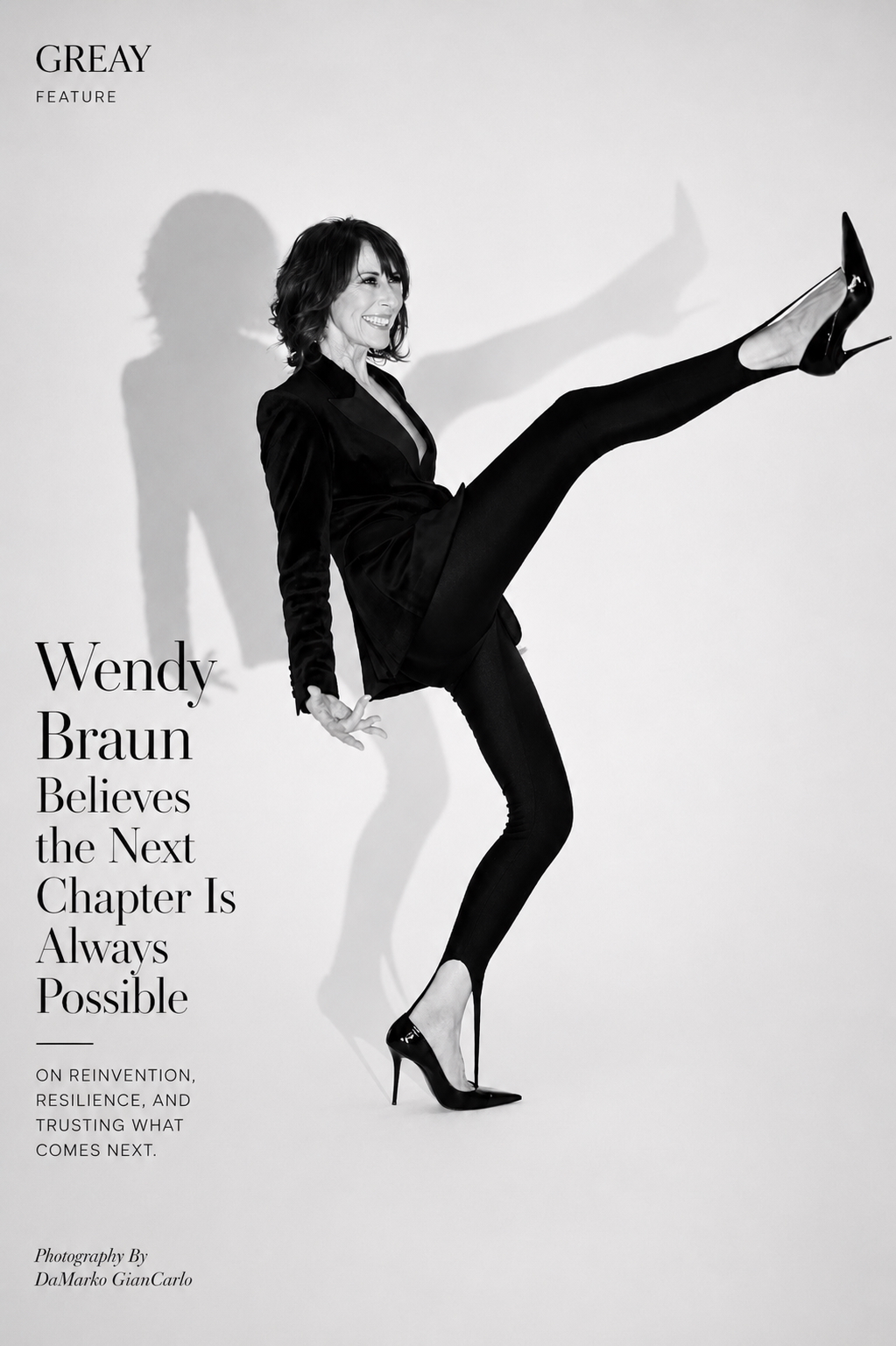
Wendy Braun Never Stopped Becoming

For much of her career, Wendy Braun has been in motion. Long before Jury Duty Presents: Company Retreat, before Emmy-season conversations and acclaimed performances, she was dancing professionally in Monte Carlo, performing across Europe while quietly imagining a future that had not yet arrived. What followed was not a straight line, but a series of reinventions shaped by faith, discipline, rejection, persistence, and an unwavering belief that growth often requires leaving behind the version of yourself that already works.
In conversation with GREAY, Braun reflects on performance, presence, resilience, and the lessons that emerge when you continue moving forward long after certainty disappears.
GREAY: You’ve spoken about dancing professionally in Monte Carlo and opening for legendary artists like Stevie Wonder, Barry White, Natalie Cole, and Earth, Wind & Fire before transitioning into acting. There’s something emotionally profound about recognizing your body may eventually age out of one form of performance while your creative ambition hasn’t disappeared. Did that realization reshape the way you understood identity, reinvention, and survival inside entertainment itself?
Wendy Braun: I loved performing in Monte Carlo. I was 24 years old, and I knew I wanted to pursue acting. When my contract ended, I remember looking around Monaco and realizing that many of the dancers were staying for another six months or a year, while still introducing themselves and saying, “I’m an actress in New York.”
Something inside me knew I didn’t want to stay where I was comfortable simply because it was working.
On the flight home, I wrote in my journal that one day I would return to the South of France as the lead in a film premiering in Cannes.
Three years later, I found myself doing exactly that.
That experience taught me something I still believe today: sometimes your next chapter requires you to leave an identity that still fits in order to grow into one that is more expansive, especially when it feels scary.
Dance gave me an incredible foundation, but acting felt timeless to me. It allowed me to keep expanding as an artist, storyteller, and human being.
Shifting from dance to acting also reminded me that we’re capable of so much more than we think. These days I find myself dreaming even bigger.
And after filming Company Retreat, I have a whole new respect for performance under pressure. Now, I’m thinking Dancing with the Stars would be a pretty incredible full-circle moment.
I’ve learned that reinvention isn’t about becoming someone else. It’s about allowing yourself to evolve into all you’re meant to be.
GREAY: Dance and acting both require vulnerability, but one communicates through movement while the other often lives inside silence, timing, and emotional restraint. What parts of being a dancer never left you once you became an actor?
Wendy Braun: Being a dancer never leaves you.
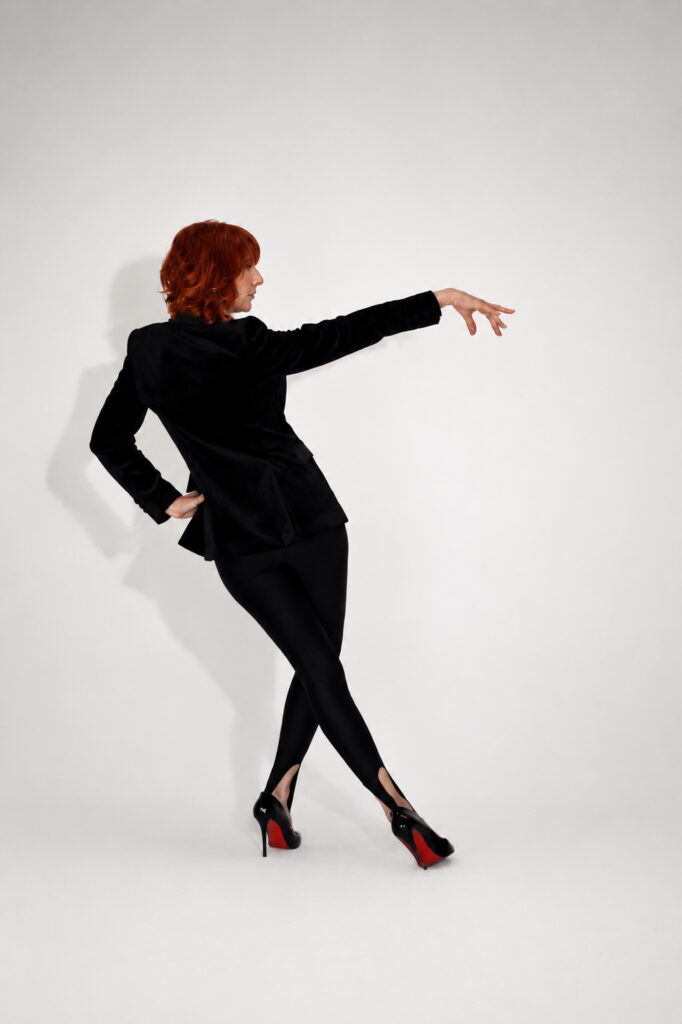
Dance taught me to stand up taller, take up space, and move more gracefully through the world. It taught me discipline, focus, commitment, and perhaps most importantly, how to feel at home in my body.
And having been 5’10” since I was 13 years old, that took a little while to learn.
As an actor, I still think of blocking as choreography. I pay attention to rhythm, energy, timing, and physical storytelling. Those skills have absolutely made me a stronger performer.
On Company Retreat, there was a jousting fight sequence that required precise choreography and had to be executed perfectly in a single take. My dance and martial arts background became invaluable.
Once you’ve rehearsed something enough, there comes a moment where you have to stop thinking and trust your body.
That’s true in dance. It’s true in acting. And honestly, it’s true in life.
When we pulled off that stunt and everything landed exactly as it was supposed to, it felt like we had performed a giant magic trick. The audience sees the result, but underneath it is years of training, trust, and preparation.
To this day, when I watch great dance, I’m often moved to tears. It was my first love. I also have come to realize over the years that there’s something beautiful about feeling fully at home in your body. That’s a gift at any age.
GREAY: What fascinated me about Company Retreat is that the performance discipline almost feels unprecedented. It carries elements of SNL, The Groundlings, and Whose Line Is It Anyway?, but unlike traditional improv, nobody could break the social reality of the environment. The cast had to sustain character psychology for extended periods while adapting in real time to unpredictable human behavior. How mentally exhausting — and artistically rewarding — was that level of discipline as a performer?
Wendy Braun: Being on Company Retreat felt like walking a high wire without a net.
It demanded every skill I had as an actor: discipline, instinct, focus, collaboration, presence, and trust. There were no second takes. No opportunity to stop and reset. We were operating at the highest level of performance under pressure.
It was equal parts terrifying and exhilarating.
What made it so unique was that the fear never really went away. You simply learned to work alongside it. Every day became an exercise in showing up fully, trusting your preparation, and committing completely.
On top of that, I had to walk into every scene as Elizabeth Prescott, a powerful private equity executive who commands every room she enters, and sustain that authority for hours at a time. There was no stepping out of character, no reset button, and no second-guessing.
Ultimately, you never wanted to be the one who knocked down the entire house of cards and ruined the multi-million-dollar illusion.
That’s actually one of the greatest lessons the experience gave me.
Courage isn’t the absence of fear. Courage is confidently taking a seat at the head of the table and knowing Fear is going to sit right next to you the entire time — and be very chatty.
At the end of every day, there was this collective exhale among the cast and crew. More than a hundred people were working together to protect this incredibly ambitious show, and somehow we kept pulling it off.
The fact that audiences have embraced it, critics have celebrated it, and there’s Emmy buzz surrounding it now, that’s all icing on a very beautiful cake.
GREAY: I’ve read that many of the cast members primarily referred to one another by their character names in order to protect the illusion of the environment. At a certain point, did Company Retreat start feeling less like traditional acting and more like psychologically living inside an alternate reality together?
Wendy Braun: We intentionally didn’t learn each other’s real names because there was no room for error. We only knew each other by our character names, and strangely enough, that became completely normal.
This was definitely harder than a traditional acting job. By the end of it, we all couldn’t believe we had actually pulled it off. We would joke about how easy it was going to feel to return to a regular set where you can do multiple takes and actually interact with the crew.
On this show, once you stepped onto the retreat grounds, it didn’t feel like an alternate reality. It just felt like “go time.”
You had to stay in character, stay present, listen carefully, and bring your A-game every single moment.
It actually made me realize how tuned out we are in our own lives. Here we were in the great outdoors, with no phones, listening intently to every conversation and responding in real time. It became an experiment in being fully present. And it was thrilling.
GREAY: Most comedies allow actors to reset once the scene ends, but Company Retreat demanded sustained behavioral control because the emotional reality could never collapse for the participant at the center of the experience. Did that process change the way you think about performance itself?
Wendy Braun: It made me realize that your greatest superpower as an actor is your instincts and your ability to trust them.
Because on Company Retreat, that’s all you had.
You couldn’t hesitate or hem and haw. You had to trust your preparation, trust your scene partners, and trust yourself.
Delivering under that level of pressure day after day gave me an entirely new level of confidence, not just as an actor, but as a person.
It was the ultimate peak performance test. It felt like the Olympics of Comedy and we all stuck the landing.
The entire experience reminded me that we’re capable of far more than we think we are when we’re willing to trust ourselves and rise to the occasion.
GREAY: Your career has moved through live dance performance, television, coaching, writing, and now one of the most psychologically ambitious comedy experiments on streaming. What have you learned about reinvention from surviving multiple eras of entertainment culture?
Wendy Braun: I look back now and realize that everything we do as artists, creatives, and human beings informs the next chapter.
When I was playing Elizabeth Prescott, I suddenly realized that the role was a culmination of so many things I’d spent years learning: dance, improv, stand-up, live theater, television, film. Every chapter had prepared me for this moment.
That’s when you realize nothing is wasted. Every season, every skill, every setback eventually becomes part of the story you’re here to tell and the person you’re here to become.
The challenge is that when you’re in a season where the roots are growing beneath the surface and nobody can see the fruits yet — not even you — it can feel like nothing is happening.
But that’s often where the most important growth is taking place.
If you can make peace with your path and trust that it’s all leading you toward a more expanded version of yourself, you’ll find your way.
I’ve also learned that if you spend your days wishing things were different “back then,” you miss the present moment, which is where all your power lives.
At the end of the day, we all need the reminder:
You are more powerful than you know.
Let joy lead. And when in doubt, dance it out.
GREAY: You’ve spent years helping creatives, entrepreneurs, and performers step into greater confidence and authenticity. What do people misunderstand most about what actually makes someone compelling?
Wendy Braun: Whether they’re performers, entrepreneurs, authors, or creatives, I think people spend too much time trying to be impressive and not enough time just being authentic.
The qualities that make someone compelling aren’t perfection and polish. They’re truth, presence, vulnerability, and self-acceptance.
So many people think they have to look perfect, be perfect, or have everything figured out before they can be successful. But what actually draws us to someone is their humanity. It’s their willingness to be real.
Acting isn’t about perfection. It’s about illuminating humanity in all its flaws and fabulousness.
We don’t need another perfect person. That’s not compelling. That doesn’t make us lean in. We need your authenticity, your life experience, your scars, your wisdom, and your truth.
The people we remember aren’t usually the most polished ones in the room. They’re the most fully expressed. They’re the ones brave enough to be themselves.
GREAY: Many actors spend years trying to become visible, but longevity often requires emotionally surviving periods where the industry becomes quieter around you. Was there a moment in your career where resilience became more important than momentum?
Wendy Braun: Absolutely.
When I first moved to LA, the top 10 commercial agents all turned me down. They told me I was too tall, there was too much competition, and my personal favorite, “We already have someone exactly like you.”
Really? I’d love to meet her. I’m sure she’s delightful.
Then my father, who was my biggest cheerleader, passed away. The last three words he left on my answering machine — yes, this was the 90’s — were “Keep going, Sunshine.”
And those three words became my mantra.
Three years later, I booked nineteen national commercials in a single year and then landed a three-year spokesperson campaign opposite my childhood crush, the late David Cassidy.
In one of the commercials, he showed up at my door as a holiday caroler and serenaded me with “Do You Believe in Magic?”
And I remember thinking, “Um… yes. Yes, I do.”
The crazy part was that he twirled me into a giant winter wonderland, complete with fifteen snowflake dancers as my backup dancers.
Had I quit during that quiet season, I would have been one of those snowflakes instead of standing at the center of the story.
That’s why I believe so strongly in perseverance.
Sometimes the very thing you’re being prepared for is waiting just on the other side of the season you’re tempted to quit.
So, if you are in a quiet season right now, steal my mantra and make it your own: Keep Going, Sunshine.
GREAY: The Emmy/FYC conversation around Jury Duty feels culturally significant because audiences connected to sincerity more than spectacle. Why do you think emotionally generous storytelling suddenly feels so refreshing in contemporary culture?
Wendy Braun: I think we’re living in a time when so much of life feels curated.
Social media just shows us these polished versions of reality, and now AI is making us question what’s real and what isn’t. I think people are craving something authentic.
Sincerity feels refreshing because it’s becoming increasingly rare. Shining a light on the goodness, decency, and generosity in people is what we all need right now, and that’s one of the reasons I love being part of this show.
Company Retreat is hilarious, but it’s also deeply human, heartfelt, and surprisingly moving.
To be part of a show that can make people laugh out loud and move them emotionally — even if it means playing a villain audiences love to hate — is truly a gift.
I’m just grateful that it’s resonated with so many people.
GREAY: There’s a quiet humanity in your career that feels resistant to the mythology Hollywood often builds around performers. Was maintaining that sense of groundedness intentional, or did it naturally come from navigating the realities of the industry for so long?
Wendy Braun: Thank you so much. I think it comes from my Midwest roots and the values I grew up with. I knew this business would challenge me, but I never wanted it to change who I was.
Being a mother to two boys has kept me grounded. Building a business that serves creatives around the world has kept me deeply connected to purpose. Acting is something I love, but it’s not the entirety of who I am.
I’ve also been intentional about wanting to work on projects that put something positive into the world. Doing four seasons of Atypical meant a lot to me because it opened people’s eyes and created a greater understanding around autism.
And with Jury Duty Presents: Company Retreat, I loved being part of a project that reminds us of our shared humanity.
Even with Elizabeth Prescott, I wasn’t interested in playing a one-dimensional villain. She walks in believing she’s helping people. Through playing her, I was reminded that the villain never thinks she’s the villain and that no one is ever just one thing.
The longer I’ve been in this business, the more I’ve realized that having a meaningful life outside of it is what allows me to bring more humanity, perspective, and depth to the work itself.
I also love helping people defy doubt, trust themselves, and turn big dreams into reality. Working with creatives around the world reminds me every day that we’re all far more capable than we think we are.

GREAY: When you look back at the dancer performing in Monte Carlo and the woman now participating in an Emmy-season conversation decades later, what do you think she would be most proud survived?
Wendy Braun: I think she’d be most proud that I survived the no’s. The times I heard, “We’re going another way,” “You’re not quite right,” or my personal favorite, “Yes, that’s a no.”
She’d be proud that I survived the slow seasons. The seasons where nothing seemed to be happening and yet everything was taking root beneath the surface.
She’d be proud that all of her dreams came true, just not in the order or timeline she imagined.
Most of all, I think she’d be proud that I stopped waiting for the outside world to tell me who I was.
Many people chase success hoping it will finally make them feel worthy. But no achievement can repair a relationship you haven’t healed with yourself.
The greatest accomplishment of my life isn’t a credit, an award, or an accolade. It’s learning to trust myself and own my value. It’s knowing that who I am is more important than what I’ve achieved.
Ultimately, along the way I’ve learned that success is mastering the fine art of dealing with rejection, disappointment, and setbacks without allowing any of it to define you, derail you, or defeat you.
At the end of the day, the mantra will always be:
Keep Going, Sunshine.
What lingers after speaking with Wendy Braun is not only a story about Hollywood, but a story about endurance. Beneath the credits, career milestones, and the momentum surrounding Jury Duty Presents: Company Retreat is a woman who learned that success is rarely about avoiding rejection, fear, or doubt. It is about continuing anyway.
Whether reflecting on Monte Carlo, motherhood, performance, entrepreneurship, or the quiet seasons when nothing appears to be happening, Braun returns to the same belief: growth is often taking place long before anyone else can see it. Perhaps that is why her father’s final words still echo through her story with such tenderness and force.
Keep going, Sunshine.
Photography DaMarko GianCarlo @damarkogiancarlo
Words Kyra Greene @Noteasybeingreen
Hair Samm Castro @sammcastrohairstylist
Make Up Aliana Moss @alianamoss
Wardrobe Abby Wan @abbywan
Produced by GREAY Firm @greayfirm & Firstsight International @firstsight.intl
Related Posts

RAP SNACKS ANNOUNCES ENTRY INTO TRUCKING BUSINESS
By Jamal Suiter Rap Snacks, a trailblazing pioneer in the Consumer Pac
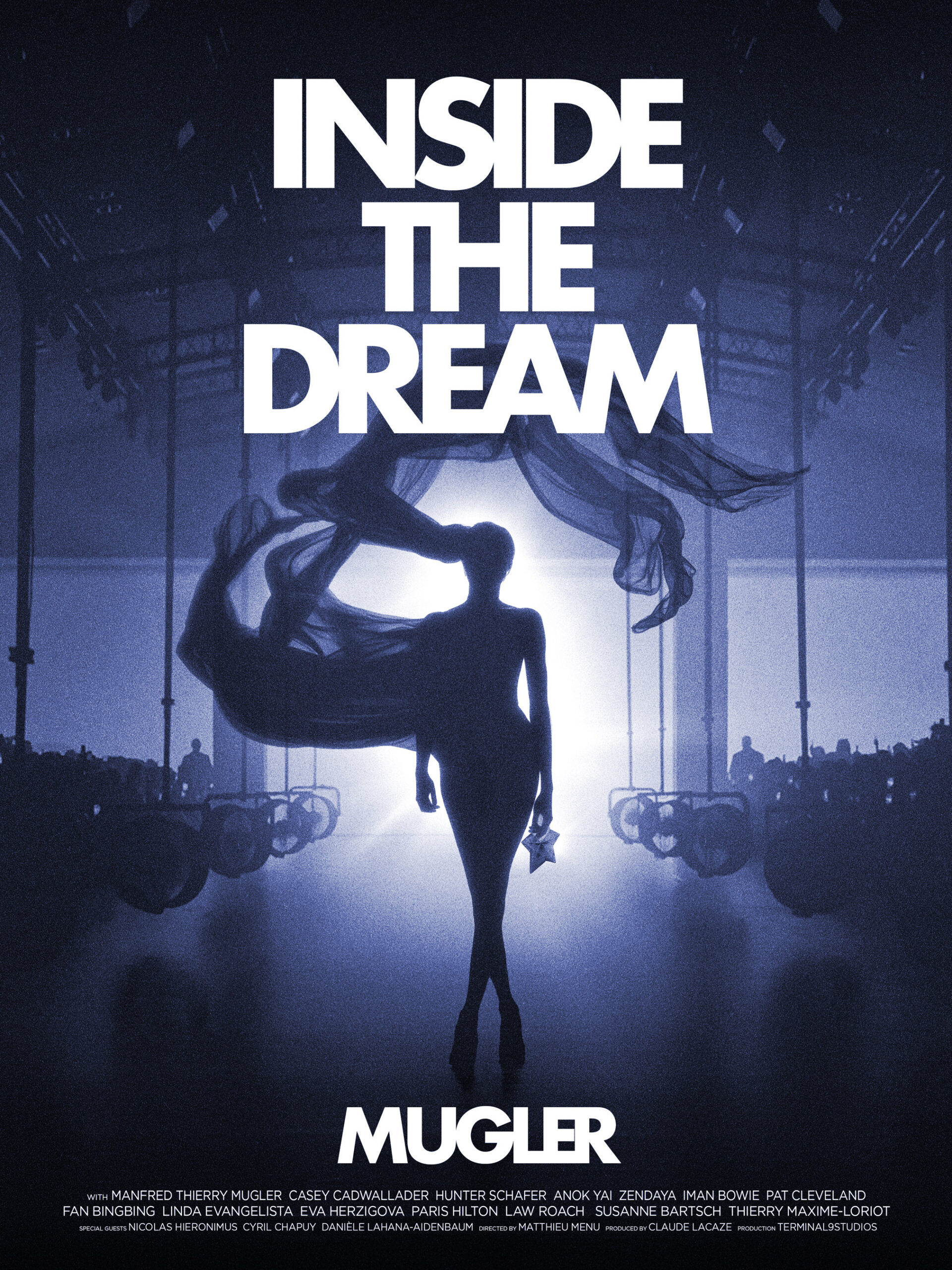
Mugler Unveils Inside the Dream: A Documentary Exploring the French Fashion House’s 50th Anniversary
INSIDE THE DREAM: MUGLER, THE NEW DOCUMENTARY

Isa Bernal Steiner Is Following Her Curiosity Wherever It Goes
Still Discovering What’s Possible

Life is Strange: Double Exposure Two Timelines. Twice the Suspects. One Impossible Mystery
By DaMarko Webster The latest trailer for Life is Strange: Double Expo
Alexie Olivo Is Learning That Success Means Choosing Her Own Direction
Choosing purpose over expectation

War Between Humans and Machines Explodes in Netflix’s Animated Series ‘Terminator Zero’ Trailer
Netflix "Terminator Zero" revisits the classic conflict between humans