

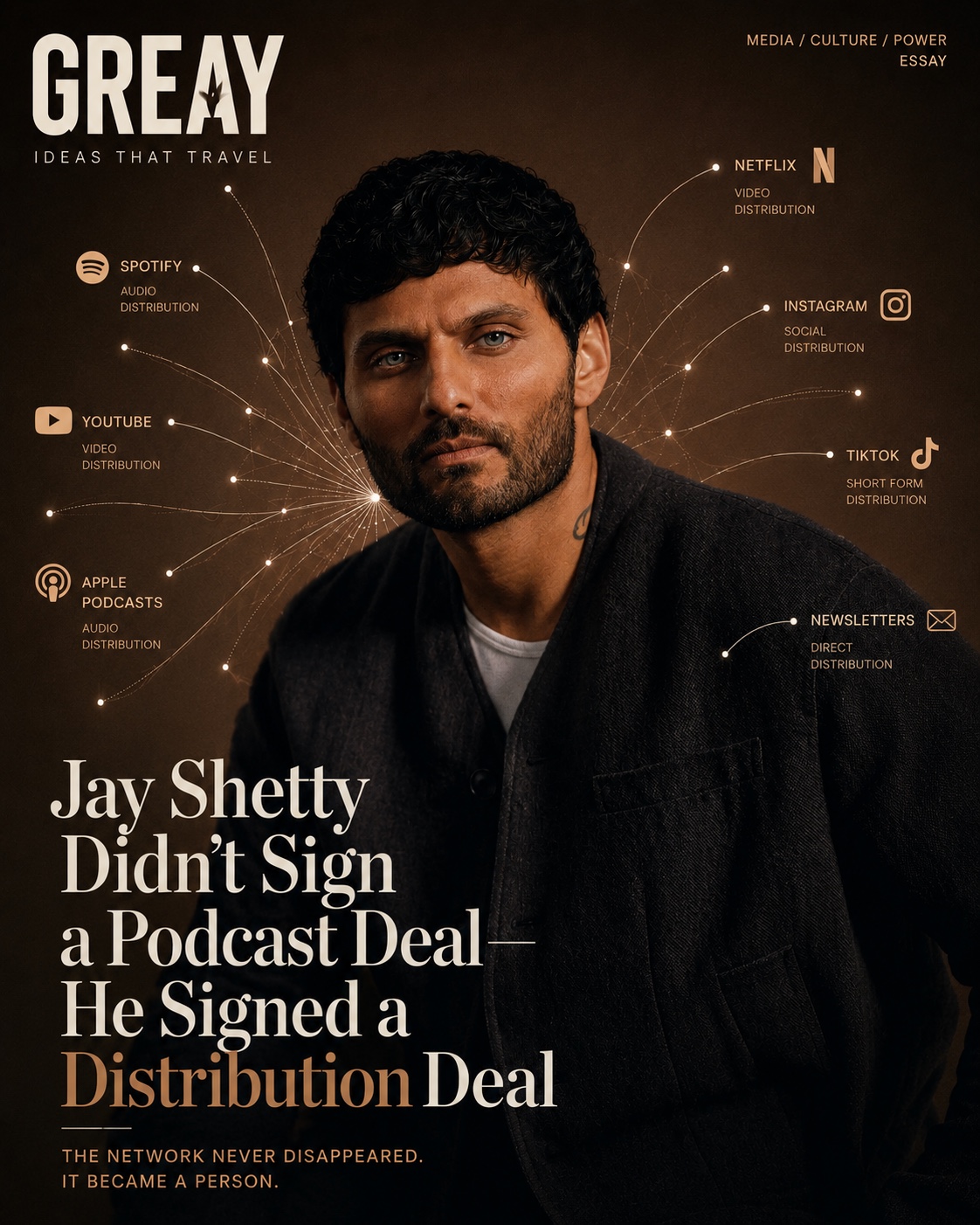
Jay Shetty Didn’t Sign a Podcast Deal—He Signed a Distribution Deal
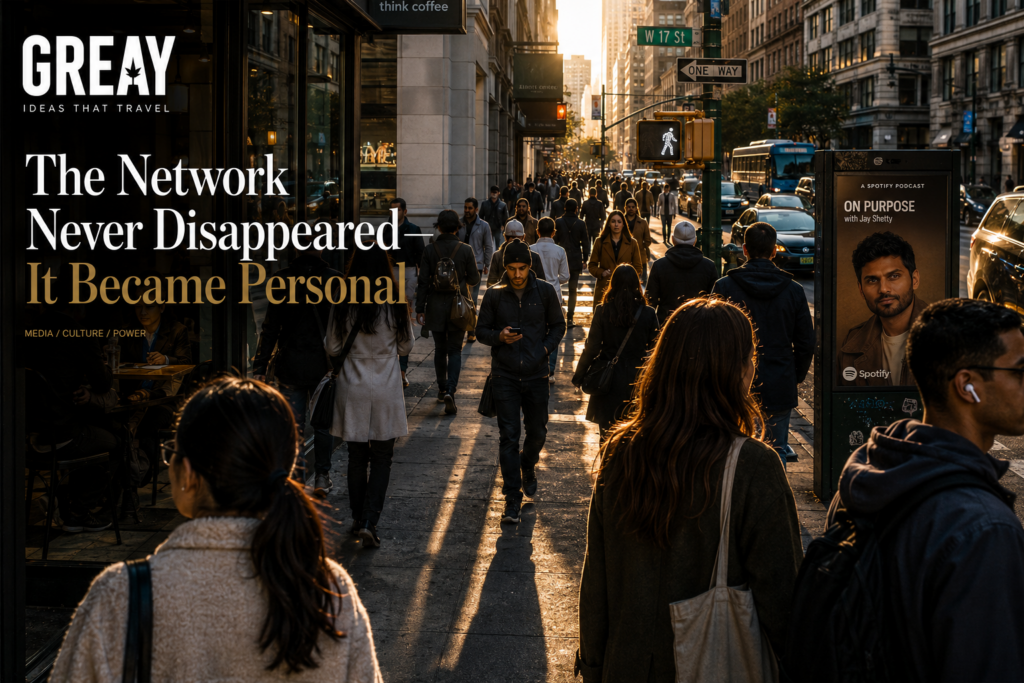
By Luke Cullans
The most important word in Jay Shetty’s reported $100 million deal is not podcast.
It is distribution.
The headlines will focus on the number because numbers are easy to understand. They create attention. They create conversation. They create a story.
But the money is not the story.
The story is what the money believes.
For decades, media companies competed to own content. Networks acquired television rights. Studios accumulated film libraries. Publishers expanded catalogs. The assumption was simple: own enough content and audiences would follow.
Today, that equation is changing.
Content is abundant.
Distribution is scarce.
Every day, millions of videos are uploaded. Thousands of podcasts are published. Countless articles, newsletters, and social posts enter the world. The internet solved the problem of creation years ago.
What it never solved was trust.
Trust determines what people watch.
Trust determines what people share.
Trust determines what people return to tomorrow.
And trust has quietly become one of the most powerful distribution systems in modern media.
That is what Jay Shetty built.
The interviews matter.
The guests matter.
The production quality matters.
But none of those things explain the scale of the reported deal.
The asset is the relationship.
Every week, millions of people willingly spend time inside an ecosystem built around a single voice. They listen during commutes. They watch between meetings. They encounter clips while scrolling. They bring the content into moments that once belonged to radio stations, television networks, and newspapers.
The audience never stopped moving.
The pathways simply moved with them.
For decades, distribution belonged to institutions.
Networks controlled access.
Studios controlled visibility.
Publishers controlled reach.
The internet promised something different.
Anyone could publish.
Anyone could broadcast.
Anyone could build an audience.
For a moment, it appeared as though gatekeepers had disappeared altogether.
Instead, something unexpected happened.
The gatekeepers became people.
The network did not disappear.
It became personal.
Today, audiences often trust individuals more than institutions. They follow creators across platforms. They move from YouTube to Spotify, from podcasts to newsletters, from social feeds to streaming services.
The relationship travels.
The audience follows.
The platforms become interchangeable.
This is what makes the Jay Shetty deal significant.
It is not a bet on podcasting.
It is a bet on portability.
It is a bet on the ability to move attention from one environment to another.
That ability is becoming one of the most valuable assets in media because it reveals a truth many companies are only beginning to acknowledge:
The future belongs less to those who create content and more to those who direct attention.
This creates an interesting paradox.
The internet promised infinite distribution.
What it ultimately produced was concentrated trust.
Millions of people can publish.
Only a handful can consistently move audiences at scale.
The result is a media landscape that appears decentralized on the surface while becoming increasingly concentrated underneath.
The names changed.
The technology changed.
The platforms changed.
The function remained.
That is why deals like this matter.
Not because they tell us where podcasting is going.
Because they tell us where power is going.
Jay Shetty did not sign a podcast deal.
He signed a distribution deal.
And the size of that deal says less about content than it does about one of the oldest truths in media:
The most valuable asset is not the message.
It is the pathway through which the message travels.
Related Posts
Nike Extends Historic Partnership with NBA, WNBA, and G League Through 2037
Nike Inc. Lands Historic 12-Year Partnership Extension With NBA and WN

Urban Decay and Los Angeles Sparks Renew Sponsorship for 2024 WNBA Season
Urban Decay and Los Angeles Sparks Renew Sponsorship
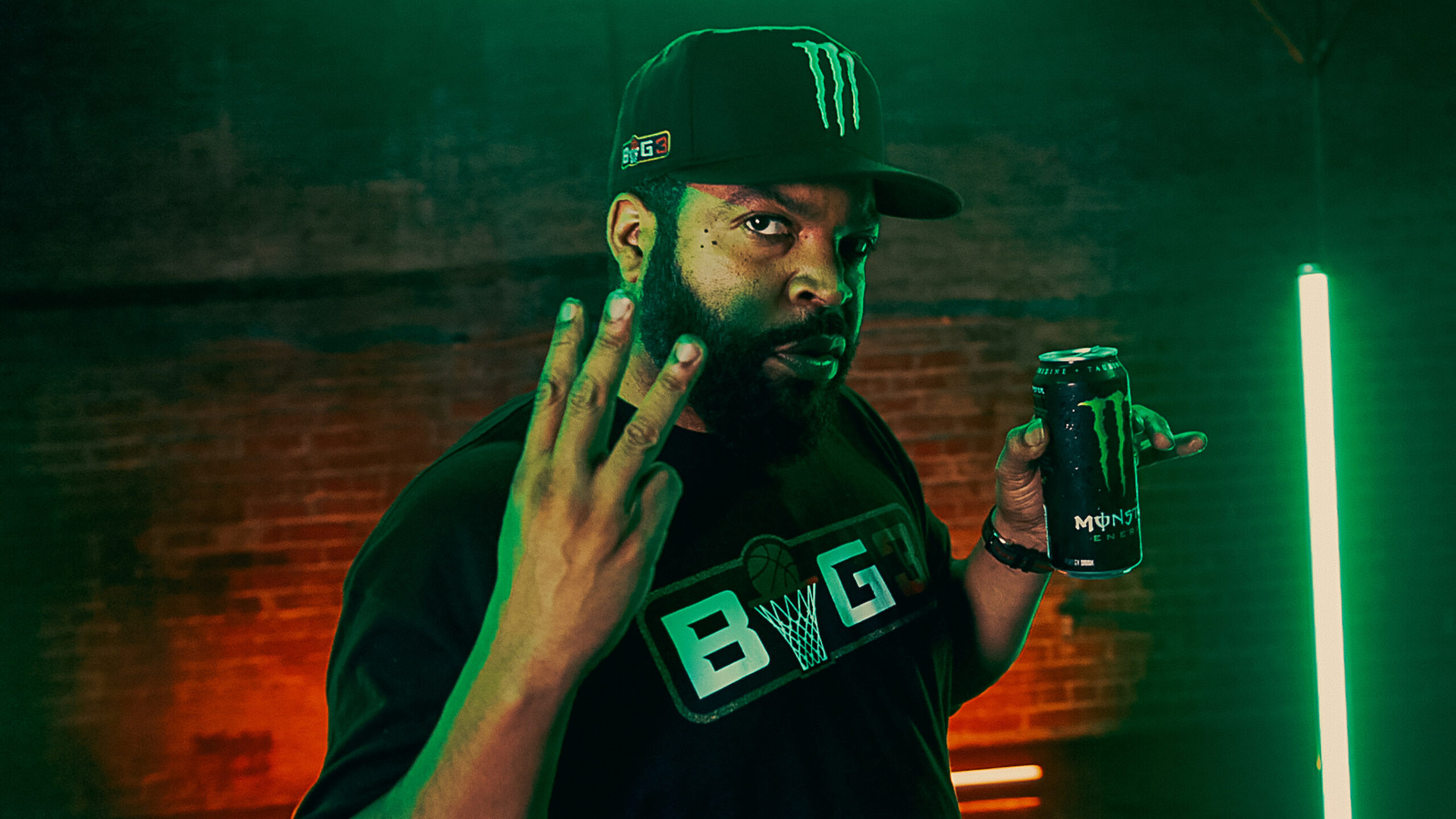
Monster Energy Returns as the Official Energy Drink Partner of the BIG3
MONSTER ENERGY BACK AS THE OFFICIAL ENERGY DRINK OF THE BIG3
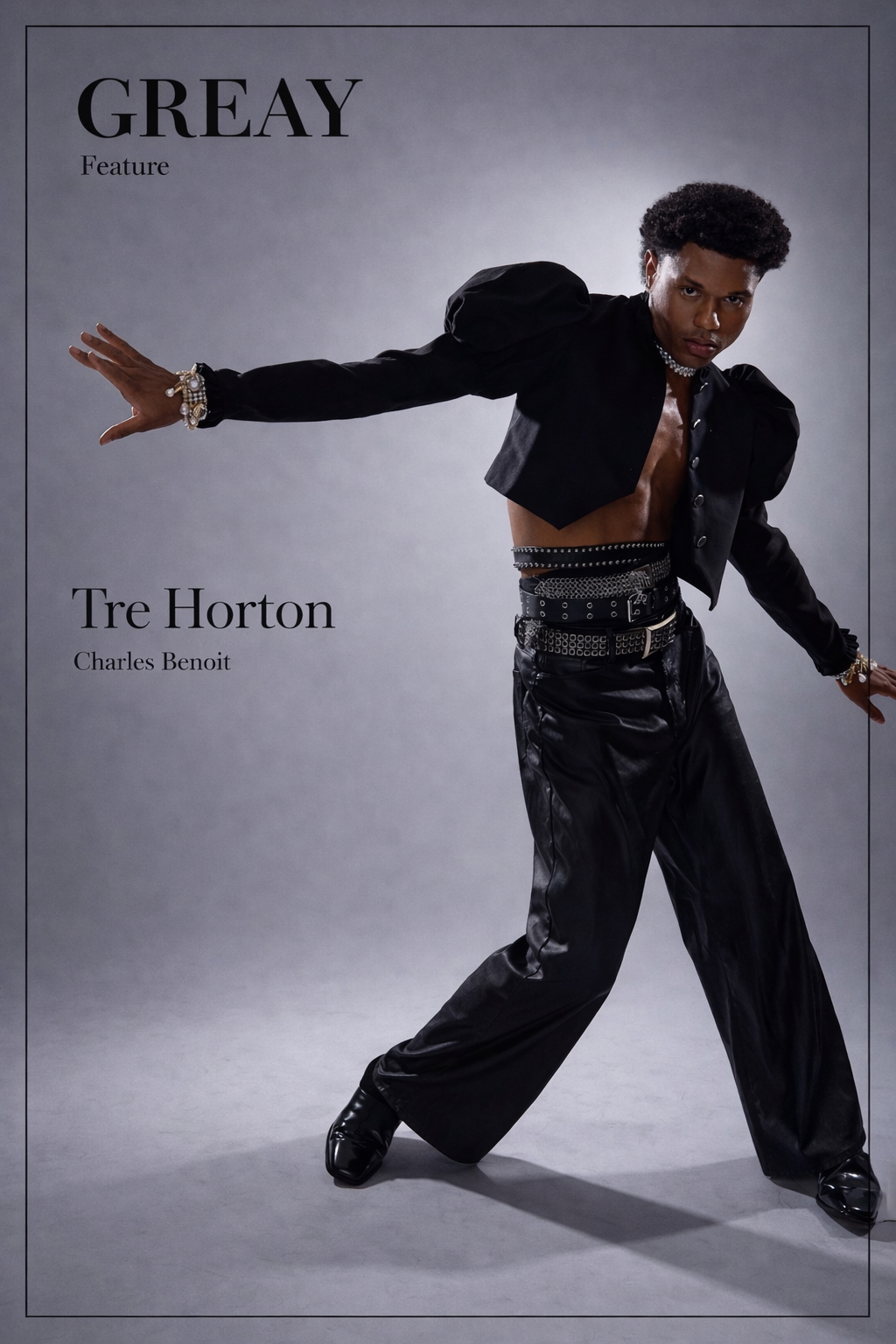
Tre Horton and the Discipline Behind the Moment
Not the Spotlight—The Structure

The Waldorf Astoria Miami Beach Isn’t Just Replacing the W—It’s Repositioning What Luxury Means
The Business of Luxury

Now You See Me: Now You Don’t” Trailer Drops, Teasing Diamond Heist and Star-Studded Return
Magic, Mischief, and Diamonds: “Now You See Me 3” Set for Fall Rel