

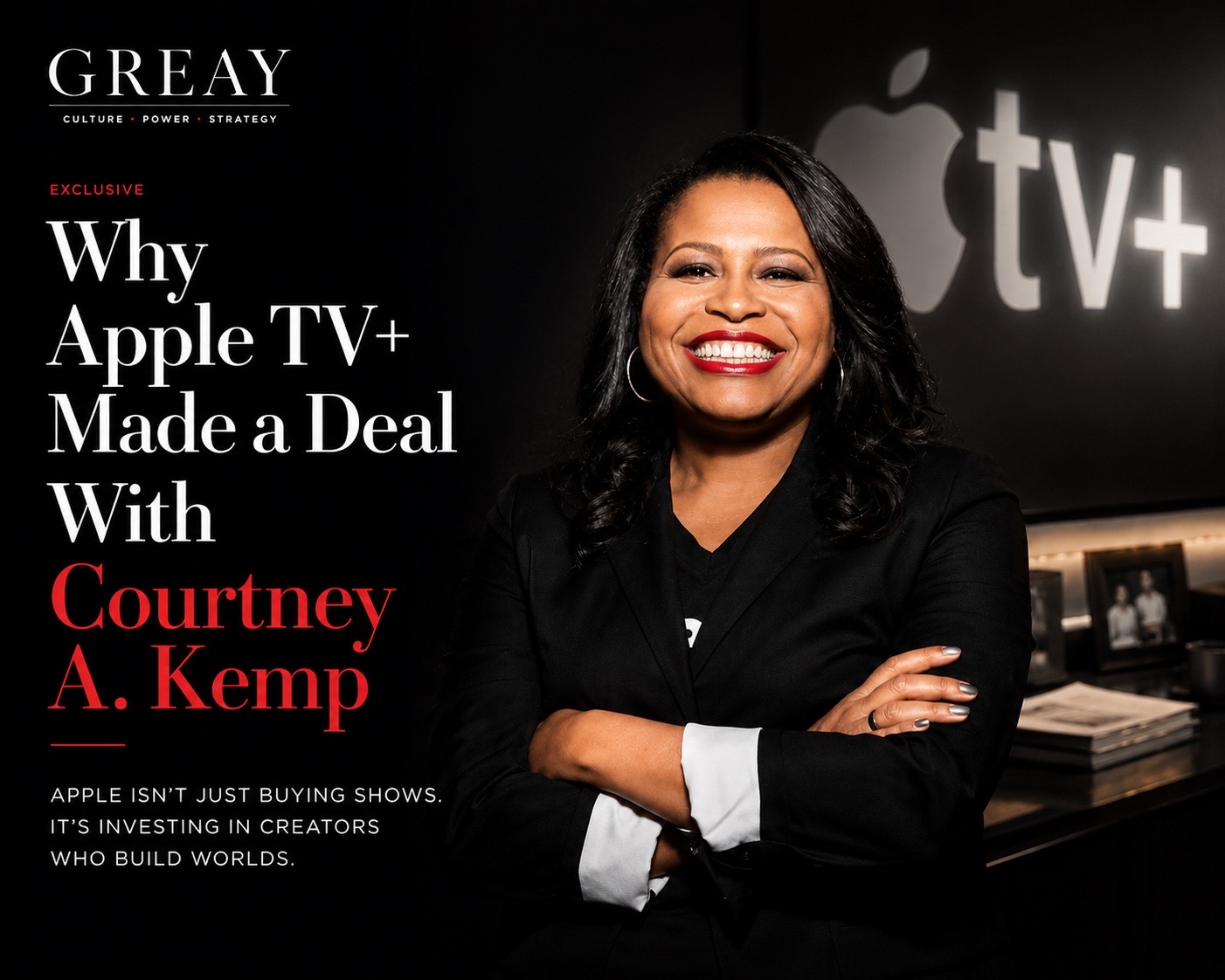
Why Apple TV+ Made a Deal With Courtney A. Kemp
By DaMarko GianCarlo
For years, the streaming wars were measured by volume.
Who had the biggest library.
Who released the most originals.
Who could keep audiences endlessly scrolling through an infinite wall of content.
The strategy made sense. Streaming platforms were trying to replace cable television, and cable conditioned audiences to associate abundance with value. More channels meant more power. More programming meant more leverage. The interface itself became the business model.
But the economics of streaming have changed.
And with them, the definition of value has changed too.
Today, the most important thing a platform can own may not simply be content volume anymore. It may be cultural gravity — the ability to build worlds audiences emotionally return to over time.
That is what makes Apple TV+ making a multi-year overall deal with Courtney A. Kemp significant.
Because Kemp does not simply represent a successful television producer. She represents something increasingly valuable in modern Hollywood: a creator capable of engineering durable narrative ecosystems.
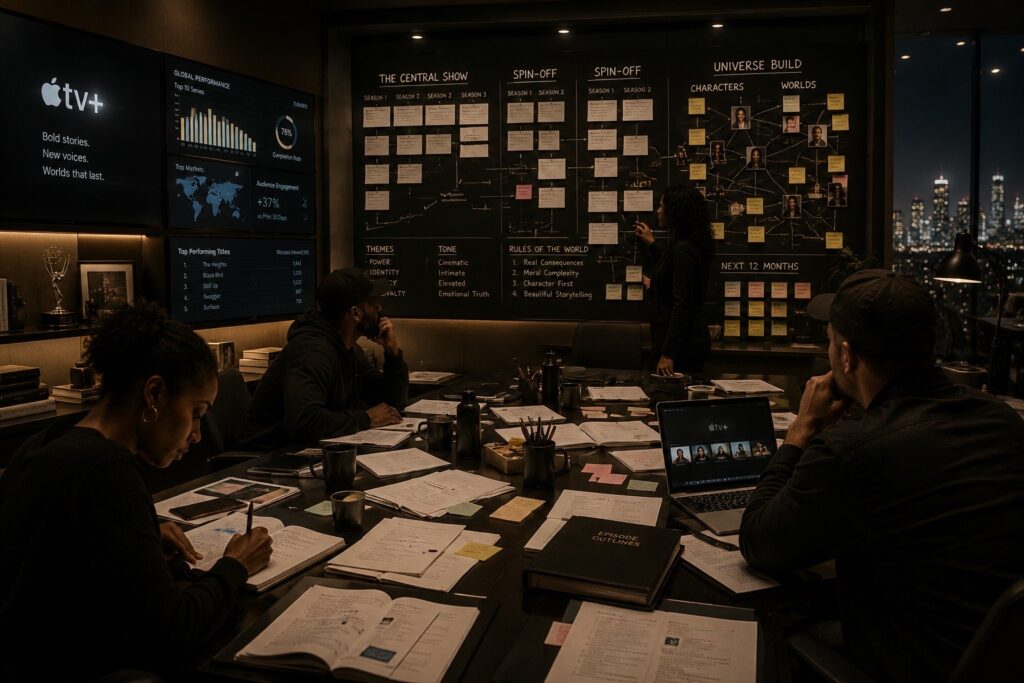
The Power universe was never just a hit series. It became an expandable environment. Spin-offs multiplied. Audiences stayed connected to the identity of the world itself. Characters evolved into long-term infrastructure. Storylines became recurring engagement systems. The franchise survived because viewers were not only attached to a single show — they were attached to the universe surrounding it.
That distinction matters.
Old Hollywood valued stars.
The first streaming era valued quantity.
The next phase may value world-builders.
And platforms are beginning to organize themselves accordingly.
Apple TV+ has consistently operated differently than many of its competitors. While some streaming services pursued industrial-scale output, Apple positioned itself closer to a prestige ecosystem: fewer releases, higher production value, carefully managed aesthetics, and selective creator partnerships. Even the platform’s visual identity feels more curated than chaotic.
That positioning changes the type of creators Apple needs.
A volume-first platform requires endless production pipelines. A prestige-first platform requires cultural architects — creators capable of building worlds with long-term emotional and commercial durability.
Courtney A. Kemp fits that model almost perfectly.
Because in today’s entertainment economy, the most valuable creators are no longer simply writers or producers. They are ecosystem engineers. They create universes capable of extending across multiple series, sustaining audience loyalty between seasons, generating continuous online conversation, and producing value long after an initial premiere.
Streaming platforms once competed over who could release the most content. Increasingly, they are competing over who can create the deepest audience relationship.
That is a very different business model.
The shift also reveals something larger happening across Hollywood itself. Intellectual property is no longer the only asset that matters. The people capable of repeatedly generating emotional infrastructure around that IP are becoming just as valuable.
In other words, Hollywood is no longer merely buying shows.
It is buying narrative durability.
That is why deals like this matter beyond trade headlines. They are signals. Structural indicators. Evidence that the entertainment industry may be moving away from the “infinite content buffet” era and toward something more curated, identity-driven, and ecosystem-oriented.
The platforms that survive long-term may not necessarily be the ones with the most programming.
They may be the ones that understand how to build worlds audiences emotionally choose to live inside.
Courtney A. Kemp already proved she can build one.
Now Apple TV+ wants that capability inside its infrastructure.
Related Posts

Lights, Camera, Vacation! Coppola’s Latest Hotel is a Cinematic Dream Come True
Francis Ford Coppola Opens The All-Movie Hotel In Georgia

Steven Bartlett and Authentic Are Building a System to Turn Creators Into Companies
The New Creator Economy Begins After the Follow

Paris Saint-Germain Set to Unveil World’s Largest Store on New York’s Fifth Avenue
Paris Saint-Germain, the prominent French soccer team, is unveiling a


Disney Unveils Official Trailer for Live-Action Snow White
Disney releases Trailer for Upcoming 'Snow White' Live-Action.
Zibby Allen: Acting in the Space Between Feeling and Form
Performing the Unspoken