

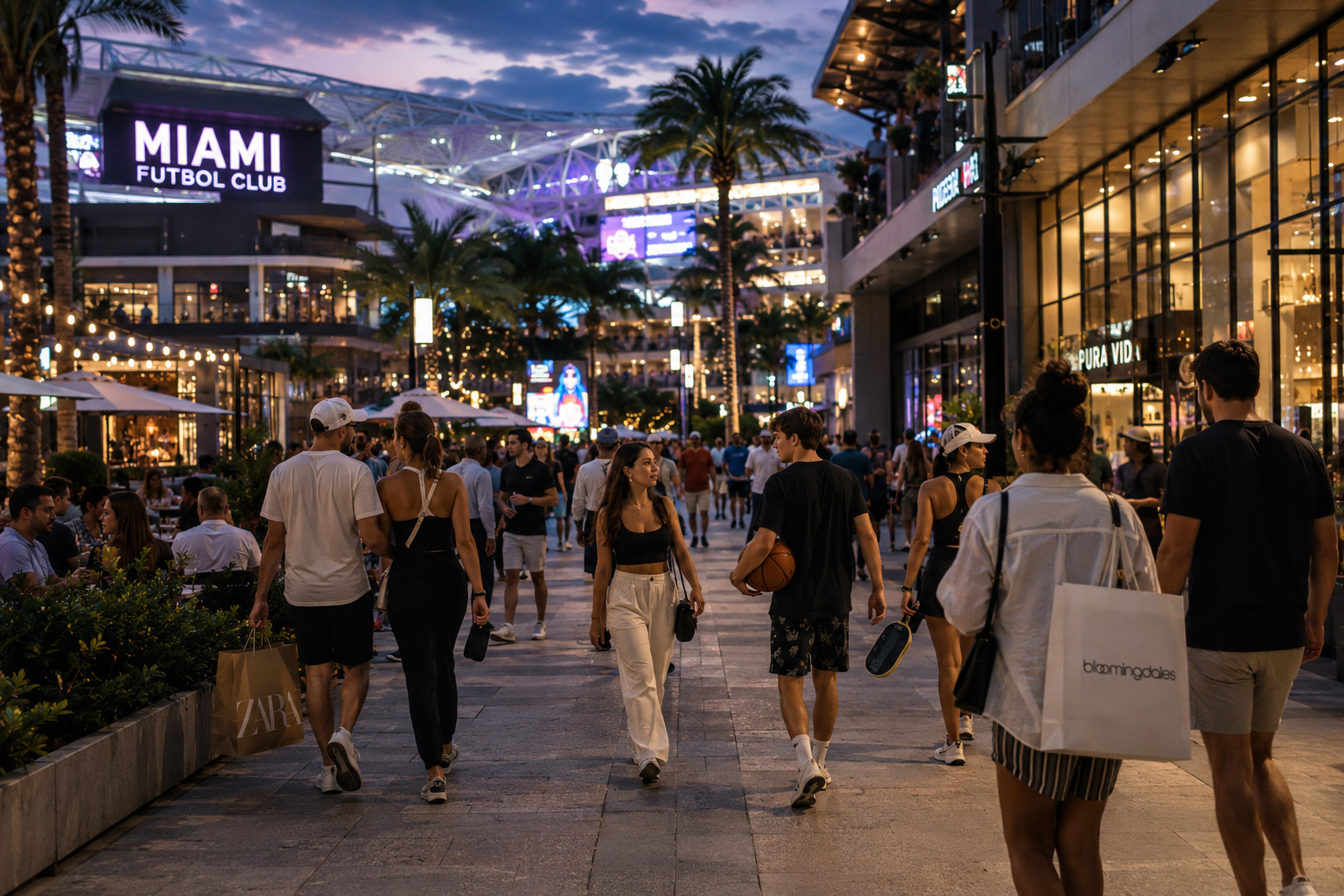
Sports Infrastructure Is Becoming Real Estate Infrastructure — And Miami Is Next
By Issac Rios
The modern stadium is no longer being designed as a place people visit a few times a year.
It is increasingly being engineered as a permanent economic environment.
That shift is becoming visible across America. Atlanta transformed the area surrounding Truist Park into The Battery — a year-round ecosystem of restaurants, hotels, offices, apartments, and entertainment. Los Angeles turned SoFi Stadium and Hollywood Park into a mixed-use district designed to operate far beyond football season. Dallas expanded “The Star” into an infrastructure layer that blends sports, hospitality, corporate space, and lifestyle branding into a single environment.
The venue is no longer the entire business.
The district is.
And now Miami appears to be entering the next phase of that transformation.
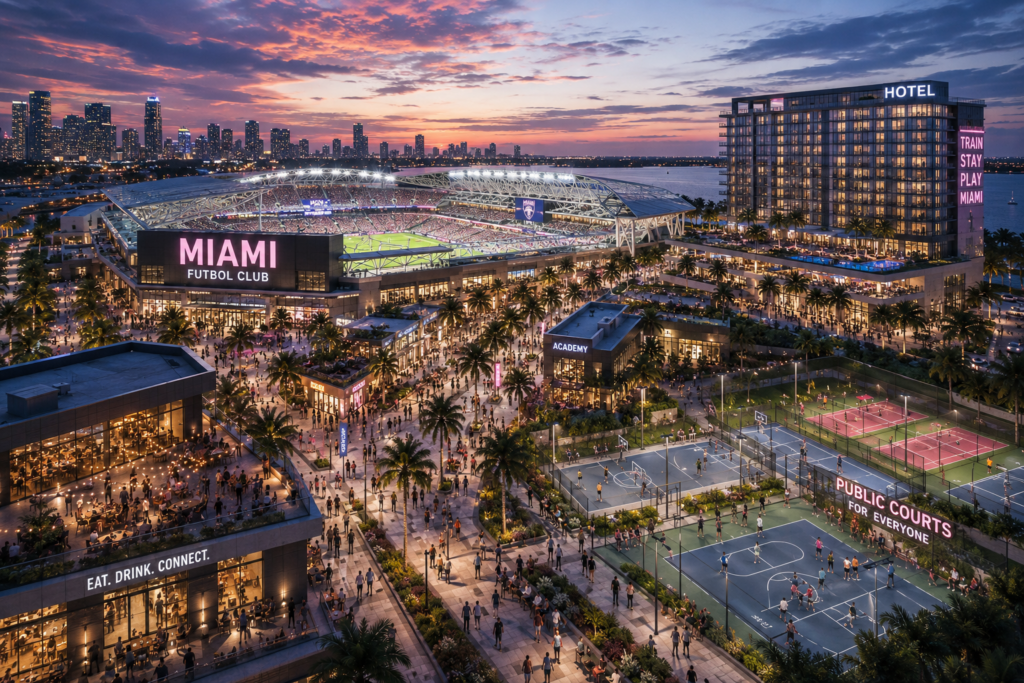
The newly announced $280 million Sports Performance Hub planned for Homestead is being positioned as far more than a stadium project. The 100-acre development is expected to include a 10,000-seat stadium for FC Miami, a hotel, training facilities, sports academies, and public courts for basketball, tennis, and pickleball. Former NBA star Manu Ginóbili has reportedly joined the athlete-backed initiative, which is expected to open in 2028.
On paper, it sounds like a sports complex.
In practice, it resembles something much larger: a recurring engagement ecosystem.
That distinction matters.
Because modern sports infrastructure is increasingly being designed around one core objective — keeping people inside an economic environment for as many hours, days, and years as possible.
The old stadium model relied heavily on event-based traffic. Fans arrived. Games ended. Parking lots emptied. Revenue spikes were tied to schedules.
The new model seeks permanent circulation.
Hotels keep visitors overnight. Retail and restaurants extend spending beyond the match. Public courts create daily activity instead of seasonal attendance. Youth academies bring families into the ecosystem years before professional fandom fully develops. Offices, residential towers, and entertainment spaces transform sports districts into lifestyle districts.
The result is that sports infrastructure increasingly behaves like real estate infrastructure.
Not symbolic real estate.
Literal real estate.
Land value. Foot traffic. Hospitality. Density. Recurring engagement. Lifestyle integration. Mixed-use monetization.
The stadium becomes the anchor tenant for a much larger system.
And Miami may be uniquely positioned for this evolution because the city already operates at the intersection of tourism, luxury development, international migration, celebrity culture, and global sports visibility. The arrival of Lionel Messi accelerated Miami’s positioning inside the global football economy, but the city’s broader transformation has been building for years. Sports simply gives developers and investors another mechanism to organize movement, attention, and economic gravity.
That is why projects like this matter beyond athletics.
They reveal how cities are increasingly competing through atmosphere.
The modern sports district is no longer designed only for fandom. It is designed for identity. For tourism. For residency. For content. For hospitality. For recurring visibility. For daily life itself.
And perhaps most importantly, athletes themselves are beginning to move deeper into ownership structures surrounding these ecosystems. For decades, athletes primarily operated as endorsers — faces attached to products, campaigns, and franchises they did not control. Increasingly, they are entering the infrastructure layer instead: ownership groups, development projects, investment syndicates, hospitality ventures, and long-term real estate ecosystems.
The economics are changing from appearance to permanence.
From sponsorship to territorial influence.
That is the larger signal emerging underneath projects like Miami’s Sports Performance Hub.
This is not simply about where games are played.
It is about how cities are being reorganized around continuous engagement economies where sports function as the emotional entry point into much larger systems of commerce, identity, and urban development.
The stadium is no longer the destination.
It is becoming the center of an ecosystem designed to keep the city moving around it.
Related Posts
From Dunder Mifflin to the Toledo Truth Teller: Peacock Drops Trailer for The Office Spinoff, The Paper
From Paper Company to Newspaper Company

“Team Chipotle” Unveils Limited-Time Menu Featuring Favorite Orders of America’s Top Athletes
Chipotle brings back gold foil burritos in the U.S.

Bad Bunny and the End of Cultural Permission
Authority Travels Differently Now
Ben Hundreds Opens The Benjamin in Hollywood, Serving American Classics in a 1920s Art Deco Setting
Ben Shenassafar is stepping into the restaurant scene.

Bang & Olufsen Unveils Cutting-Edge London Boutique: A Futuristic Tech Haven
Danish electronics giant Bang & Olufsen is setting its sights on an ex
VertTV Shows That Hollywood Is Building the Next Generation of Television
A filmmaker-led studio built for the vertical era