


Ellenore Scott Is Choreographing Emotional Truth on Broadway

There are choreographers who create movement, and then there are artists who understand what movement does to people emotionally once it enters a room. Ellenore Scott belongs to the second category.
What made this Broadway season feel so defining was not simply the amount of work Scott delivered. It was the emotional distance between the worlds she entered — the historical weight of Ragtime and the absurd freedom of Titaníque. Most artists spend years becoming associated with one recognizable creative language. Scott spent this season proving she could move between entirely different emotional ecosystems without losing the humanity underneath any of them.
That humanity is the thread connecting all of her work.
Even when discussing choreography itself, Scott rarely speaks about movement in a purely technical way. She speaks about emotional truth. About responsibility. About storytelling. Early in the process of building these productions, she reminded herself that her “most important job as a choreographer is to help tell the story, versus adding as much cool dancing as possible.”

That philosophy quietly explains why her work feels so emotionally lived-in. Nothing feels performative for the sake of performance. The movement always appears connected to a larger emotional consequence.
Nowhere was that more visible this season than in Ragtime, the production that earned Scott her first Tony nomination. Tony Awards
Ironically, Scott never approached Ragtime as a traditional “dance show.” In fact, she understood early that the emotional responsibility of the production would require restraint rather than spectacle. So much of the storytelling, she explains, existed in “how the actors move through the world and space.”
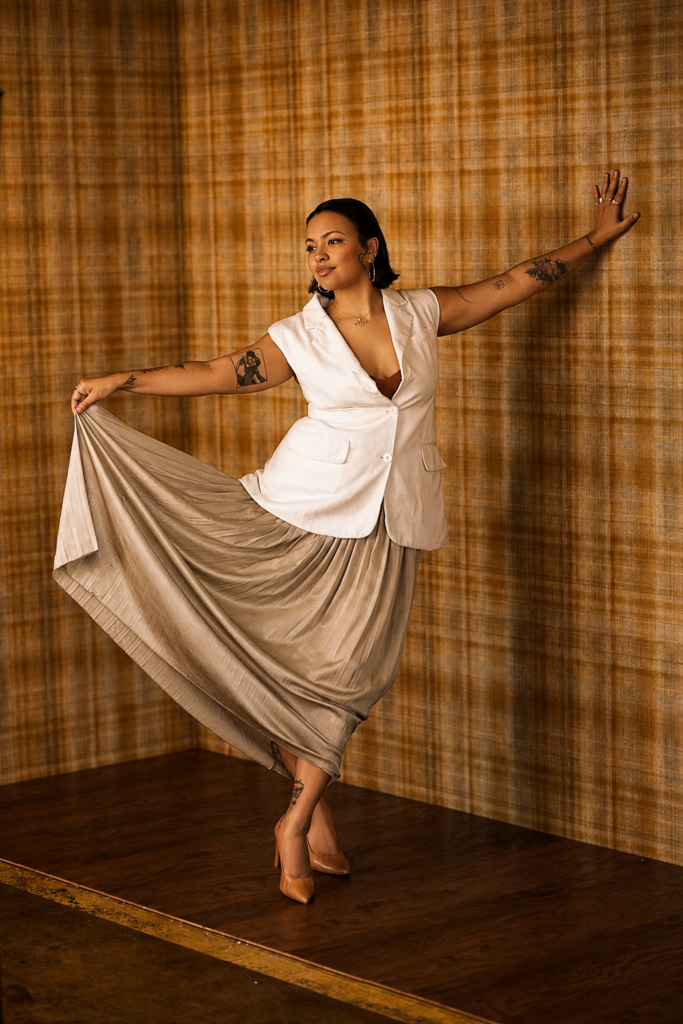
That distinction matters because Scott approached the production less like choreography and more like emotional truth translated physically.
The physical language of each community inside Ragtime became intentionally distinct. New Rochelle carried posture and structure. Harlem moved with grounded emotional connection. The immigrant communities carried heaviness while still holding onto hope. Those choices were not aesthetic flourishes layered onto the production afterward. They became part of the emotional infrastructure of the story itself.
And then there is the moment Scott still describes with visible emotional weight: the destruction of Coalhouse Walker Jr.’s car.
For Scott, the Model T was never simply a prop. It represented dignity, ambition, labor, and self-worth. The violence inflicted upon it had to feel larger than physical destruction. It had to feel spiritual. That is why the men of Harlem physically build the car onstage before it is later destroyed. The audience is forced to emotionally understand what is actually being attacked in that moment.
“It’s difficult to watch,” Scott admits, “but it’s one of the moments I’m most proud of creating.“
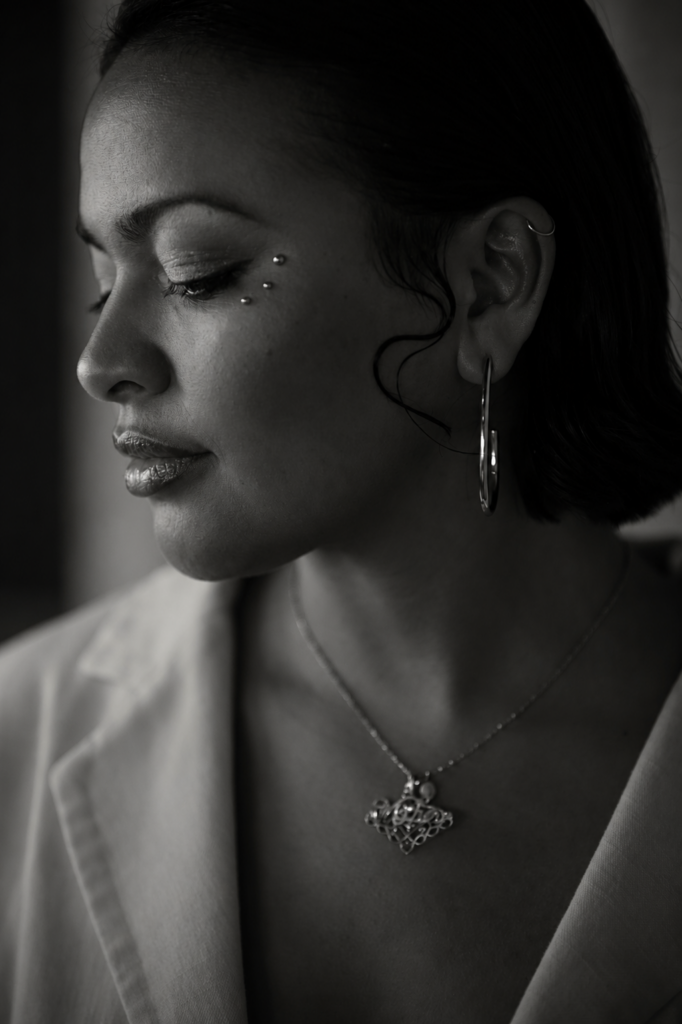
That sentence reveals something essential about her artistry. Ellenore Scott is not interested in movement that exists independently from emotional reality. Even her most technically impressive work still feels tethered to human consequence.
Which makes the transition into Titaníque almost hilarious in the best possible way.
Scott laughs while describing the production as “kooky crazy,” but what makes the show work is precisely that nobody involved is apologizing for the absurdity of it. The choreography leans directly into the chaos instead of trying to intellectualize it into something respectable. Actors break the fourth wall. Audiences become part of the rhythm of the show itself.
“There is an inherent freedom built into something this fun and absurd,” Scott explains.

That freedom reveals another dimension of her creative intelligence: tonal discipline. Scott understands that emotional honesty does not always mean seriousness. Sometimes truth exists inside release, humor, and theatrical chaos. Her work on Titaníque feels just as emotionally intentional as her work on Ragtime, even though the productions could not be more stylistically different.
But perhaps the most human part of this entire season existed offstage.
Because underneath the acclaim, the nominations, and the transfers was exhaustion.
Scott choreographed Ragtime while pregnant. The day after opening, she gave birth to her son, Ford. Two months later, Titaníque transferred. During tech for Titaníque, she simultaneously directed and choreographed other work while balancing motherhood and one of the most creatively demanding seasons of her career.
When she reflects on the experience now, there is humor in her voice, but there is also honesty.

“I am a shell of who I was,” she says, laughing while still sounding emotionally transparent about the toll the season took mentally, physically, emotionally, and spiritually.
That honesty gives this season additional weight.
The entertainment industry often romanticizes impossible output because audiences only see the finished image. They rarely see the emotional negotiations underneath it. Scott does not hide from that reality. She openly discusses fighting imposter syndrome throughout the process, questioning whether she was giving enough of herself to her work, her family, her child, and the people around her.
And yet somehow, that vulnerability may actually be the reason her work resonates so deeply.

Because even while discussing career milestones, Scott continually redirects the conversation back toward people.
That instinct becomes especially visible when she speaks about directing and choreographing the one-night-only concert presentation of For Colored Girls at the Appel Room at Jazz at Lincoln Center honoring the 50th anniversary of the original production.
She understood immediately that this was not simply another concert. For many people, the work exists as cultural memory itself.
There was responsibility attached to that.
There was emotional inheritance attached to that.
And when Ntozake Shange’s family attended and expressed pride in this reimagining, Scott finally allowed herself to feel proud too.

That detail says everything.
Not the nomination.
Not the headlines.
Not the season itself.
The trust.
That seems to matter most to her.
Even when speaking about legacy, Scott avoids grand declarations. There is no obsession with self-mythology or untouchable artistic identity. In fact, after one of the most defining seasons of her career, her answer becomes surprisingly simple.
“I want to be the type of artist that people want to work with again and again,” she says, “because they like my work, and because they want me in the room.“

In many ways, that may already be the legacy Ellenore Scott has built.
Not simply choreography.
Not simply direction.
Not even recognition.
But emotional trust inside the room itself.
And maybe that is why this Broadway season feels larger than awards or campaigns.
Because while the industry was busy recognizing Ellenore Scott’s work, what audiences were actually witnessing was an artist creating emotional worlds sturdy enough for other people to safely step inside them.
Photographer DaMarko GianCarlo @DaMarkoGiancarlo
Words Kyra Greene @noteasybingreen
Creative Director Aric L Johnson
Wardobe Stylist Aric L Johnson @aricljohnson
Hair/ Make up JamiLei Silva @jamileisilva
Produced By GREAY Firm & First Sight International LLC
Related Posts
Austin Nichols Doesn’t Force the Scene — He Lets It Reveal Itself
The Actor Who Became a System
Eve Harlow Builds Through Structure, Then Lets It Breathe
Awareness Is Authority

Violet McGraw Is Learning That Becoming Yourself Is Not a Race
Growing with curiosity, kindness, and the freedom to remain herself
David Del Rio from Broadway to Courtroom
David Del Rio a man with many talents.

Lamar richardson Breaking standards in A broad way
Lamar Richardson 2x Tony Winner