

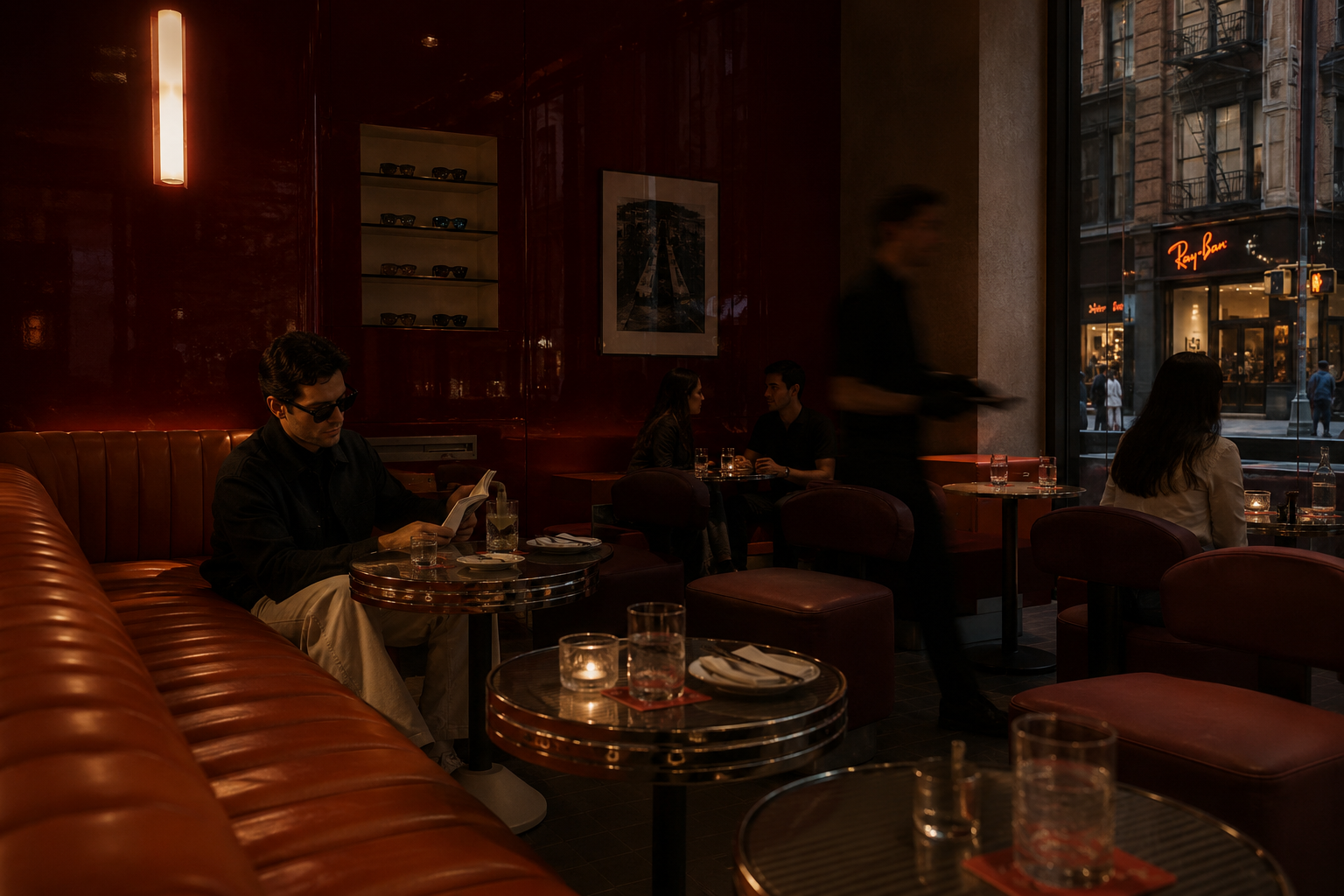
Ray-Ban Is Building Atmosphere
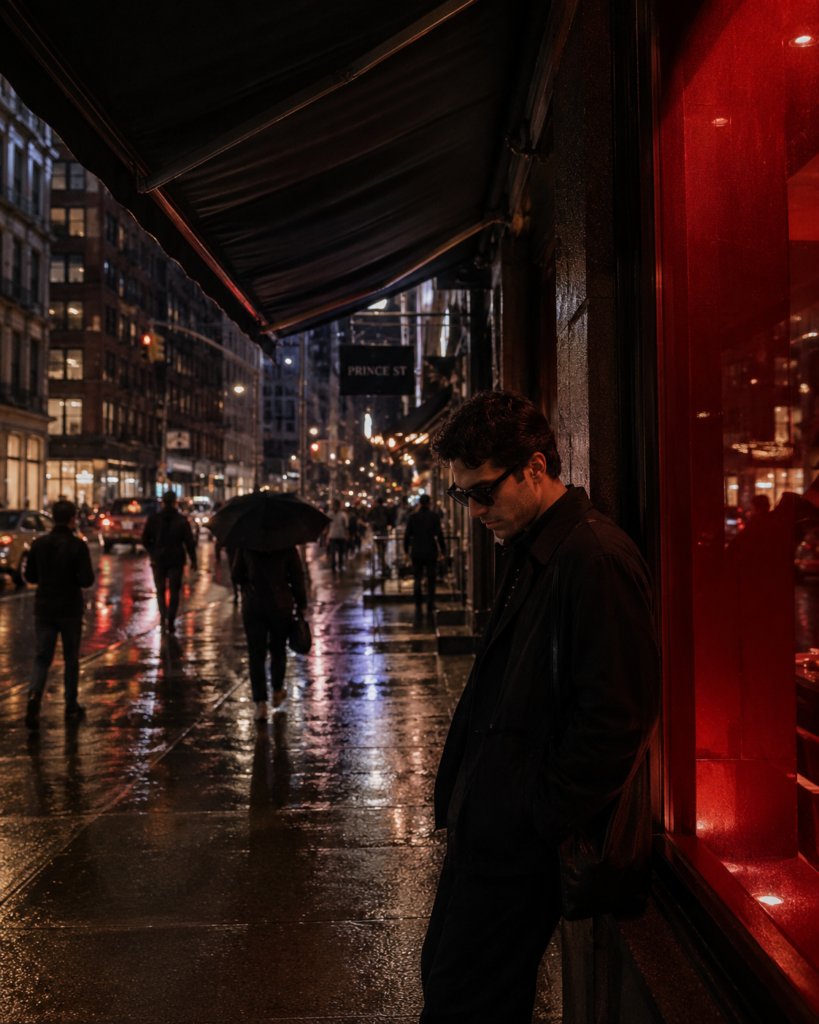
By Xavier Newman
There was a time when a brand only needed a storefront.
A clean window. Good placement. Enough cultural relevance to make someone stop walking for a moment and step inside.
That era is ending.
Today, the most ambitious brands are no longer designing stores. They are designing environments people emotionally enter. The object is still there — the sunglasses, the sneaker, the bag, the coffee, the candle — but increasingly, the object is only one layer of a much larger system.
That is what makes Ray-Ban opening Ray-Ban House in New York City feel important beyond retail news.
On paper, it sounds simple: an eyewear boutique paired with a design-forward café in SoHo.
But culturally, this is something else entirely.
Because the moment a fashion or lifestyle brand begins integrating hospitality, food, architecture, and social experience into the same physical environment, the brand stops behaving like a product company. It starts behaving like a world.
And modern luxury increasingly depends on world-building.
The details matter. The red lacquer walls. The chrome café tables. The low seating. The Japanese-Italian fusion menu. The shokupan milk bread. The carefully controlled lighting. None of it exists accidentally. Every material decision contributes to emotional atmosphere.
The goal is not simply to sell eyewear.
The goal is to construct a feeling people want to remain inside.
That is the larger shift happening across luxury and lifestyle industries right now. Brands no longer compete only through product quality or advertising reach. They compete through environmental immersion. Through emotional architecture. Through the ability to shape how a person experiences time inside a space.
In the past, luxury asked consumers to purchase status.
Now luxury asks consumers to inhabit identity.
That distinction changes everything.
A café inside a retail concept is not really about coffee margins. The restaurant is not there because sandwiches are suddenly central to Ray-Ban’s business model. The hospitality component performs a different function entirely: it slows the consumer down long enough to absorb the brand emotionally.
The longer someone stays, the deeper the imprint becomes.
This is why so many modern brands are moving toward hospitality ecosystems:
- Louis Vuitton cafés
- Ralph Lauren restaurants
- Alo wellness spaces
- Tiffany & Co. dining concepts
The pattern is no longer isolated. It is structural.
The store is evolving into a social environment.
And underneath all of this sits a deeper reality about modern consumer behavior: people increasingly seek places that validate who they believe they are becoming.
Not just products.
Not just aesthetics.
But environments.
Spaces that feel cinematic.
Spaces that feel emotionally coded.
Spaces designed to be remembered, photographed, revisited, and circulated online.
That last part matters more than many companies openly admit.
Because today, architecture itself has become media.
A room that photographs well functions like distribution infrastructure. The seating arrangement matters. The warmth of the lighting matters. The texture of the walls matters. The visual coherence of the tableware matters. Entire hospitality spaces are now designed with social circulation in mind.
Not in the obvious “Instagram museum” way that dominated the late 2010s.
More subtly than that.
The best modern spaces understand that people no longer want environments that scream for attention. They want environments that quietly signal belonging. Rooms that feel cinematic without appearing staged. Luxury now performs itself through restraint.
That is why concepts like Ray-Ban House feel aligned with the current cultural moment. The atmosphere does not feel loud. It feels controlled. Intentional. Spatially aware. More lounge than store. More social habitat than retail floor.
The product becomes integrated into lifestyle instead of interrupting it.
And perhaps that is the most important signal hidden underneath this entire shift.
Retail used to revolve around transactions.
Now it revolves around emotional continuity.
Brands want to remain present before the purchase, during the experience, and long after someone leaves the building. The café, the music, the architecture, the seating, the food, the lighting, the visual language online — all of it extends the lifespan of the relationship.
In other words:
the store is no longer the destination.
The atmosphere is.
Related Posts
Ryan Coogler’s Creative Infrastructure
From film school collaborations to the Oscars

Silent Hill f: A Haunting New Chapter Set in 1960s Japan
Konami reveals first trailer for Silent Hill f.
HBCU Excellence Takes Center Stage at the Inaugural 2025 Toyota National Battle of the Bands Symphonic
Toyota National Battle of the Bands Symphonic to Debut at the Kennedy
Born Again, Uncontrolled: Inside the Radical World of Maggie Gyllenhaal’s THE BRIDE!
A Monster Falls in Love

Spike Lee’s “School Daze”: A Vital Piece of Black Cultural History
By DaMarko GianCarlo In the world of cinema, few directors have had as

Victor Wembanyama soars into the limelight as the latest house ambassador for Louis Vuitton
Victor Wembanyama is Louis Vuitton’s newest ambassador