

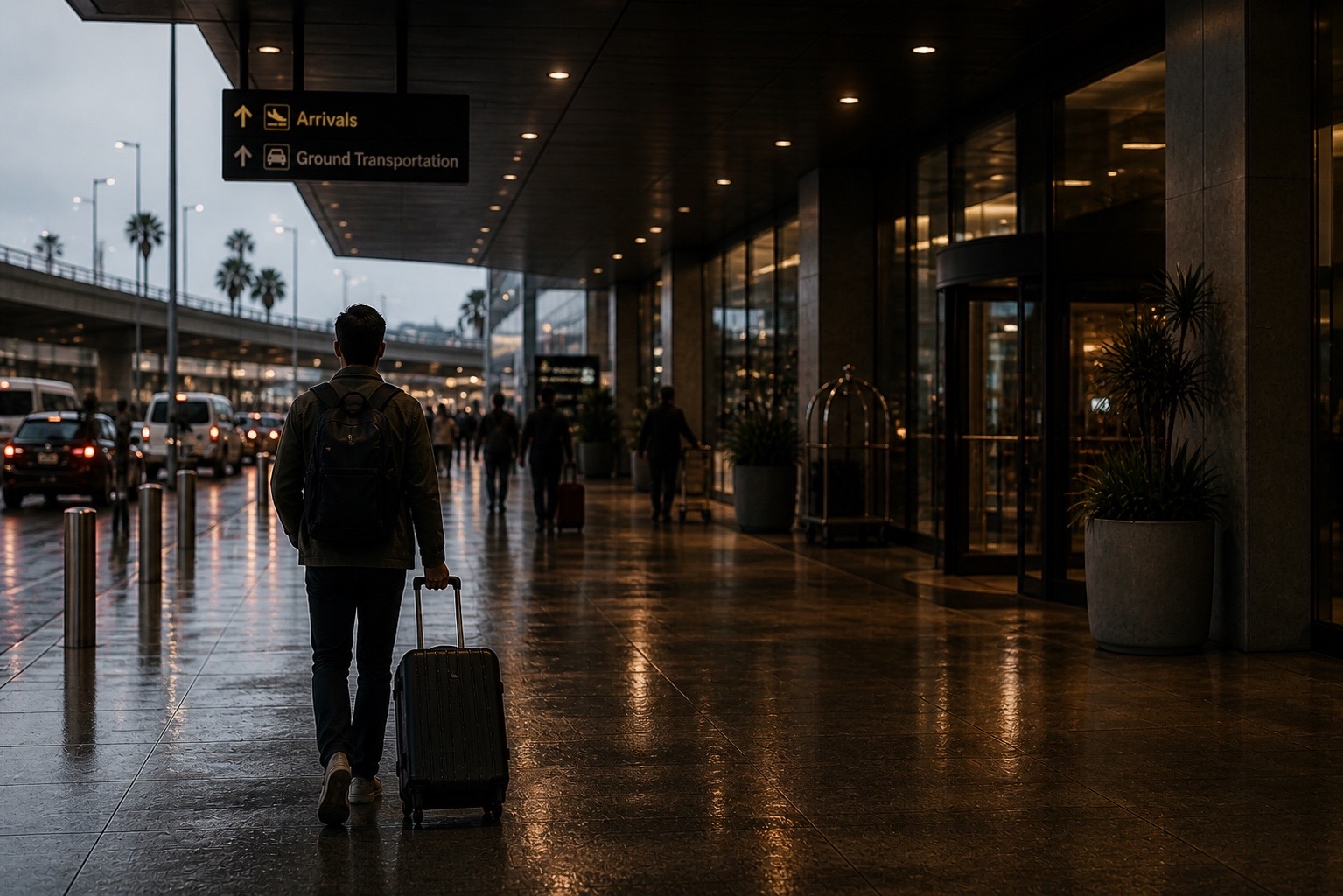
Uber Is Building a Travel System—Not a Product
By Lamont Kirkland
For years, Uber existed at the end of the decision.
You landed somewhere.
You opened the app.
You requested a ride.
Simple. Useful. Reactive.
But reactive products don’t shape behavior. They respond to it. And the companies that eventually redefine categories are rarely the ones waiting at the end of a process. They position themselves at the beginning—quietly becoming the layer that everything else moves through.
That’s why Uber introducing hotel booking through a partnership with Expedia matters more than it appears to.
This isn’t a feature expansion.
It’s a structural repositioning.
Because the real opportunity in travel was never transportation. And it was never hotels. The opportunity was always the space between decisions—the invisible coordination layer connecting movement itself.
Most travel platforms still think in categories. Flights. Hotels. Transportation. Restaurants. Experiences. Each service exists in its own interface, asking users to manually stitch together what is supposed to feel like one continuous journey.
But people don’t experience movement in categories.
They experience it in flow.
“I’m going somewhere.”
That’s the real product.
Everything else is infrastructure built around that sentence.
Uber understands this. Which is why the company doesn’t need to own hotel inventory to become more powerful inside travel. It simply needs to position itself at the moment intent begins.
Expedia supplies the inventory.
Uber owns the interface.
And the interface is where behavior is formed.
The second a hotel is booked inside Uber, the relationship changes. The app no longer understands you as someone requesting transportation. It understands you as someone in motion.
Where you’re going.
When you’re arriving.
How long you’re staying.
What type of trip you’re taking.
From there, the system begins connecting itself.
Airport transportation becomes expected instead of requested. Recommendations become contextual instead of generic. The journey stops feeling like a series of separate decisions and starts behaving like one continuous experience.
That’s the transition happening here.
Uber is moving from a moment-based utility to a movement-based system.
And systems are more powerful than products because systems remove friction people no longer want to think about. The most successful platforms aren’t the ones demanding attention every second. They become invisible through convenience. Quiet enough to disappear. Essential enough to become default behavior.
But this is where the conversation becomes larger than travel.
Because hotels are not the destination of this strategy. They are the cleanest entry point into a much larger category: movement.
Travel happens occasionally.
Movement happens constantly.
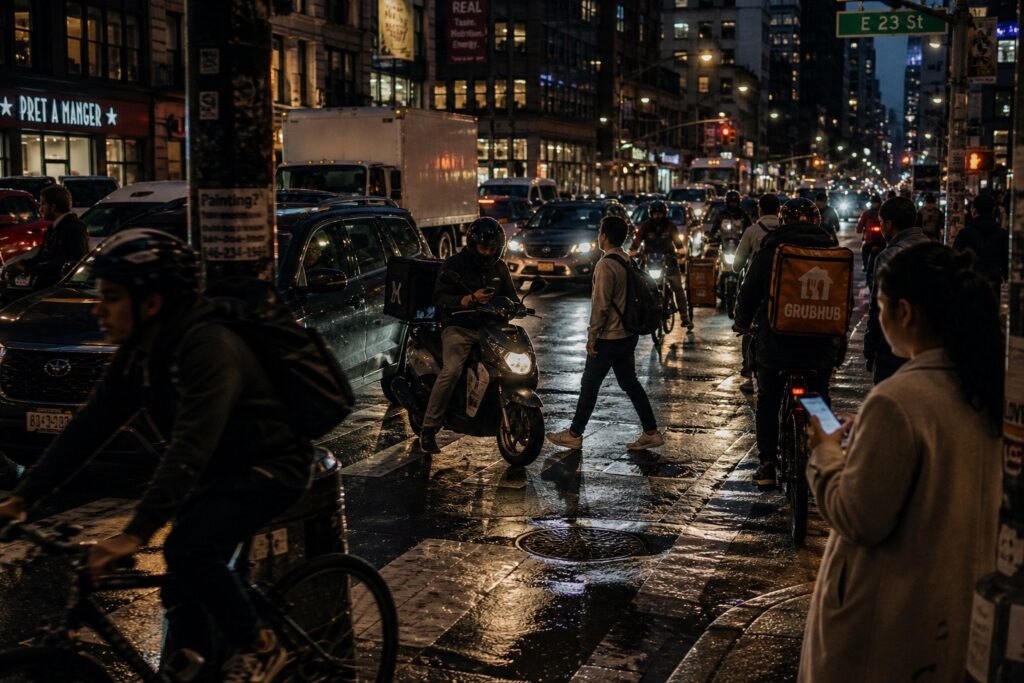
Morning commutes. Airport pickups. Dinner reservations. Grocery runs. Delivery riders weaving through traffic. Mopeds waiting at lights. Cyclists cutting through gridlock. Pedestrians rerouting in real time while staring at phones that continuously recalculate where they should go next.
Modern cities are no longer organized around places.
They are organized around coordination.
That’s why the real power layer isn’t the car. It isn’t the hotel. It isn’t even the ride request.
It’s the system capable of understanding movement across time.
And once a company begins understanding movement at that level—not as isolated transactions, but as behavioral patterns—it stops operating like a product entirely.
It becomes infrastructure.
That’s the shift most people miss when companies announce features onstage. The announcement sounds small because infrastructure rarely introduces itself dramatically. It enters quietly. One layer at a time. One convenience at a time. One removed decision at a time.
Until eventually the behavior becomes automatic.
What looked like separate industries begin collapsing into one continuous flow:
transportation, delivery, hospitality, navigation, local commerce, logistics.
Not merged visually.
Merged behaviorally.
And the companies positioned closest to the beginning of movement gain the clearest view of everything that follows.
That’s what Uber is actually building.
Not a ride app.
Not a hotel marketplace.
Not even a travel company.
A coordination layer for how modern movement functions.
The ride was simply the first door into the system.
Related Posts

GameSir Unveils the G8+ Galileo: A High-Tech Leap in Mobile Gaming Controllers
GameSir Announces New G8+ Bluetooth Gaming Controller.
Apple Unveils First Scripted Film Shot in Immersive Video and Announces New Experiences for Apple Vision Pro
Apple Revolutionizes Entertainment with Immersive Video Content for Vi
Valve Debuts Limited-Edition Steam Deck OLED: A Holiday Exclusive for Gaming Enthusiasts
Valve Launches Limited Edition White Steam Deck OLED
Meta Launches AI App to Rival ChatGPT, Powered by Llama 4
Social Meets Smart: Meta Unveils Its ChatGPT Competitor
LG Display Set to Mass Produce World’s First Gaming OLED Panel Offering Switchable Refresh Rate and Resolution
LG Display Set to Mass Produce World's First Gaming OLED Panel

The Next Instagram Creator May Look More Like a Showrunner Than an Influencer
The shift from viral moments to recurring programming