

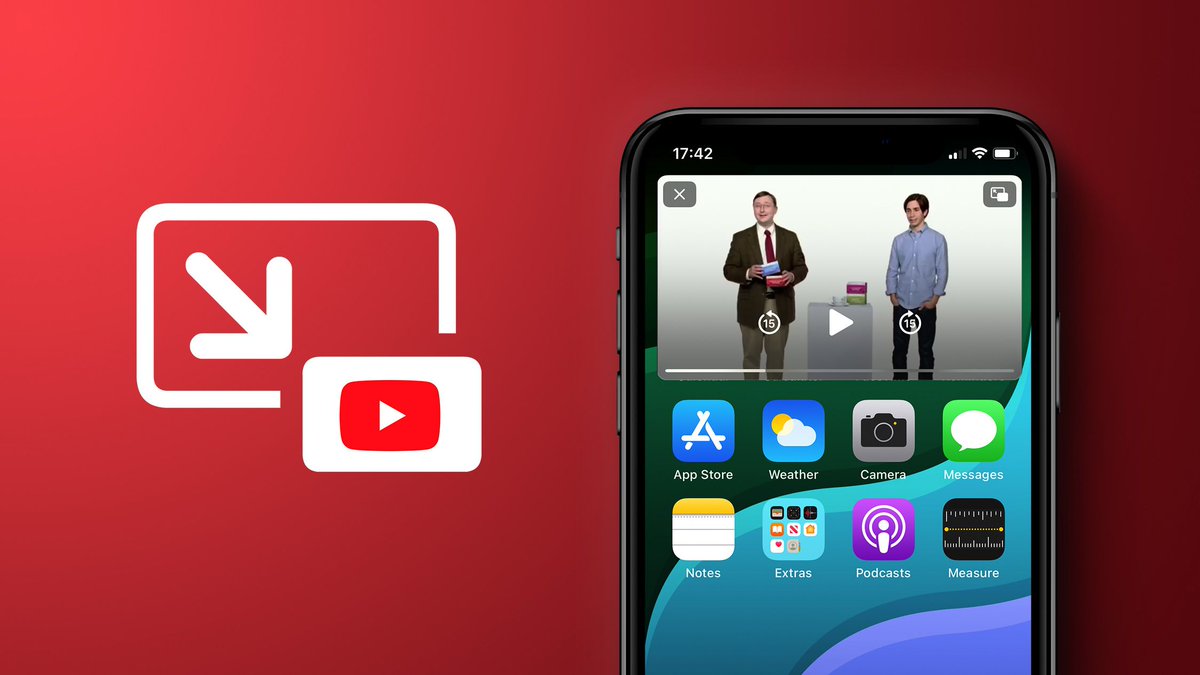
Picture-in-Picture Rolls Out to All YouTube Users
By Anthony Finn
YouTube is finally removing one of its most frustrating global limitations—and doing it in a way that reveals exactly how the platform thinks about control, access, and revenue.
The company has begun rolling out picture-in-picture (PiP) mode to all mobile users worldwide, including those without a Premium subscription. Once fully deployed, anyone on iOS or Android will be able to shrink a video into a floating mini-player that stays on screen while they move between apps. Texting, browsing, checking email—the video no longer stops. It keeps playing, quietly asserting itself as a constant layer in the background of daily life.
This isn’t a small quality-of-life tweak. It’s a structural correction.
For years, PiP was technically available at the operating system level—baked into Android and introduced to iPhones with iOS 15—but YouTube deliberately restricted it behind a paywall outside the United States. Users found workarounds, opening videos in browsers just to replicate a feature their phones already supported. The friction wasn’t accidental. It was designed.
Now, that barrier is coming down.
But not entirely.
Free users globally will get PiP access only for long-form, non-music content. The moment the video becomes music—official tracks, covers, or even user uploads centered around songs—the system shuts the door. That experience remains locked behind Premium. Even the lower-cost Premium Lite tier doesn’t fully unlock it.
That line isn’t technical. It’s strategic.
YouTube isn’t just giving users multitasking—it’s segmenting behavior. If you watch content, you get freedom. If you use the platform like a music player, you hit a wall. And that wall is where monetization begins.
From a product standpoint, the feature integrates seamlessly. Exit the app—swipe up on iPhone or press home on Android—and the video collapses into a movable window. If users don’t want it, they can toggle it off in settings. The experience feels native now, as if it should have always been there.
Because it should have.
The rollout is happening server-side, meaning it’s being activated account by account rather than through a single app update. That also means patience—some users will see it immediately, others over the coming months.
But the direction is clear.
YouTube isn’t just unlocking a feature. It’s recalibrating how control is distributed across its ecosystem—what feels free, what stays gated, and what quietly nudges you toward paying.
The video never stops anymore.
Unless they want it to.
Related Posts
VITURE Unleashes ‘The Beast’ at CES 2026—and XR Finally Feels Grown
Seeing the Future Clearly

The Necessity of Including Black People in Technology
By DaMarko Webster The field of technology is a rapidly evolving lands


Safe-Living Introduces the Pioneering Plug & Play Contactless Home Emergency Detection System at ces2024
Incorporating cutting-edge AI technology and a proprietary radar desig

Titans in the Shadows: Exploring the Attack on Titan Event in Assassin’s Creed
From the Walls to the Shogunate

The Estate Is Becoming the Final Studio
Death No Longer Ends Production