

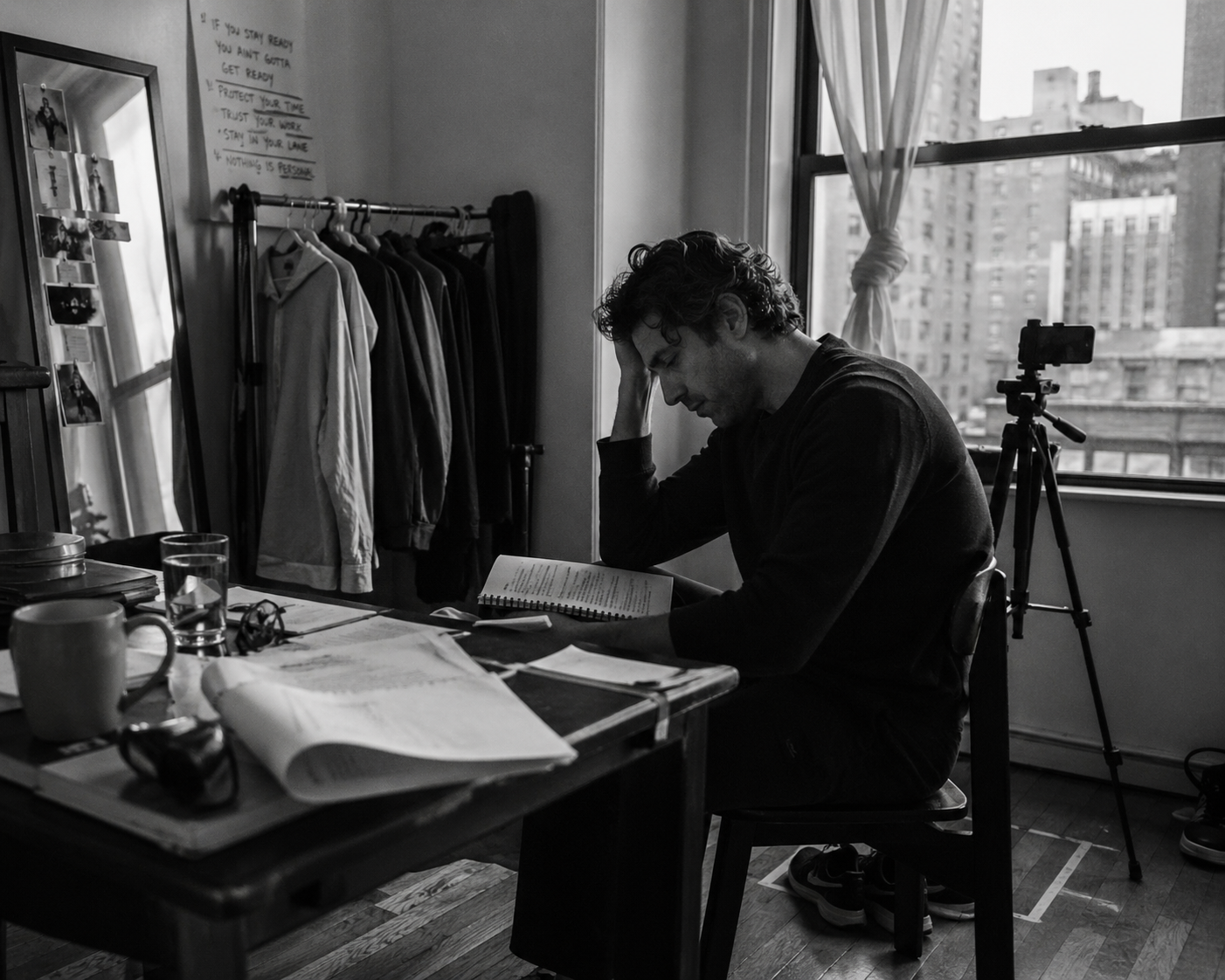
The Middle-Class Actor Is Being Engineered Out

By Kyra Greene
The middle-class actor isn’t disappearing.
They’re being engineered out of the system that once required them.
There was a time when an actor could live between anonymity and stardom. Not famous, not invisible—just working. They moved from project to project, recognizable enough to matter, flexible enough to be cast anywhere. The industry didn’t need them to sell the story.
It needed them to hold it together.
That version of the actor still exists.
But the system that sustained them doesn’t.
None of this means work has stopped. Productions are still being made. New faces are still breaking through. On the surface, the industry looks active—busy, even.
But activity is not stability.
What used to be a career has become a series of short-term engagements, connected by uncertainty instead of continuity. The shift isn’t about visibility.
It’s about infrastructure.
The old system was built on volume.
Network television produced long seasons. Studios financed films across a wide range of budgets. Residuals created a financial afterlife actors could depend on.
An actor didn’t need to be the reason a project was made.
They just needed to be good enough to stay inside it.
The new system is built on precision.
Seasons are shorter. Projects are fewer. Contracts are tighter. Timelines are compressed. Residuals are no longer predictable—they’re tied to data actors don’t control or see.
The middle didn’t lose relevance.
It lost frequency.
It’s true that there is more content than ever. More platforms, more releases, more noise. But more content has not translated into more sustainable careers—it has fragmented them. Where actors once built continuity across long seasons and repeat collaborations, they now move through shorter cycles with longer gaps in between. The volume increased. The stability did not.
And while actors have always been expected to hustle—to network, to promote, to stay visible—that effort used to support the work. Now it precedes it. Visibility is no longer an advantage. It’s a requirement.
From the outside, it doesn’t look like removal. It looks gradual—almost invisible. But what feels like a slow shift is, in reality, a system phasing them out in real time.
At the same time, the definition of value changed.
Actors are no longer evaluated solely on performance. They’re evaluated on their ability to extend a project beyond itself.
Can they bring an audience? Can they generate conversation? Can they exist before the project—and continue after it?
The performance is no longer the product.
It’s the entry point.
This is where the middle collapses.
Because the industry no longer funds projects that rely on actors to simply be excellent. It funds projects that justify their existence before they are made.
Which means casting is no longer just about fit.
It’s about leverage.
IP provides leverage. Franchise attachment provides leverage. Visibility provides leverage.
The middle-class actor, by design, was never built for leverage at scale.
At the top, stars still anchor the system.
At the bottom, emerging talent remains flexible and expandable.
But in the middle—the space where actors once built sustainable careers—the system now asks a different question:
What do you bring besides the work?
And if the answer is only the work, the system has already moved past you.
So actors adapt.
They build platforms. They produce their own material. They become brands, not just performers.
Not because they want to—
but because the system now requires proof of gravity before opportunity.
You are no longer cast to become visible.
You must be visible to be cast.
This is not a temporary shift.
It’s the result of an industry reorganized around certainty.
Certainty of audience. Certainty of engagement. Certainty of return.
The middle-class actor represented something else.
Trust in the process.
That trust has been replaced by metrics.
And when a system stops trusting the process, it stops funding the people who made the process work.
Related Posts

FanDuel’s “Kick of Destiny 3” Brings Peyton and Eli Manning Head-to-Head in a Super Bowl Sunday Showdown
Peyton and Eli Manning Head-to-Head Super Bowl Sunday

Bang & Olufsen Names Charles Leclerc as Global Brand ambassador
Bang & Olufsen announces Charles Leclerc as Global Brand Ambassador

Angel Reese and Daniel Ricciardo Star in Animated Beats Pill Campaign for New Summer Colors
Beats Pill Adds Two New Colors Just in Time for Summer.

Jordan Coleman Knows the Quiet Days Matter
The Work No One Sees

Scandi Style Takes Flight: NUDIENT Launches First-Ever Luggage Collection
Minimalist, Durable, Beautiful—NUDIENT’s Luggage Sets a New Standa