


You Don’t Buy Samsung — You Live Inside It

By Tyso Winsom
We like our power visible.
We understand dominance when it shows up as market share, cultural relevance, or brand obsession—when a company wins in a way that can be measured, debated, and ultimately replaced. That model makes sense to us because it preserves the idea of choice. There’s always another option, another product, another name waiting to take the lead.
But some companies don’t operate inside that system.
Samsung doesn’t win by being chosen.
It wins by being present in everything that gets chosen.
That distinction is where the real story begins.
On the surface, Samsung is easy to categorize: a global electronics giant competing in familiar spaces—smartphones, televisions, appliances. A company with scale, yes, but still operating inside the same competitive frameworks as its peers. That’s the narrative most people carry because it’s the one they’re shown.
But that narrative breaks the moment you follow the company beyond the product.
Because Samsung doesn’t expand outward the way most companies do. It doesn’t simply add categories or chase adjacency. It moves through layers—embedding itself at every critical point where value is created, transferred, and realized.
Not categories. Layers.
Material. Interface. Environment. Human.
At the material level, it manufactures semiconductors—the invisible intelligence powering devices, servers, and the digital systems the modern world depends on. At the interface level, it produces displays that shape how information is seen, not just on its own products, but across competitors. At the environmental level, its construction arm has helped bring structures like the Burj Khalifa and Merdeka 118 into existence—physical anchors of contemporary cities. At the human level, it operates hospitals, advances biotech manufacturing, and participates in the systems that sustain life itself.
And Samsung sits across all of them.
Individually, these look like separate businesses.
Together, they form a continuous stack.
This is the shift most companies never make. Expansion increases presence. Integration creates leverage. Samsung’s advantage isn’t that it exists in many industries—it’s that those industries connect through it.
And once that connection is established, something more powerful than scale emerges.
Inevitability.
A traditional company needs to be preferred. It depends on attention, perception, and loyalty. Its success rises and falls with the consumer’s decision.
Samsung has positioned itself where that decision matters less.
If you choose their product, they win visibly.
If you choose a competitor, they may still win invisibly—through components, infrastructure, or systems already embedded in the outcome.
If an entire industry grows, they expand with it—not as a participant, but as a structural layer inside that growth.
They don’t chase demand.
They align with everything demand requires to exist.
This is what separates diversification from design. Diversification spreads risk. Design captures dependency.
And that word—dependency—is where the conversation becomes more precise.
Not dependency as constraint, but as condition. The kind that forms when a company becomes so deeply integrated into the systems around it that removing it would require rebuilding the system itself.
This is the logic behind the chaebol model—a uniquely South Korean structure where a single group spans industries, often shaping large portions of the national economy. But Samsung has extended that logic beyond national borders. What began as domestic infrastructure has evolved into a global presence embedded in multiple layers of modern life.
And the deeper it embeds, the less it needs to announce itself.
Because infrastructure doesn’t need visibility to be powerful. It needs reliance.
We’ve been conditioned to look at culture as the primary driver of influence—who’s leading the conversation, what’s trending, what people are choosing. But culture operates on top of something else. Before a product can be desired, it has to be possible. Before a platform can scale, it has to be supported. Before a city can grow, it has to be built.
That’s where Samsung lives.
Not at the point of attention—but at the point of enablement.
And once you see it that way, the company stops looking like a competitor and starts reading like a framework.
This is the direction many companies are now trying to move toward. Technology firms expanding into hardware. Platforms moving into finance. Brands attempting to build ecosystems that extend beyond their original category. The ambition is clear: to become harder to replace, more essential, more embedded.
But Samsung didn’t pivot into this position.
It accumulated it—slowly, structurally, over time.
Which is why it feels less like a strategy and more like a condition that has already taken hold.
Some companies fight to be chosen.
Others build systems where choice becomes less relevant.
Samsung is the latter.
And here’s the consequence:
When a company sits at every layer of the stack, disruption doesn’t remove it—it reroutes through it.
That’s the level of positioning we’re actually looking at.
And as more industries converge—technology, healthcare, infrastructure, data—the value will shift even further toward those who control not just the outcome, but the environment that makes the outcome possible.
Samsung doesn’t need to define the moment.
It helps define the limits of what moments can exist.
Related Posts

The Most Powerful Media Companies Don’t Call Themselves Media
The Platform Is the Publisher Now

The Daily Show and The Tonight Show Signal How Television Franchises Are Evolving
The rise of platform-flexible television franchises

“7’scarlet” Makes Its Way to Nintendo Switch—And It’s More Immersive Than Ever
Missing Brother, Twisted Secrets

Meet Geeker: A Fresh Peer-to-Peer Marketplace Offering Instant Access to On-Demand Tech Support by Live Experts
Geeker, the on-demand tech support marketplace, has officially launche
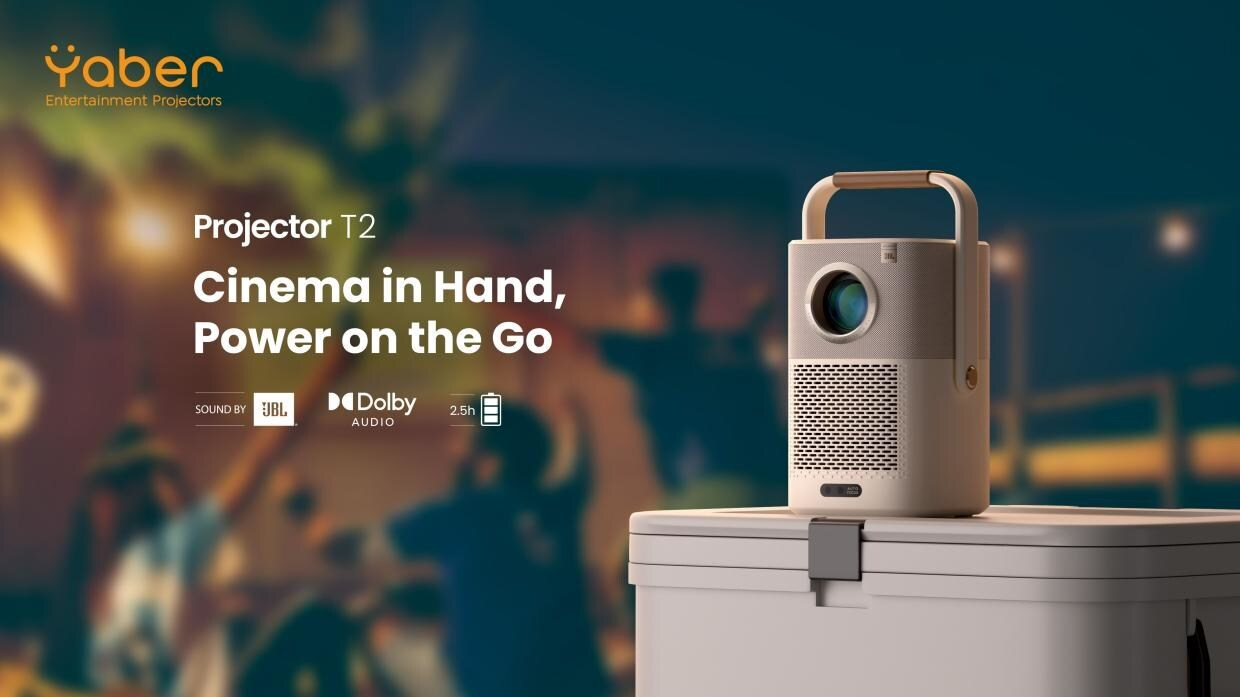
Yaber Introduces Projector T2/T2 Plus: The Perfect Portable Solution for Outdoor Entertainment
Yaber Introduces Projector T2/T2 Plus.

LockIn Company Unveils New Product ‘LISS’ to Fortify Mobile App Security
BY Adam Jacobs LockIn Company, a prominent mobile app security firm,