

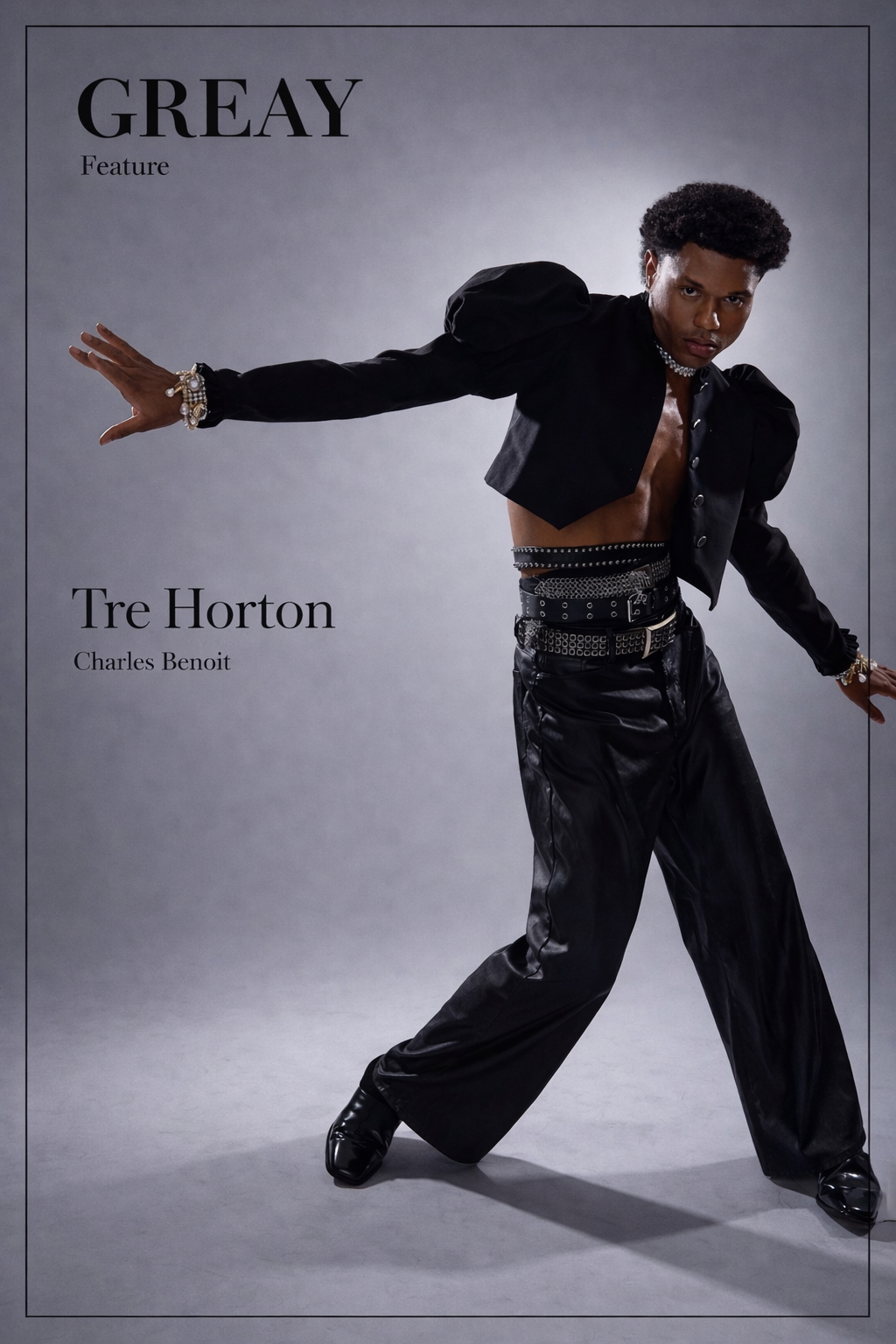
Tre Horton and the Discipline Behind the Moment

Tre Horton does not speak like someone chasing attention. He speaks like someone who understands where to stand.
In Michael, where the instinct might be to search for the loudest performance, Horton operates differently—calibrated, precise, aware of the space he occupies inside a structure that has to hold. As Marlon Jackson, his work is not to pull focus, but to maintain it—to reinforce rhythm, timing, and the quiet discipline that allowed something larger to exist.
That understanding runs through every answer. Not performance as display, but performance as function. Not spotlight, but system.
You stepped into the role of Marlon Jackson—not the frontman, but a critical piece of the system around Michael Jackson.
How did you approach playing someone whose power lives in precision rather than spotlight?
I approached it from the understanding that Marlon’s strength is in discipline and awareness. He’s not chasing attention—he’s maintaining structure. So for me, it became about precision, timing, and being fully locked into the group. If I did my job right, it wouldn’t pull focus—it would support the system.
At what point did you realize you weren’t preparing for a role—you were stepping into a system that had to work?
That realization came early in rehearsals. Once we started working as a unit, it was clear this only works if everyone is in sync. It stopped being about individual performance and became about collective execution.
You worked directly with Marlon Jackson in shaping this performance.
What’s one adjustment you made after speaking with him that fundamentally changed how you understood the role?
One thing Marlon emphasized was energy control. He talked about not over-performing—about letting the work speak for itself. That shifted my approach. I stopped trying to add and focused more on refining what was already there.
Musical theater builds repetition and discipline. Where did that training hold—and where did it break—once you were inside this production?
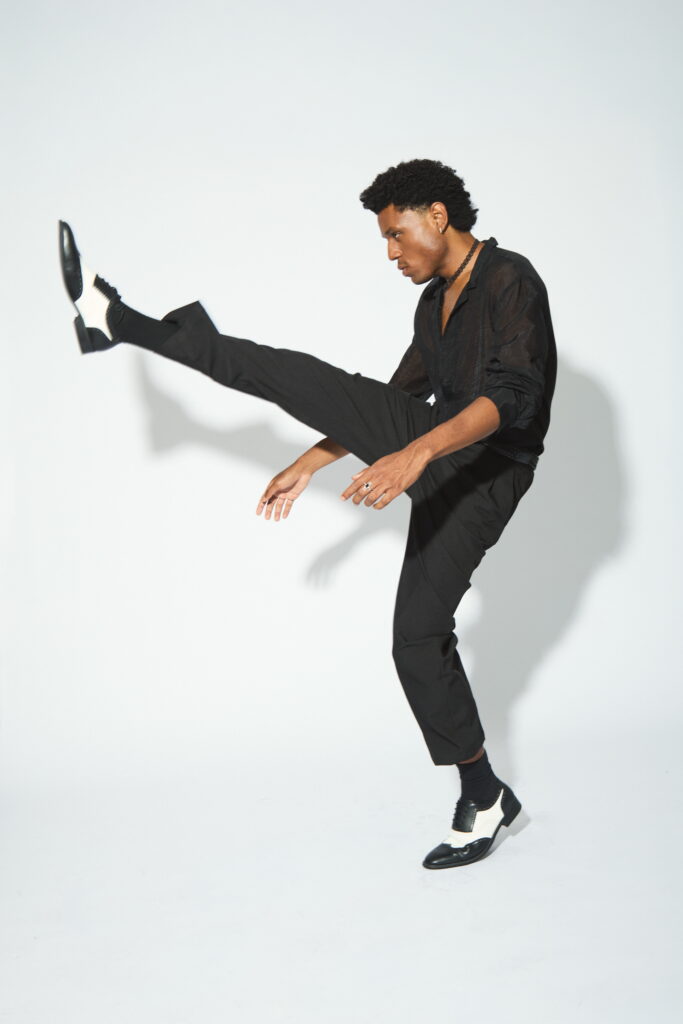
The discipline from musical theater definitely carried over—especially in terms of repetition and stamina. But what changed was the level of detail. On camera, everything is more precise. You can’t rely on projection—you have to trust smaller, more controlled choices.
There’s a difference between learning choreography and embodying it as memory.
When did the movement stop feeling rehearsed and start feeling lived-in?
It happened after repetition with intention. Once the choreography wasn’t something I had to think about, it started to feel internal. At that point, it wasn’t steps anymore—it was rhythm and instinct.
What detail did you protect the most to keep Marlon human?
I focused on subtle reactions—how he observes, how he supports, how he stays present without always being the focal point. That’s where the humanity lives.

You arrived in Los Angeles and within a year stepped into this scale. What did that pace force you to become—quickly?
It forced me to become adaptable. Things move fast at that level, so you have to trust your preparation and adjust in real time without overthinking.
When you’re part of an ensemble portraying something as culturally significant as the The Jackson 5, how do you balance individuality with the responsibility to move as one unit?
It’s about understanding your role within the group. You bring your individuality through intention and detail, but physically and rhythmically, you have to move as one. That balance is what makes it believable.
After living inside this story, what do you understand now about the cost of building an icon?
You start to understand that building something at that level requires sacrifice—time, pressure, expectations. There’s a cost to that kind of consistency and excellence.
During the Jackson 5 performance scenes, there’s a moment where you’re not just reacting—you’re inside the rhythm with Jaafar Jackson. Did there come a point where it stopped feeling like acting and started feeling like you were witnessing something real?
Yes. There were moments where everything just locked in—the movement, the music, the energy. It didn’t feel like acting anymore, it felt like we were inside something that had its own life.
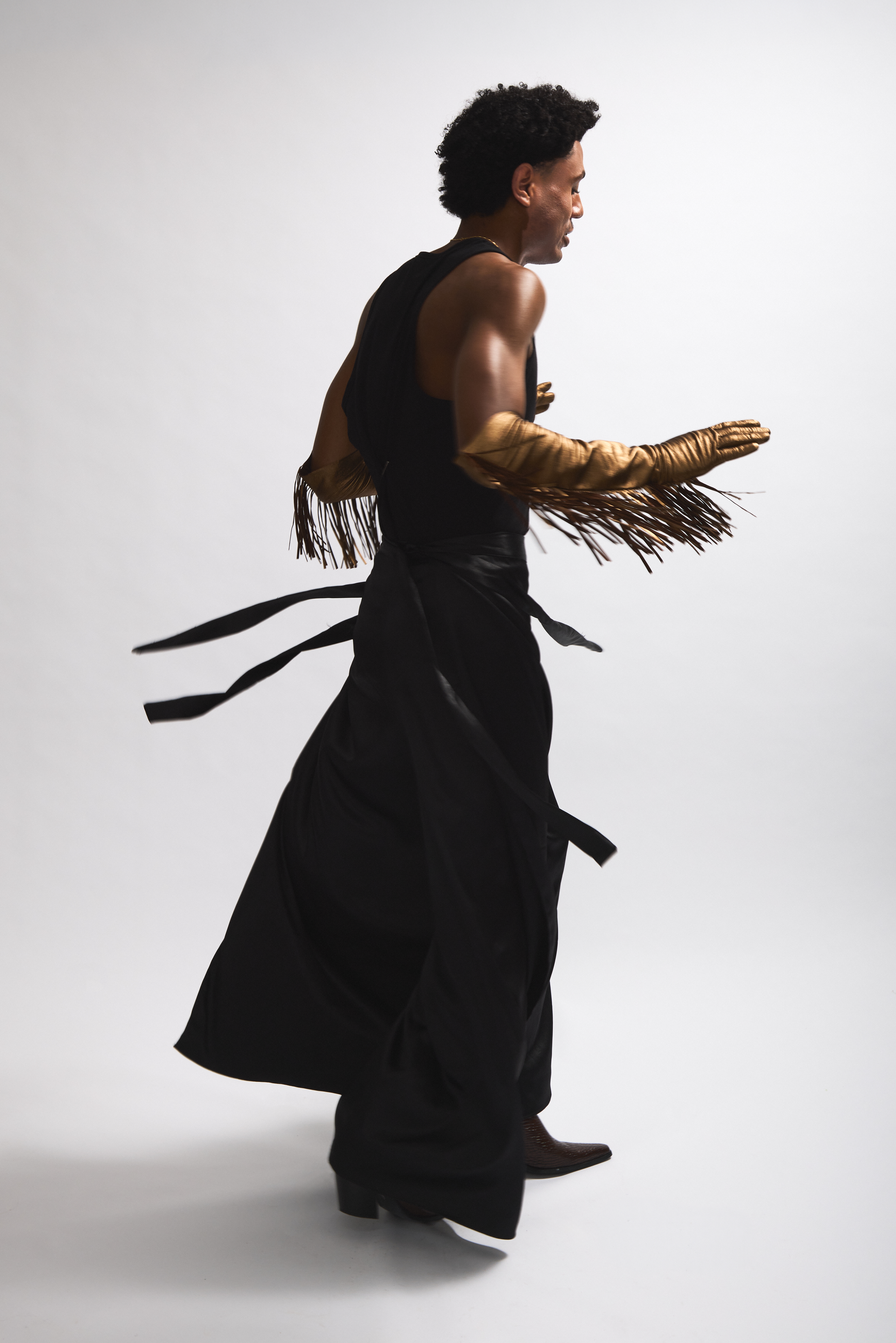
You’re performing alongside someone embodying Michael Jackson at a level that’s meant to be convincing.
Was there ever a moment—mid-performance—where your instinctual reaction surprised you, because it wasn’t you responding, but something closer to Marlon?
There were moments where my reactions felt automatic, not planned. That’s when you know you’re fully in it—when you’re not thinking, you’re just responding.
While performing those Jackson 5 moments, you’re recreating something the world already remembers—but you’re also inside it, in real time.
Was there ever a point where the weight of that history became present—where it stopped feeling like recreation and started feeling like responsibility?
Absolutely. There’s a responsibility in recreating something that people already hold onto so strongly. At a certain point, you feel that weight, and it pushes you to be more precise and more intentional.
You’re sharing space with Colman Domingo and Nia Long as Joe Jackson and Katherine Jackson—two forces that shaped everything around Michael Jackson. Did their presence—on or off camera—shift how you understood that dynamic? And what did you take from working alongside them that stayed with you beyond the performance?
Working with Colman Domingo and Nia Long brought a different level of presence to the set. They carry a grounded authority that naturally shapes the environment. Being around that reinforced the importance of staying present and committed to the truth of the moment.
By the end of the conversation, what becomes clear is not just how Tre Horton prepared for the role—it’s how precisely he understood it.
There is no attempt to expand the moment beyond what it is. No need to claim more than what the work requires. Instead, there is an awareness of position, of responsibility, of the subtle mechanics that allow something as visible as Michael Jackson to exist at all.
And maybe that’s the point.
Because the story of Michael isn’t only about the icon. It’s about the structure that made him possible—and the people who knew, instinctively, how to hold it together.
Photography by Charles Benoit @cbenoitphoto
Interview by Kyra Greene @noteasybeingreen
Wardrobe by Irina Van Verseveld @wonderzuzu
Grooming by Suna Myles @sunamyles_mua
Produced by The GREAY Firm @greayfirm & Kyree L. Frazier firstsight.intl
Related Posts

Ancestry Inspires People to Discover, Preserve and Represent All That They Are With “It’s a Family Thing” Integrated Brand Campaign
By Tanner James Ancestry®, the global leader in family history, today

Precision in Every Detail: Porsche Design Tower Bangkok Reimagines Ultra-Luxury Living
By LuLu Clemmons Porsche Design Tower Bangkok, Asia’s first ultra-lu

Drake Unveils NOCTA Basketball Campaign Featuring Kevin Durant
Drake Unveils NOCTA Basketball Campaign

Not Made from paris madame ft mike tyson
Mike Tyson s not made from Paris

Chameleon Unveils Upcoming Cold-Brew Coffee Varieties Inspired by Girl Scout Cookie™ Flavors
Chameleon Organic Coffee®, renowned for its consciously crafted bottl