

LACMA and the End of Institutional Control
By River Hendrix
For most of its history, the museum has been a controlled experience. You enter, you are oriented, and then—quietly but precisely—you are guided through a sequence of ideas someone else has already decided matter. Even when it feels open, it isn’t. There is always a beginning, a middle, an end. A narrative embedded in walls, labels, and architecture itself.
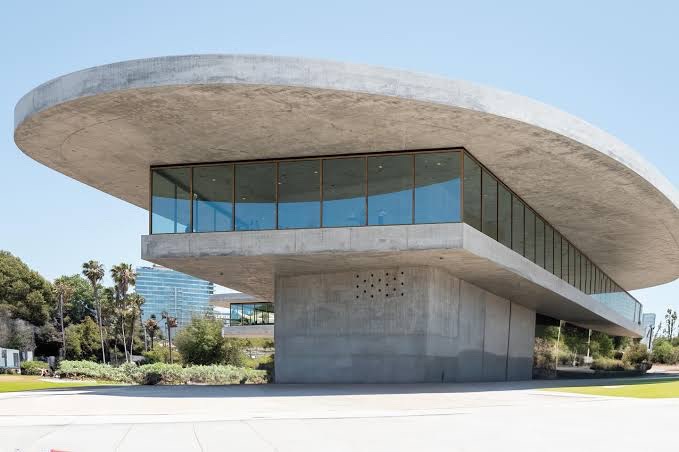
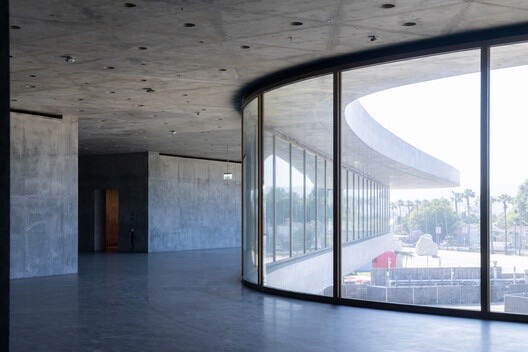
What Los Angeles County Museum of Art has done with the David Geffen Galleries is remove that control. Not symbolically. Structurally. A single elevated plane replaces the traditional museum layout. No wings. No hierarchy. No prescribed path. The building doesn’t tell you where to start, and it doesn’t tell you when you’re done.
There is something unsettling about that, and that’s exactly the point. A traditional museum behaves like a machine—inputs and outputs, rooms and sequences, a controlled system that processes the visitor. This building behaves like terrain. You don’t complete terrain. You move through it. You double back. You miss things. You discover others by accident. Your experience is incomplete by design, and because of that, it becomes personal.
That shift—from machine to terrain—is not aesthetic. It is structural. It transfers authorship. The institution stops acting like an authority and starts acting like a field. And once a space becomes a field, meaning is no longer delivered. It is assembled.
For decades, museums were one of the last places where narrative control remained intact. Film lost it to streaming. Music lost it to playlists. Retail lost it to browsing culture. But museums held on, because architecture resists change. Walls don’t update. Buildings don’t pivot.
Until now.
Inside this structure, chronology dissolves. Geography disappears. Direction becomes optional. You are no longer told what matters in what order. You are placed in proximity to things and left to decide. That is not a curatorial experiment. It is a behavioral alignment with a reality that already exists everywhere else.
Control-based systems are being replaced by navigation-based environments.
You see it in feeds that replace programming, in stores that remove pathways, in platforms that prioritize discovery over sequence. Culture no longer arrives in order. It arrives in fragments, and the individual assembles it into meaning. What this building does is translate that condition into physical space.
That is why this had to happen in Los Angeles. Los Angeles Times called it one of the riskiest institutional moves in the city in decades, and that risk only makes sense in context. Los Angeles has spent the last several years smoothing itself out—commercially, culturally, architecturally. Luxury became consistent. Culture became optimized. And optimization removes friction.
This building brings friction back. Not chaos, but uncertainty. A lack of instruction. A refusal to resolve itself cleanly. It reintroduces the possibility of being disoriented inside culture, and that disorientation is where interpretation begins.
Because before a painting is seen, before a story is understood, before meaning is formed, the space determines the conditions of that encounter. That is infrastructure. And infrastructure does not simply support culture. It defines how culture can exist.
By flattening hierarchy and removing prescribed movement, LACMA is not just redesigning a museum. It is redefining the role of the institution itself. Authority is no longer established through control of sequence. It is established through the creation of conditions.
That distinction changes everything.
If an institution cannot operate as an environment, it begins to feel rigid. If it insists on guiding instead of allowing navigation, it begins to feel outdated. Because the audience has already changed. People do not wait to be told what matters. They move, they choose, they assemble.
And once that behavior becomes natural, anything that restricts it no longer feels premium. It feels limiting.
What stands on Wilshire is not just a building. It is a signal. A large-scale acknowledgment that the logic shaping digital culture has crossed over into physical space, and that institutions must now decide whether they are authors of meaning or architects of possibility.
Los Angeles County Museum of Art has made its decision.
It stopped telling you where to go.
And in doing so, it revealed something far more consequential: control was never the point. It was a system. And that system has already been replaced.
Related Posts

Hailey Bieber and Gap Show That the Next Generation of Brand Partnerships Is Built on Creative Credibility
How brands are redefining the value of collaboration

Precision in Every Detail: Porsche Design Tower Bangkok Reimagines Ultra-Luxury Living
By LuLu Clemmons Porsche Design Tower Bangkok, Asia’s first ultra-lu

Crucian Christmas Festival Village Performance Line-up Headlined by International Superstar Davido
By Jordan Sanchez The U.S. Virgin Islands Division of Festivals offici

Dame Lillard Introduces Bose QuietComfort Earbuds II
By DaMarko Webster Damian Lillard, also known as Dame Dolla, is a mult

Deadpool Crashes Gotham: Marvel & DC Unleash a Wild Crossover Decades in the Making
The Bat, The Merc, and the Multiverse

Not Every Blockbuster Is Meant for Theaters Anymore
Hollywood Is Building Subscriber Cinema