

Insta360 Snap — Removing the Last Excuse in Mobile Creation
By DaMarko Webster
There was never anything wrong with the camera. Smartphones have been carrying cinema-grade sensors in their rear modules for years—sharp, deep, honest. But creators weren’t using them, not fully. They defaulted to the front-facing lens, trading quality for visibility. Not because they wanted to, but because they needed to see themselves. That gap is what Insta360 just closed.
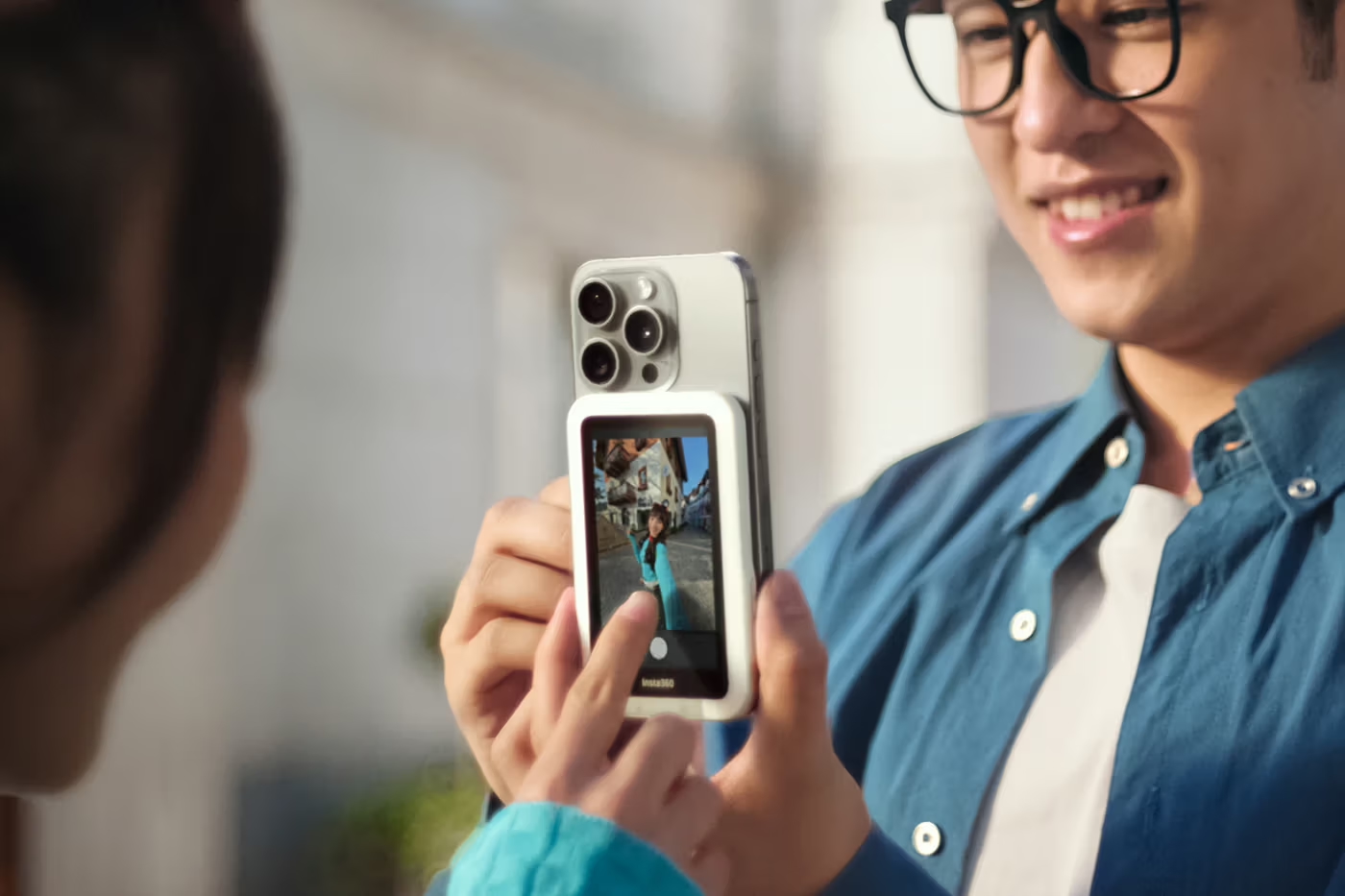
The Snap isn’t a camera. It’s a correction. A small, magnetic 3.5-inch screen that attaches to the back of your phone and quietly rewires how content is made. It allows creators to use the best camera they already have without losing control of the frame. No guesswork. No soft focus. No compromise disguised as convenience. Because this was never about megapixels—it was about feedback.
For years, the front-facing camera became the default not because it was better, but because it was usable. It gave creators something more valuable than resolution: reassurance. The ability to know they were in frame built an entire visual culture—slightly flatter, slightly softer, slightly less precise. The Snap breaks that pattern by introducing a wired, low-latency mirror through USB-C, removing delay, and by mounting magnetically, removing friction. It pulls power directly from the phone, eliminating the need for extra batteries. What’s left is a system that feels immediate, responsive, and aligned.
And once alignment is solved, behavior changes. This isn’t about better vlogs on the surface—it’s about restoring intentional image-making to mobile creators. Depth comes back into play. Dynamic range starts to matter again. Composition becomes deliberate instead of approximate. The rear camera stops being reserved for “important shots” and becomes the default lens of record. That shift may feel small, but it recalibrates the baseline of visual quality across the entire creator ecosystem.
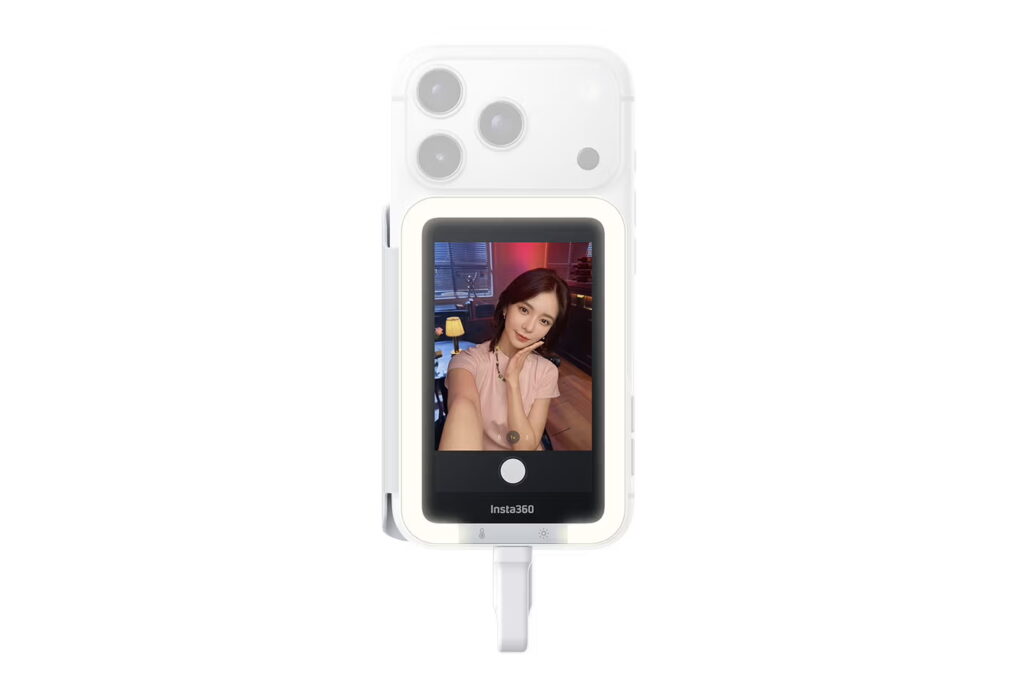
The Snap arrives in two configurations: a standard model at $79.99 and a slightly elevated version at $89.99 that integrates a built-in fill light with adjustable brightness and color temperature. That second option isn’t just an upgrade—it’s an acknowledgment. Once framing and resolution are solved, the next constraint is lighting. How the face is shaped, how shadows fall, how presence is felt. Insta360 didn’t just fix visibility—they anticipated the next layer of control.
We’ve seen this pattern before. The tools that win aren’t always the ones that introduce something entirely new—they’re the ones that remove the last reason people weren’t using what already existed. The Snap doesn’t invent a new behavior. It removes the final excuse. And in doing so, it quietly raises the standard of what everyday content can look like.
You don’t need a better camera. You need a better way to see what the camera sees. And once that’s solved, clarity, authority, and intention follow naturally.
Related Posts

Hollyland Unveils Pyro S: A Revolutionary Wireless 4K Video Transmission System for Filmmakers
Hollyland Announces Pyro S, a New Wireless 4K Video Transmission

Infinity Castle DLC Adds Muzan and More to Hinokami Chronicles 2
Demon Slayer Game Levels Up

Sylvox Redefines Outdoor Leisure with the Introduction of a Portable and Waterproof TV at CES 2024
Sylvox is once again revolutionizing the entertainment landscape
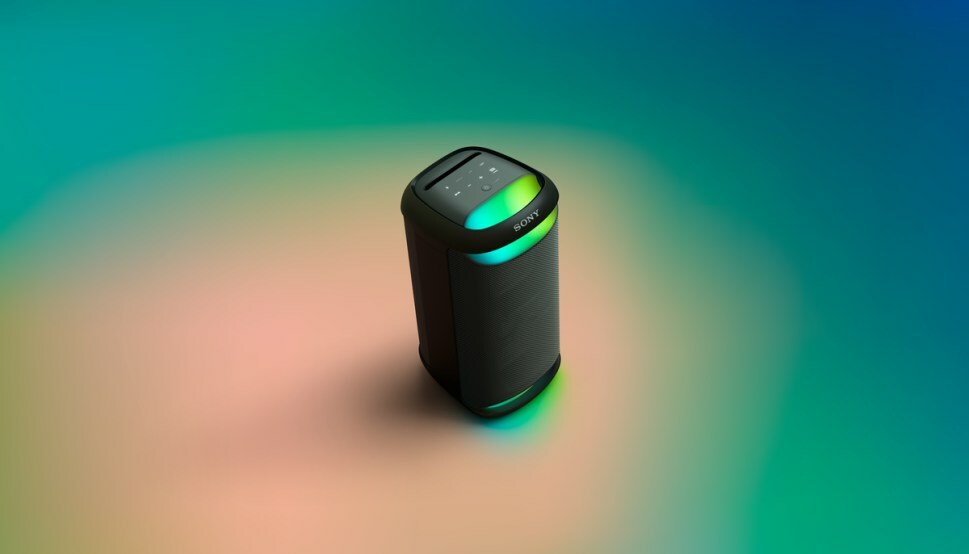
Sony Electronics has launched the SRS-XV500, a cutting-edge party speaker designed for portable and powerful sound at any celebration
Sony has unveiled the latest addition to its lineup SRS-XV500
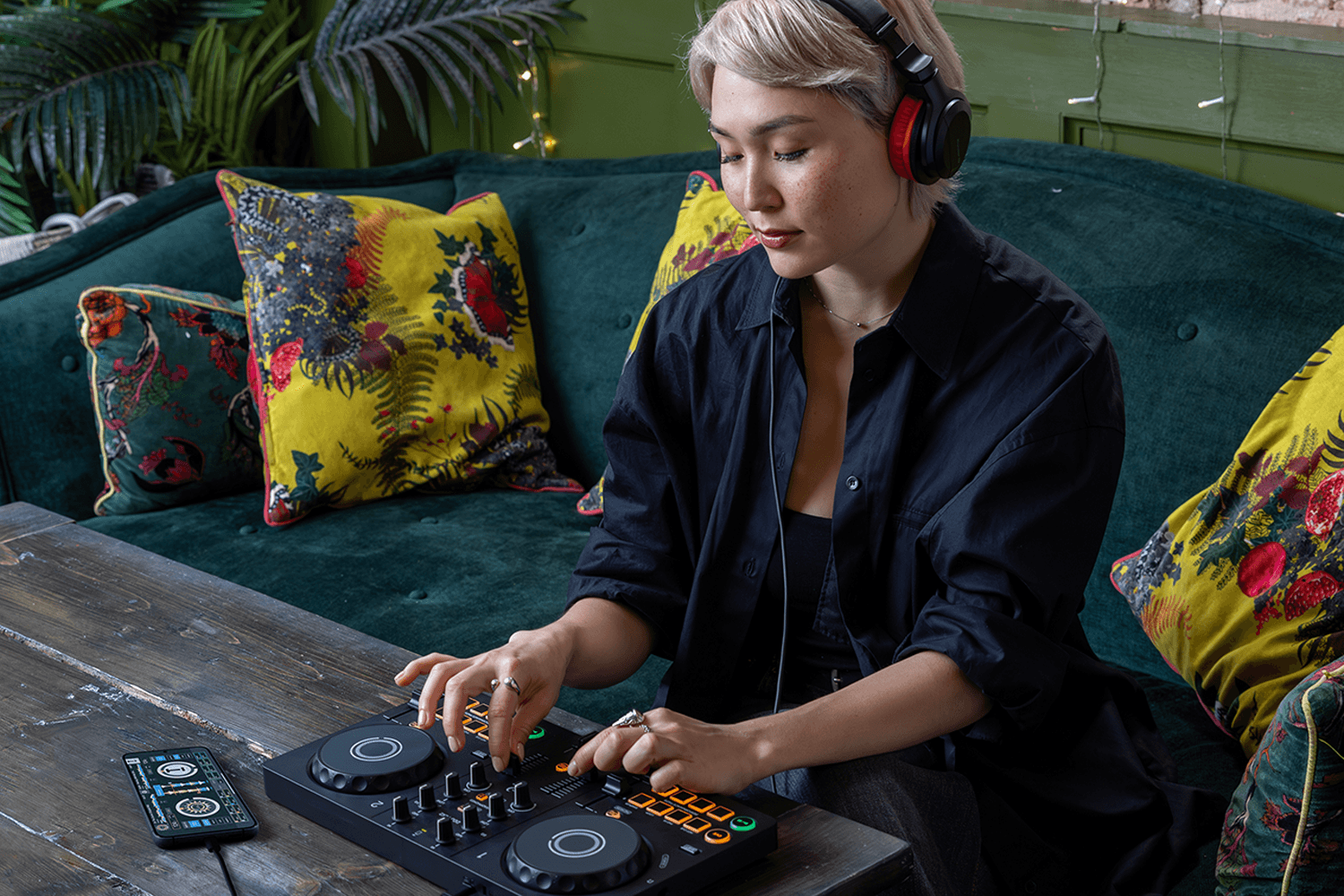
AlphaTheta Unveils the DDJ-FLX2, Its First Entry-Level DJ Controller
AlphaTheta Launches DDJ-FLX2

Unveiling the Hisense L5H Laser TV in South Africa: Embrace the Big Screen Experience
Explore home entertainment with Hisense's cutting-edge innovations.