

When the Product Disappears, the Environment Becomes the Display
By Kyra Greene
There was a time when retail existed to answer a simple question: what is this? Shelves were explanations. Packaging was persuasion. The product did the work in plain sight.
But audio doesn’t sit on a shelf.
And that’s the fracture.
When Amazon—through Audible—opens a space like the “Audible Story House” in New York, it isn’t opening a bookstore without books. That framing is too literal. What it’s actually doing is testing a new retail function: how to make something that has no physical form feel present, intentional, and worth choosing.
Because the problem with audio isn’t access. It’s perception.
Streaming solved availability. It made everything instant, searchable, and infinite. But in doing so, it stripped away the weight that once made a story feel chosen. A book in your hand has edges, cover art, thickness—signals of commitment. Audio has none of that. It exists as a file, buried in a feed, one swipe away from being replaced.
Once a product becomes invisible, it can no longer be understood at the point of sale.
So instead of trying to display the product, Audible changed the equation.
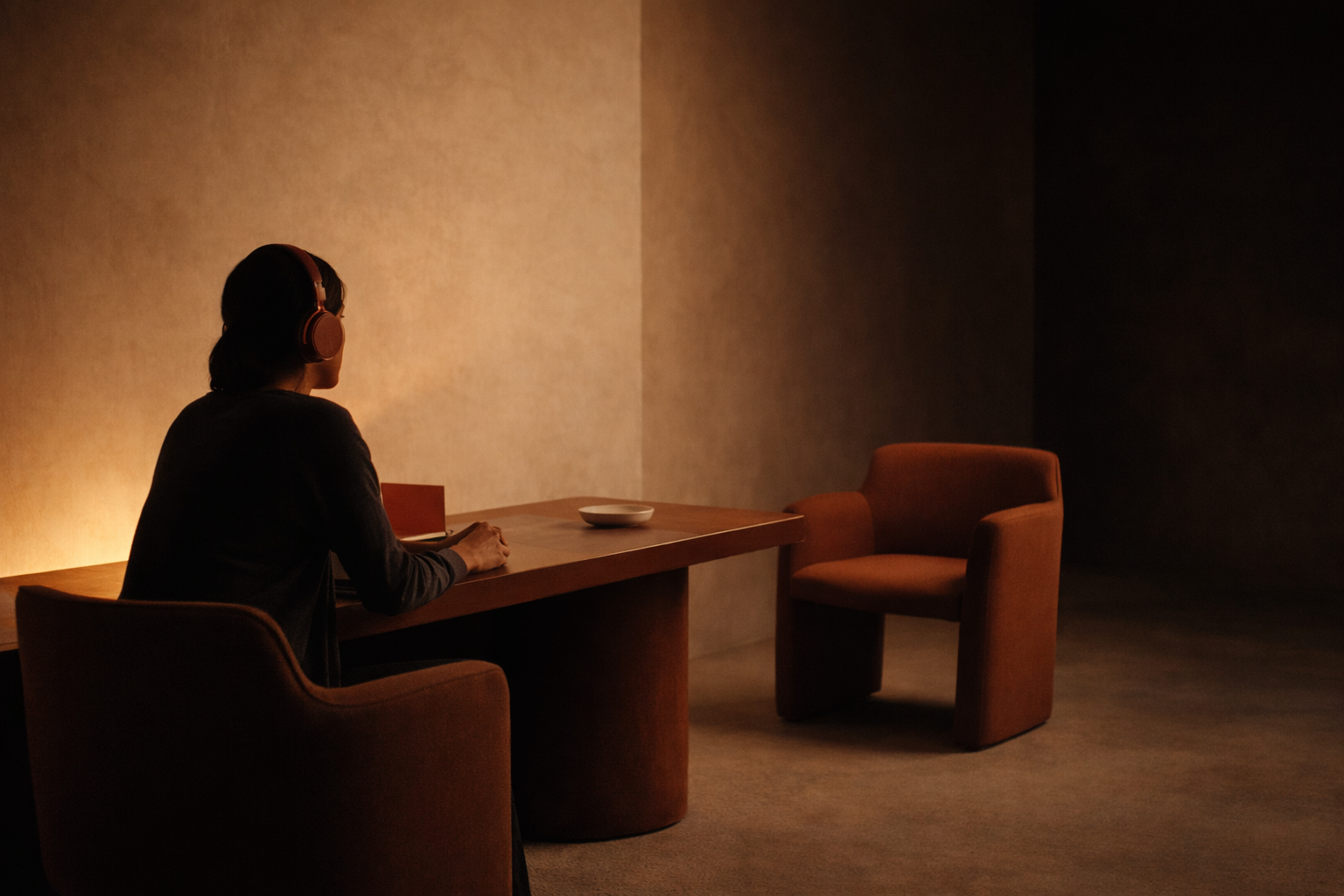
It built a space where the act of listening becomes the thing on display.
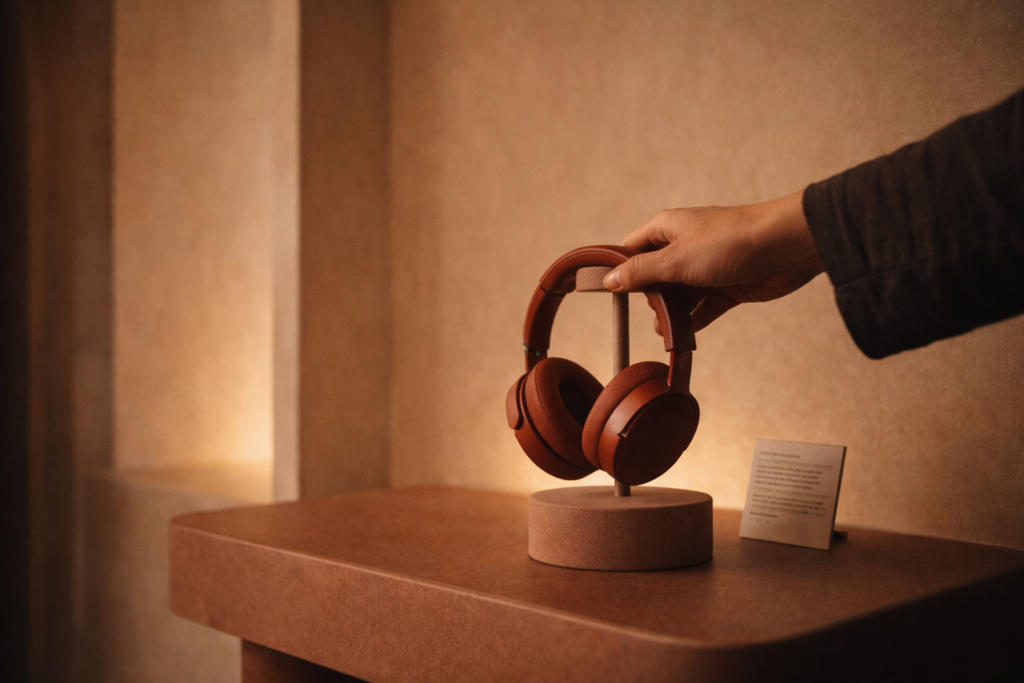
Headphones are no longer accessories—they are entry points. Shelves don’t hold inventory—they organize narrative. Seating isn’t for rest—it’s for immersion. The room itself does the job the product cannot: it gives form to something invisible.
This is not retail as distribution.
This is retail as translation.
The Audible Story House doesn’t sell you an audiobook in that moment. It teaches you how to feel one again. It slows you down. It introduces friction—not as inefficiency, but as ceremony. You choose a title. You sit with it. You experience it in space. And in that moment, audio regains something it lost in the scroll: presence.
Radio once required a room. Now audio requires one again.
That’s the shift.
Because once a product loses its physical form, its value can no longer be communicated through proximity or packaging. It has to be constructed through environment. The store stops being a container for goods and becomes an interface for perception.
We’ve seen early versions of this before.
Apple turned devices into rituals of interaction.
Nike turned stores into expressions of identity.
But Audible is operating one layer deeper—on something you can’t see at all.
Sound.
And that’s what makes this moment structural.
Because if Audible can make audio feel tangible through space, then every category that has become intangible—AI, software, streaming, even knowledge itself—suddenly has a new pathway back into the physical world. Not as inventory. Not as spectacle. But as experience designed to restore meaning.
The store is no longer the destination.
It’s the interface that teaches you how to value what you can’t hold.
And that’s the real function of Audible Story House.
Not discovery.
Not novelty.
Calibration.
Related Posts
Delaney Quinn Is Growing Through the World of Buddy
The Work Can Still Be Play

Konami Unveils Story Trailer for Silent Hill 2 Remake
Konami releases Silent Hill 2 trailer
Brett Landin The Company We Keep, The People We Outgrow
Durability Over Noise

Terrence Howard Enlists in Peacock’s Limited Series ‘Fight Night’ Based on Muhammad Ali
Terrence Howard joins Peacock Drama

The Air Jordan XI Retro “Gratitude” Enlists LA Bike Life Crew to hand out AJ XI pairs to the community
Jordan enlists LA Bike Crew

Jude Bellingham: The New Face of EA Sports FC 25
Jude Bellingham Is the ‘EA SPORTS FC 25’ Cover Star.