

Google Removed the Screen — Steph Curry Is the Proof
By Brian K. Neal
There was a time when performance needed to be seen to be believed. Numbers confirmed effort. Screens translated the body into something measurable, legible, optimizable. The rise of wearables wasn’t just about health—it was about visibility. If you couldn’t see it, you couldn’t trust it. If you couldn’t trust it, you couldn’t improve it.
That was the system.
And for years, companies like Google—through platforms like Fitbit—trained users to look. Steps became a language. Sleep became a score. Recovery became a decision made not by feeling, but by interface. Performance moved outward, away from the body, into a display that translated experience into data.
It worked. Until it didn’t.
Because the same screen that made performance visible also made it interruptible. Every glance fractured flow. Every notification introduced hesitation. The body began to wait for confirmation. The system, designed to improve performance, quietly began to compete with it.
So Google made a different decision. Not to improve the screen—but to remove it.
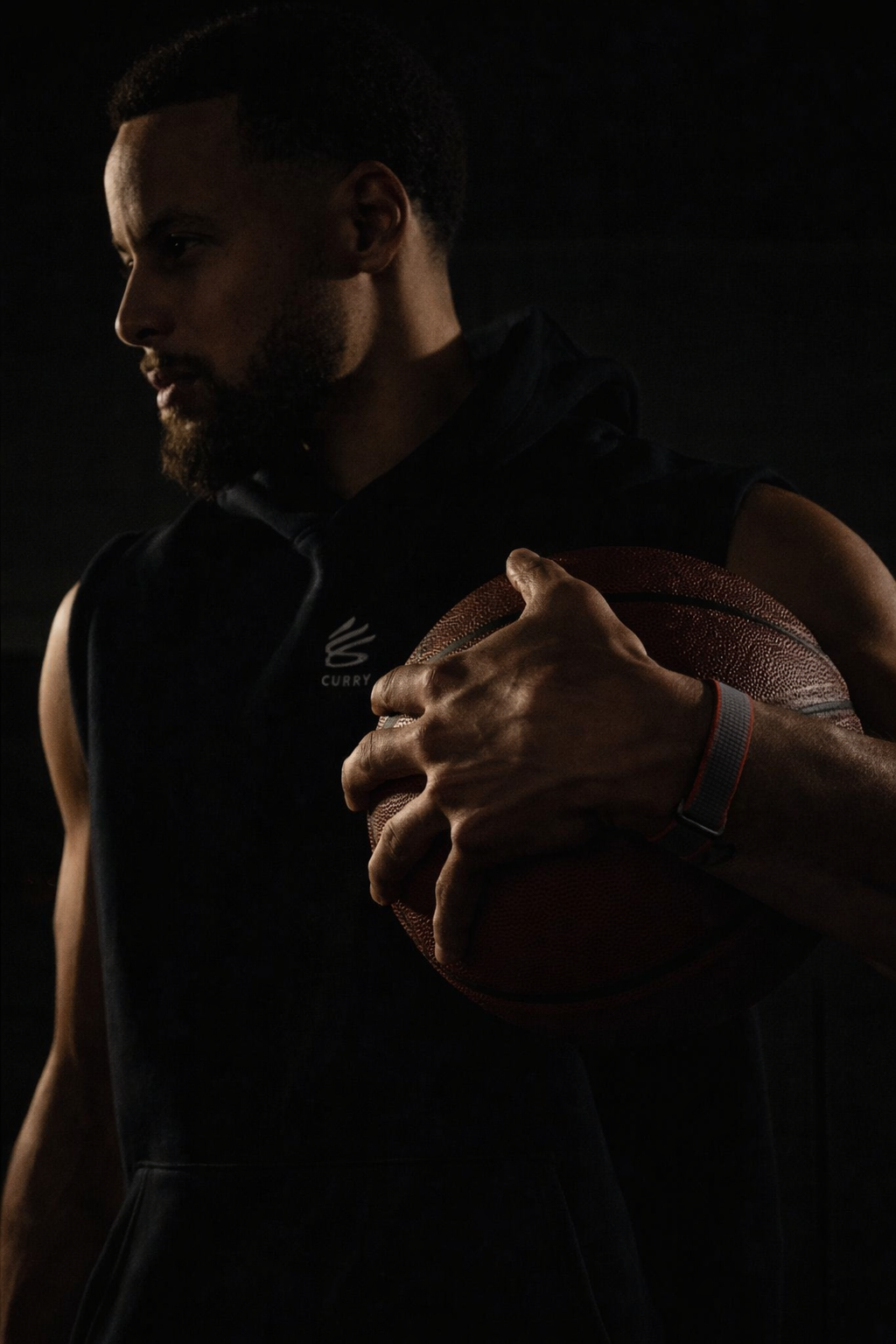
And they did it alongside Stephen Curry, not as a spokesperson, but as a Performance Advisor. The distinction matters. Curry doesn’t represent metrics. He represents calibration. A form of performance so refined it no longer requires conscious checking. His advantage has never been access to information—it’s the absence of interruption. Repetition internalized to the point where the body decides before the mind can question.
This is what Google aligned with.
A screen-less band isn’t minimalism. It’s a repositioning of where performance actually lives. The device no longer asks for attention. It collects quietly, interprets continuously, and surfaces only what matters. Data doesn’t disappear—it relocates. From the wrist to the system. From the moment to the aftermath.
The shift is subtle, but definitive: from tracking to trust.
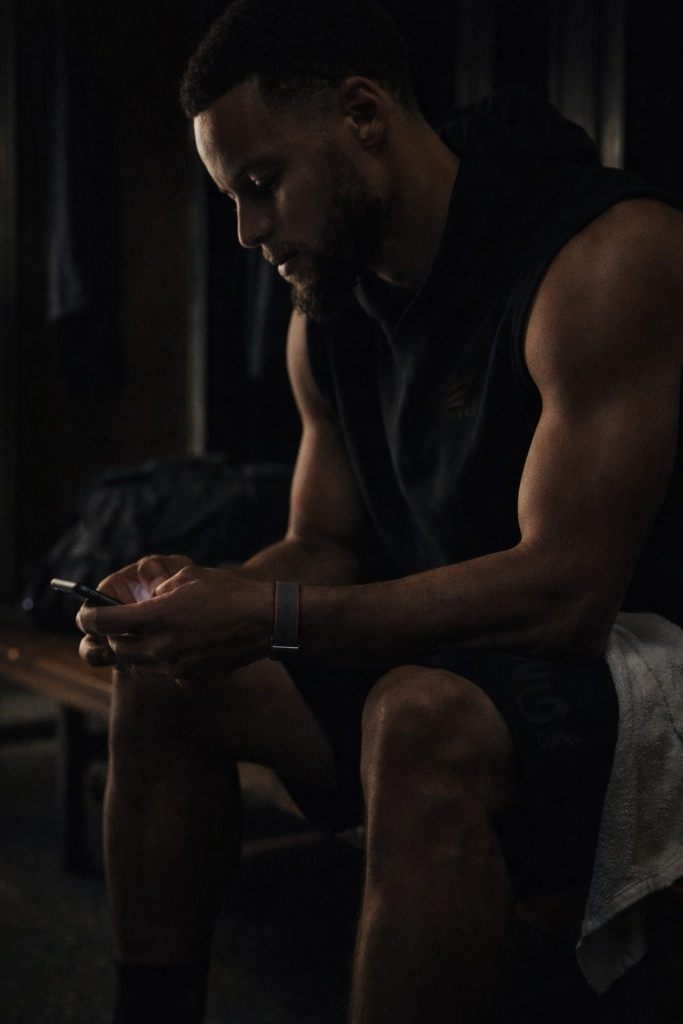
During performance, nothing happens. No glance. No confirmation. No interface. The moment remains intact. The system observes without announcing itself. It records without asking to be acknowledged.
After performance, something else happens. Not urgency. Not obsession. Just awareness—arriving late, arriving softly, arriving without demand. The relationship to data changes. It becomes something you receive, not something you chase.
This is where wearables stop behaving like products and start behaving like infrastructure.
Because the interface was never the destination. It was the bridge. A necessary phase in teaching users how to understand their bodies through data. But once that understanding is internalized, the interface becomes friction. Something to be removed, not refined.
Curry is the proof of that evolution. Not because he uses the system, but because he embodies its end state. A player who does not need to look to know. A performance that does not require validation to exist.
Google isn’t trying to win the wearable category. They’re trying to outgrow it. By removing the screen, they remove the competition entirely. What remains is a system that operates quietly, persistently, and without spectacle.
The most powerful technologies don’t ask to be seen. They integrate. They disappear. They become behavior.
This is that moment for performance.
The screen didn’t evolve.
It became unnecessary.
Related Posts

SINBON Electronics Achieves Distinction as the Pioneer in Greater China to Attain NACS Certification
SINBON Electronics, a leading provider of comprehensive solutions for

Just Salad Introduces “Salad AI”: Revolutionizing Personalized Dining
Just Salad Launches "Salad AI" Recipe Generator.
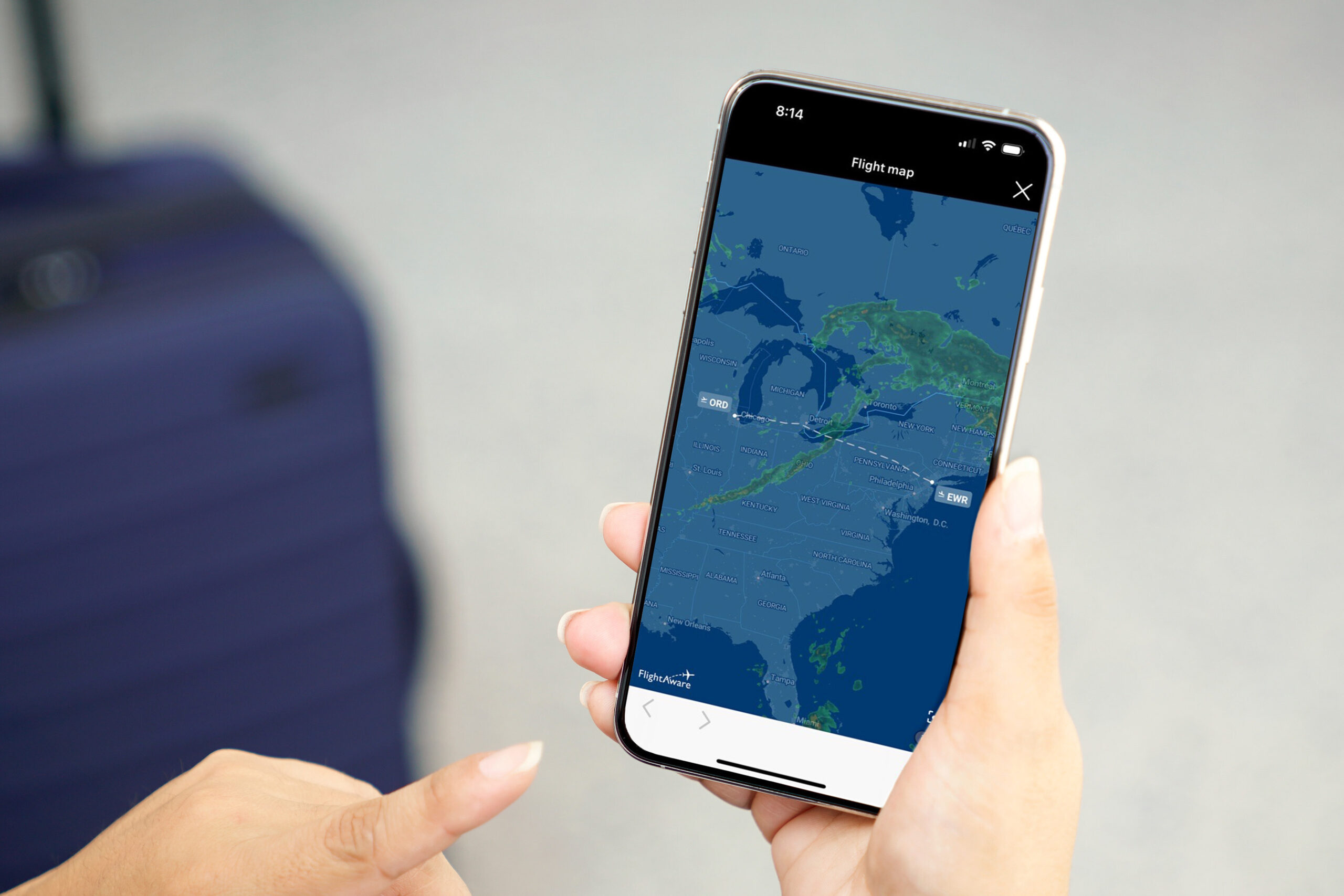
United Airlines Texts Live Radar Maps and Utilizes AI for Real-Time Weather Delay Updates
United Now Texts Live Radar Maps and Uses AI to Keep Travelers Informe
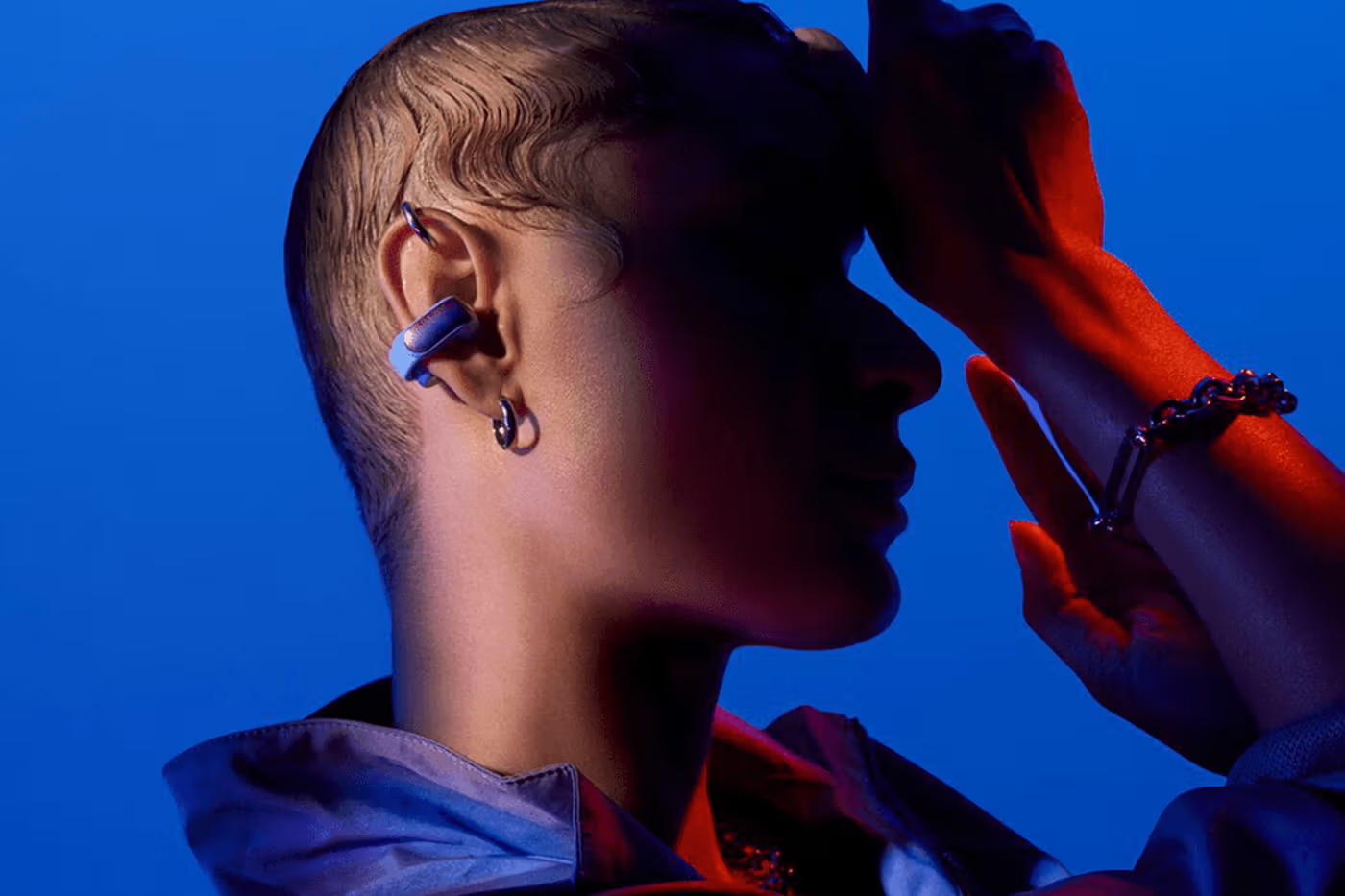
Bose Refreshes Ultra Open Earbuds with Four Vibrant Spring Colors
A Stylish Take on Wearable Audio with New Seasonal Hues.
DJI Raises the Bar in Action Cameras with the Osmo Action 5 Pro
DJI Advances Action Camera Industry with Osmo Action 5.

Inside Apple Music’s Game-Changing New LA Studio: A Decade of Sound, Reinvented
From Soundwaves to Storytelling