

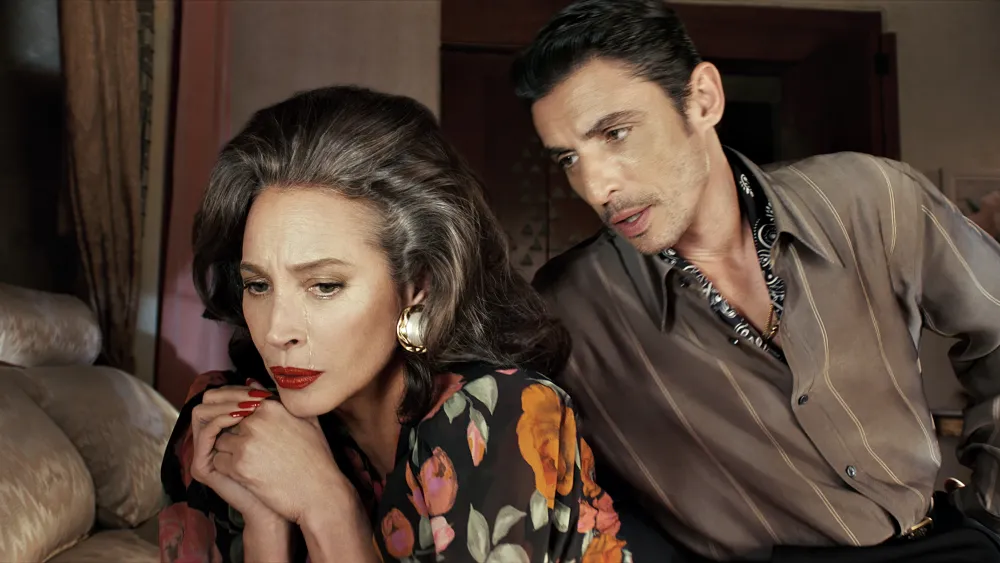
Zara and Willy Chavarria Don’t Collaborate—They Align

By Diego Sanchez
We like to imagine that fashion moves in one direction.
That the system absorbs the designer.
That scale flattens meaning.
That once something enters the machine, it comes out cleaner, faster, and quieter than it went in.
But that assumption only works when one side holds all the leverage.
What’s happening between Zara and Willy Chavarria doesn’t read that way.
It reads like recognition.
Zara has never struggled with relevance in the traditional sense. It does not wait for permission, and it does not require endorsement to participate in culture. Its advantage has always been structural: the ability to move faster than meaning can stabilize.
Runway appears.
Signal emerges.
Zara translates.
Not perfectly, but efficiently.
And for a long time, efficiency was enough to win.
Because when the cycle moves quickly enough, authorship becomes secondary. The consumer isn’t asking where something came from—they’re asking how quickly they can have it.
But that question has shifted.
Not dramatically. Not all at once.
Just enough.
Somewhere along the way, the audience learned how to read.
Not just silhouettes, but sources. Not just aesthetics, but intention.
The difference between something that is observed and something that is lived began to register. And once that sensitivity develops, the system that thrives on observation alone starts to feel incomplete.
Zara didn’t slow down.
It simply reached the edge of what speed could solve.
Chavarria lives on the other side of that edge.
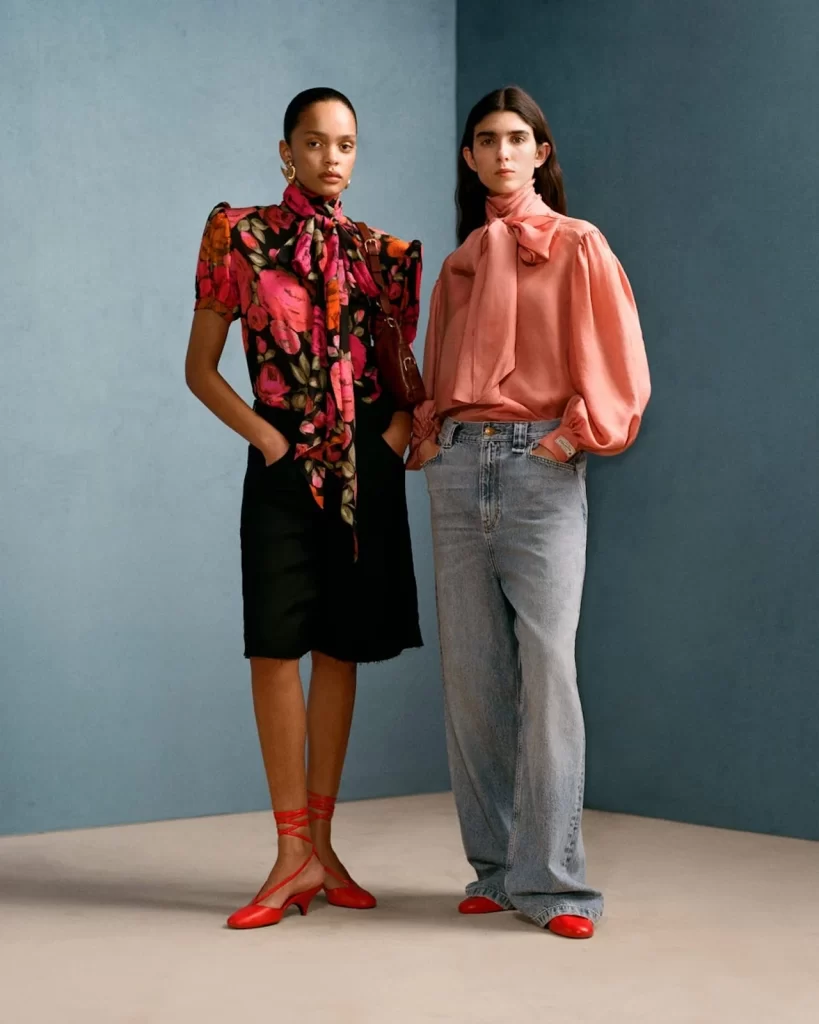
His work does not begin with trend. It begins with position—cultural, political, personal—and moves outward from there. The garments carry weight because they are built from something that exists before fashion ever touches it.
Oversized tailoring, in his hands, is not proportion.
It’s posture.
And posture, unlike trend, does not need to be refreshed every season. It holds because it comes from somewhere specific.
That specificity is what makes it powerful.
It’s also what makes it difficult to scale.
So the dynamic becomes clear.
Zara cannot produce that kind of origin internally.
Chavarria cannot independently distribute it at Zara’s speed.
Each system is complete on its own terms.
Each system is limited on the other’s.
And limitation, when recognized early enough, becomes strategy.
This is not Zara’s first collaboration. That’s what makes it easy to misread.
Partnerships have long been part of the brand’s operating logic—moments that signal proximity, recalibrate perception, and remind the audience that the system is still paying attention.
But proximity is not the same as alignment.
And alignment requires precision.
Chavarria is not an arbitrary choice.
He arrives at a moment when authorship carries more weight than trend, when identity travels faster than product, when the conversation around fashion has widened beyond what something looks like to include what it means.
To align with that is not to experiment.
It is to position.
And it matters, just as much, that he says yes.
Because this is not a designer in search of validation. The work is already recognized. The language is already established. The audience is already listening.
So the decision to partner is not defensive.
It’s directional.
Luxury has always offered reach upward—status, elevation, distance. Zara offers something else entirely: immediate, horizontal expansion. A way for an idea to move across geographies and demographics without delay.
Not interpretation later.
Translation now.
Which brings the entire exchange into focus.
Zara offers infrastructure.
Chavarria offers authorship.
One brings the system.
The other brings the reason the system matters.
And for a moment, the two are allowed to operate in the same space.
The risk is not philosophical.
It is practical.
Because scale behaves differently than meaning.
Scale simplifies.
Meaning accumulates.
One is designed to travel quickly.
The other is designed to hold.
And when the two meet, something has to give.
You can see it happen in weaker collaborations—the outline remains, but the substance fades. The garment looks right, but feels empty. The reference is visible, but the context is gone.
That is the failure point.
Not intent.
Translation.
If this holds, the outcome is more interesting than success or failure.
It suggests that authorship does not have to disappear at scale—that it can, under the right conditions, survive expansion without losing its center.
And if that becomes possible, the system itself changes.
Because then the question is no longer how fast something can move.
It’s how much of it remains intact when it does.
This is why the move resists easy framing.
It is not extraction in the way Zara has historically been accused of.
It is not compromise in the way collaborations are often dismissed.
It is a negotiation between two forms of power.
One built on reach.
The other built on meaning.
Neither replaces the other.
They intersect.
Deliberately. Temporarily. Precisely.
And in that intersection, you can see the future of how fashion operates—not as a hierarchy between creator and system, but as a series of calculated alignments between them.
Zara didn’t change what it is.
Chavarria didn’t change what he does.
They recognized what they couldn’t do alone—and acted accordingly.
Related Posts

When the Product Disappears, the Environment Becomes the Display
Audible Story House and the Rise of Invisible Retail

Netflix Drops New Teaser for Highly Anticipated ‘Squid Game’ Season 2
Watch the New 'Squid Game' Season 2 Teaser

Fate Takes a Turn: Jackpot and Black Cat Unveil Their Luckless Alliance in a Fresh Team-Up Series
Marvel’s Unluckiest Pair

Sony Launches Sony Innovation Fund: Africa
~ Fostering ventures specializing in the entertainment business in

Carl Friedrik Unveils the Sonder Collection: A Sleek Line of Soft Leather Travel Bags
Carl Friedrik has introduced a new collection of soft leather bags.

Ancestry Inspires People to Discover, Preserve and Represent All That They Are With “It’s a Family Thing” Integrated Brand Campaign
By Tanner James Ancestry®, the global leader in family history, today