

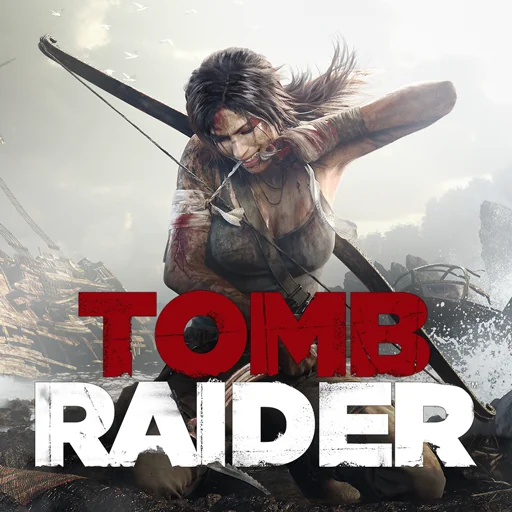
Lara Croft Enters the Mobile Era — And Nothing Feels Scaled Down

BY Brian K. Neal
Anniversaries in gaming often trade in nostalgia. Tomb Raider’s 30th does not. It trades in permanence.
As the franchise moves toward a new feature film and renewed cultural visibility, one of its most pivotal chapters has returned — not as a remaster chasing sentiment, but as a recalibrated release built for the devices that define modern play. The 2013 reboot of Tomb Raider has officially arrived on iOS and Android, rebuilt for contemporary hardware without sacrificing cinematic depth or mechanical scale.
This is not a condensed adaptation. It is the complete experience.
When the reboot originally launched on console, it did something foundational: it dismantled the myth and reconstructed the human. The Lara Croft who washed ashore on Yamatai was not yet a symbol. She was inexperienced. Vulnerable. Reactive. What followed was a survival story steeped in tension and transformation — a character study disguised as an action spectacle. That tonal shift reintroduced Lara to a new generation and redefined what Tomb Raider could be in a post–blockbuster gaming landscape.
Bringing that full arc to mobile devices without erosion is a technical and philosophical choice.
The port comes from Feral Interactive, the London-based studio known for ambitious transitions of console-scale titles into portable ecosystems. Rather than a pared-back interpretation, the mobile release includes the complete original campaign along with all downloadable content. The scope remains intact. The storytelling remains cinematic. The identity remains sovereign.
Where the mobile version differentiates itself is in execution.
The game offers full gamepad compatibility, providing traditional console-style input for those who prefer tactile familiarity. For touchscreen players, customizable controls are built with modularity in mind. Users can select a fixed virtual joystick or opt for a dynamic trackpad system that adjusts in real time for aiming and camera control. Both left- and right-handed players are accommodated — a subtle but meaningful acknowledgment of inclusivity in design.
Tablet users, particularly those on higher-end devices, gain additional flexibility. Limited mouse and keyboard support is available on compatible iPadOS and Android hardware, creating an experience that edges closer to PC play — proof that the line between platforms continues to blur.
Visually, the release resists compromise.
Graphical settings scale depending on device capability, allowing premium smartphones and tablets to reach frame rates up to 120FPS with enhanced texture quality and improved lighting systems. Rather than enforcing a single visual standard, players can tailor performance through four distinct modes:
- Graphics Mode emphasizes visual fidelity over frame rate.
- Performance Mode prioritizes smoother gameplay at slightly reduced graphical intensity.
- Performance Plus, available on select high-end tablets, pushes frame rates further toward technical peak.
- Battery Saver Mode reduces both fidelity and frame rate in favor of prolonged device life.
This flexibility signals something larger within the industry: console authority is no longer tethered to fixed spaces. It travels. It adapts. High-end gaming is migrating from living rooms to pockets without losing scale or seriousness.
Tomb Raider’s arrival on mobile also reinforces an emerging standard in the marketplace. A growing number of once-console-exclusive titles are transitioning to smartphones and tablets fully formed — not abbreviated. For players, this represents choice without sacrifice. For developers, it represents confidence in the hardware ecosystem that now defines everyday computing.
Yet beyond specs and performance metrics, the release carries symbolic weight.
Thirty years after Lara Croft first stepped onto the global stage, the character remains culturally fluent. She has survived generational shifts in graphics engines, tone, and audience expectation. The 2013 reboot marked one of her most important evolutions — a move toward psychological realism and vulnerability layered within blockbuster structure. Delivering that moment intact on modern mobile hardware feels less like fan service and more like proof of adaptability.
Legacy is rarely preserved by repetition. It is preserved by reinvention that respects core identity.
With Tomb Raider now available on the App Store and Google Play in its fully realized form, longtime players can revisit the story that reshaped the franchise. Newcomers can encounter Lara’s defining origin for the first time — not through retrospective reverence, but through active engagement on the devices they use every day.
Thirty years in, Lara Croft is not being archived. She is being redistributed.
And in an era where culture moves at the speed of portability, that may be the most enduring evolution of all.
Related Posts

Commodore Is Betting That Less Technology Has Become a Premium Product
The phone isn't rejecting technology—it's redefining its role

Ultrahuman Unveils Rare: The World’s First Luxury Smart Ring at CES 2025
Ultrahuman unveils Rare, the world’s first luxury smart ring.
BeONE Sports and MobiDev Collaborate to Unveil an AI-Powered Comparative Training Platform
Sports technology BeONE software engineering MobiDev have collaborated

Soocas Unveils the NEOS II: The Next Generation of Electric Toothbrushes with Integrated Water Flossing Technology
Soocas Unveils NEOS ll: The First 2-in-1 Electric Toothbrush.
Insta360 Takes Flight: Antigravity A1 Drone Promises 8K Immersive 360° Capture
The Future of Aerial Creativity

Sonic and Friends Go Head-to-Head in Colorful New Battle Royale
Sonic Jumps Into the Battle Royale Ring with ‘Sonic Rumble’