


Luxury, Authored: Willy Chavarria and Cultural Gravity
By DaMarko GianCarlo
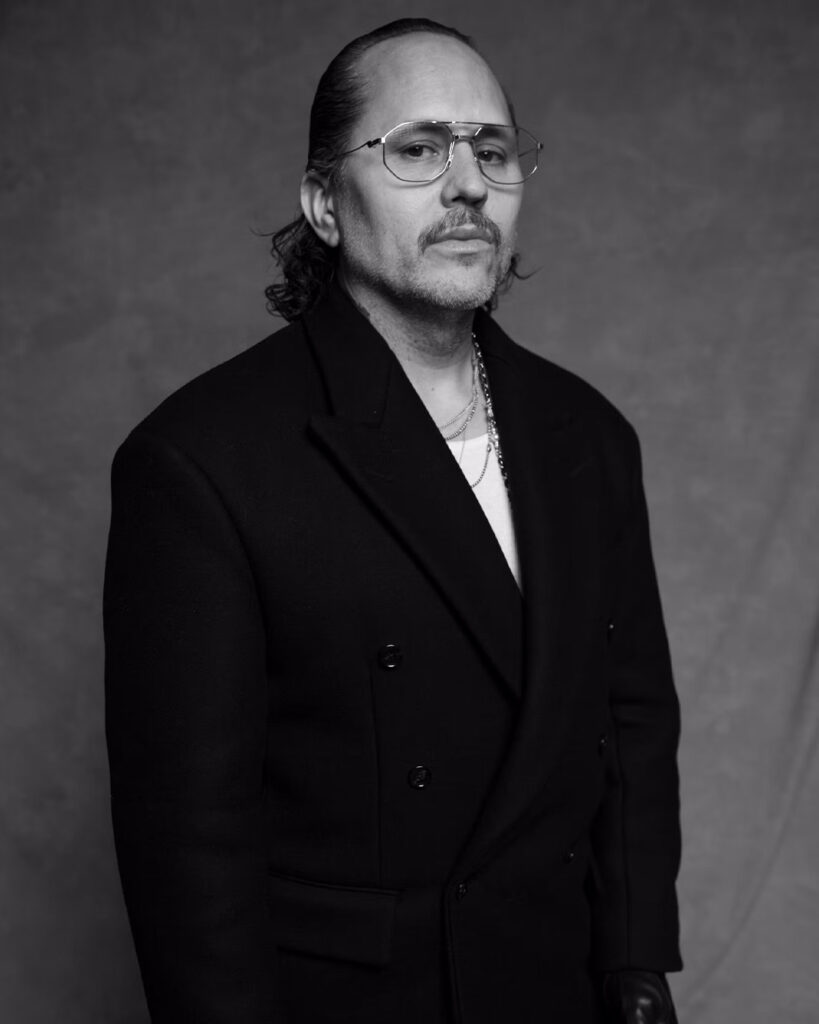
There is a reason Willy Chavarria feels unavoidable right now — and it has very little to do with novelty. His work does not rush forward shouting for recognition. It stands still and lets the room adjust to him. In an industry addicted to spectacle, he has chosen weight. And weight, in this moment, carries further than volume ever could.
Chavarria’s heritage is not presented as inspiration or reference. It is not translated for approval. It simply exists, unsoftened and unresolved, in the clothes themselves. His silhouettes carry the posture of men who have learned to take up space cautiously. His tailoring remembers labor before luxury. His casting refuses performance and instead insists on presence. This is Mexican-American identity not framed as folklore or flavor, but as lived architecture — bodies shaped by work, discipline, faith, and restraint.
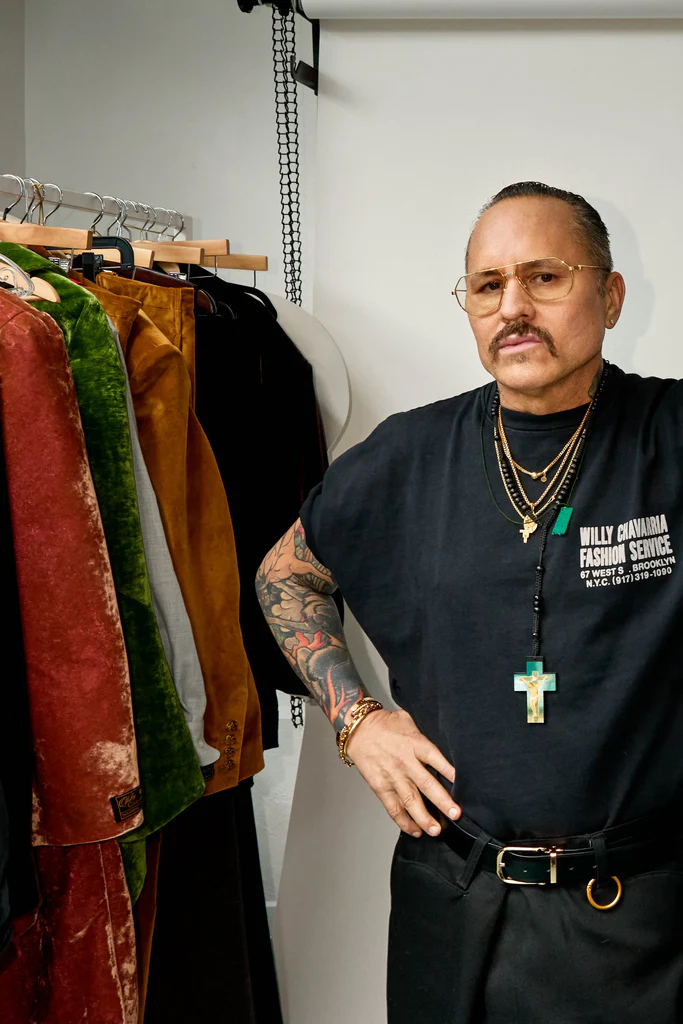
Fashion is currently reckoning with the exhaustion of surface-level progress. Representation arrived quickly, loudly, and often hollow. The industry’s appetite for spectacle has collapsed under its own speed, leaving it unusually sensitive to work that does not beg for attention but assumes it. What Chavarria offers instead is authorship. His voice does not explain itself because it doesn’t need permission to exist. The industry feels this immediately, even if it can’t articulate why. His work doesn’t ask to be understood; it asks to be stood next to. That distinction is everything.
What makes his voice scream while being quiet is control. His collections are not visually chaotic or overtly political in the way protests are expected to be. They are formal. Measured. Sometimes devotional. This restraint mirrors a very real cultural inheritance — one shaped by survival rather than celebration. The power lies in what is withheld. Long coats hang heavy with implication. Colors sit in deep, intentional seriousness. Nothing performs urgency, yet the urgency is unmistakable.
This is why his work lands so forcefully now. We are in a cultural moment where speed has collapsed meaning. Fashion moves faster than thought, and in doing so, empties itself. Chavarria’s work slows everything down. It reminds the industry that dignity is a visual language. That masculinity can be gentle without being apologetic. That heritage can be present without being advertised. His clothes do not explain Latin identity — they embody it.
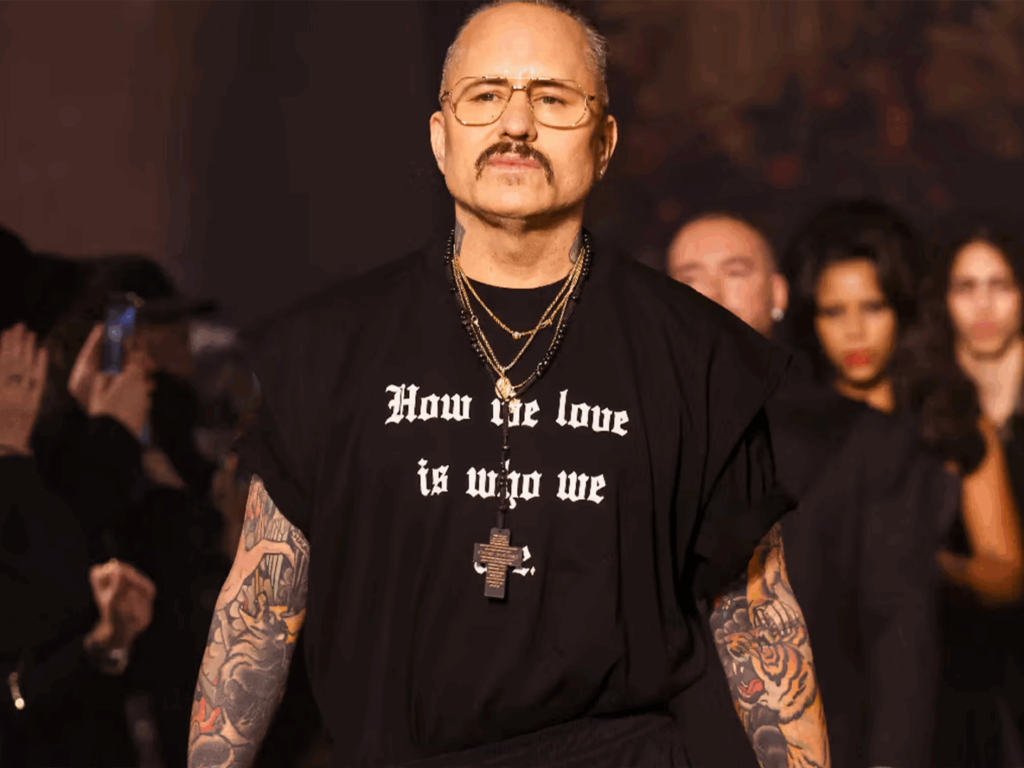
The fashion industry is also confronting a deeper question it has long postponed: who is allowed to define luxury? For decades, Latin identity in fashion was acceptable as labor, as texture, as influence — but not as the voice deciding what luxury should mean. Chavarria does not negotiate that history. He bypasses it. His work asserts that luxury does not belong exclusively to lineage or legacy houses; it belongs to conviction. To taste formed under pressure. To someone who knows the difference between visibility and power.
That distinction is why institutions are paying attention now. Not because the industry suddenly discovered Latin designers, but because audiences have grown literate. They recognize when something is being sold versus when something is being stated. Chavarria is not offering a look; he is offering a position. The clothes feel like they already know the room they’re walking into.
This type of authorship matters because it arrives without spectacle at a moment addicted to it. Because it refuses to be flattened into branding. Because it carries memory, restraint, and authority into spaces that once required permission. And because the industry — whether it admits it or not — is starving for work that doesn’t ask for attention, but commands it quietly.
This essay belongs in GREAY’s world because GREAY is not cataloguing culture. It is interpreting who holds authorship within it. Writing about Chavarria in this way signals that the magazine understands fashion as cultural infrastructure, not seasonal theater. It says GREAY recognizes when a voice is important not because it is loud, but because it is inevitable.
That is not trend relevance. That is cultural gravity. And that is precisely the kind of writing that confirms GREAY as a Pop Culture Blueprint, not a mirror.
Related Posts
Marvel Comics Celebrates Native American Heritage Month with Kahhori’s Epic Comic Debut
First Look at 'Kahhori: Reshaper Of Worlds' #1

Hollywood Built Stories for Theaters. The Phone Rebuilt Them for the Hand
The Device Is the Director Now

USPS Explores the Cosmos with Latest Priority Mail Stamps
USPS Explores the Cosmos.
Brian Newman on Why Great Music Should Never Feel Exclusive
Jazz, Joy, and the People in the Room
AI Just Hired Hollywood
The migration from computation to collaboration.
The Shadow of the Spider: Nicolas Cage Swings into Noir
Web of Secrets: Marvel’s Spider-Man Noir Series Sets the Stage