

The Fuji instax mini Evo Cinema Is Nostalgia With a Memory Card
By Brian k. Neal
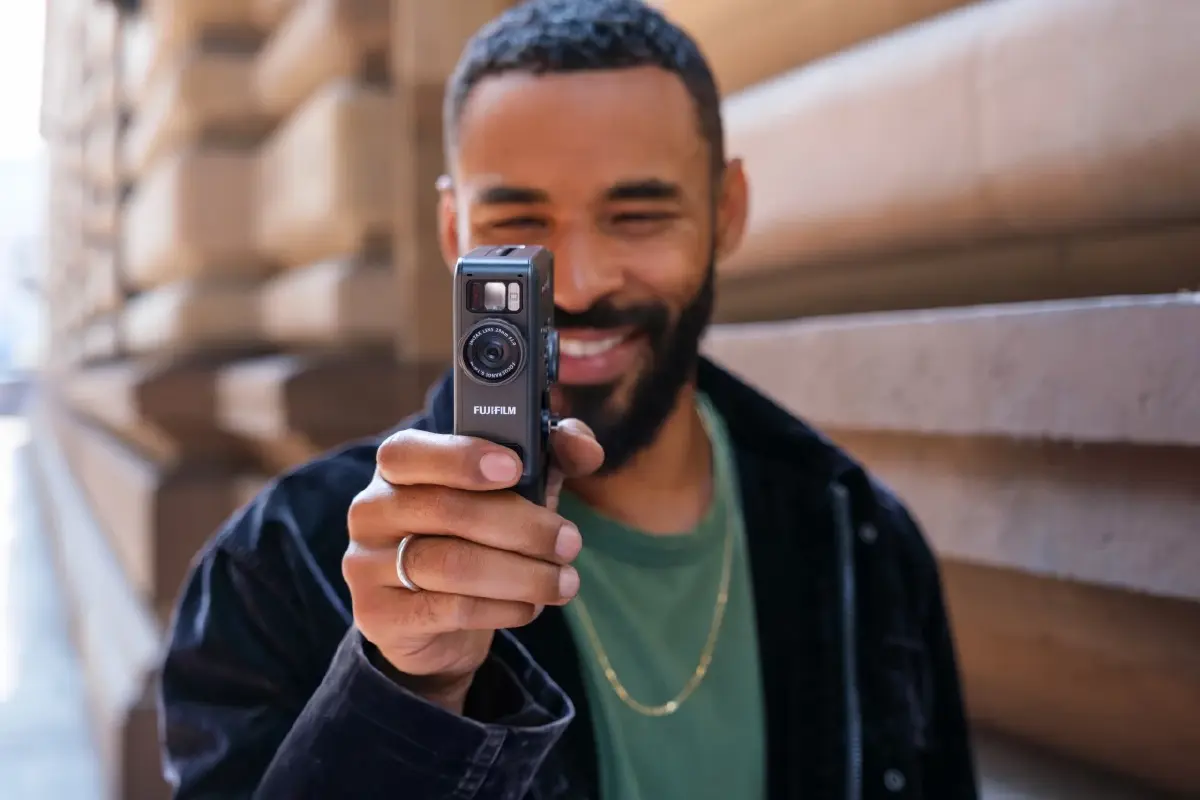
The instax mini Evo Cinema marks one of the most ambitious creative pivots the instax brand has made to date—less a camera built solely for moments, and more a storytelling device designed for how creators actually move today. Blending still photography, short-form video, and instant printing into a single hybrid system, the mini Evo Cinema positions itself at the intersection of nostalgia and modern content creation, offering a deeply tactile experience without abandoning digital flexibility.
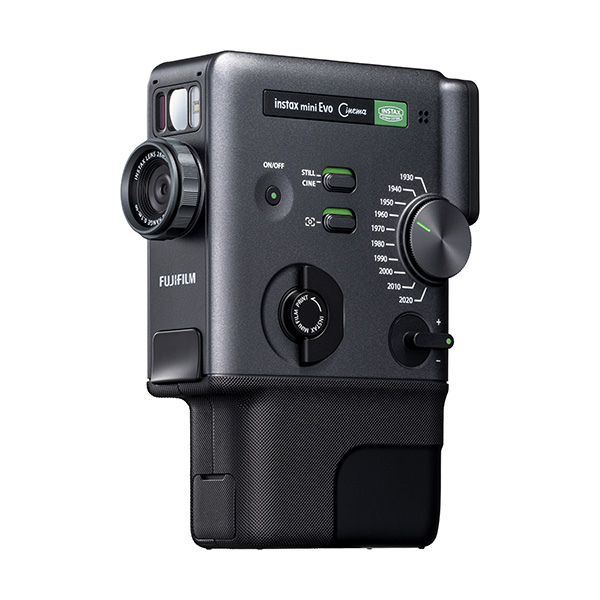
At its core, the mini Evo Cinema is about expression through time. Fujifilm’s newly introduced Eras Dial transforms the camera into a visual time machine, allowing users to apply aesthetic treatments drawn from ten distinct decades, from the soft, grain-forward restraint of the 1930s to the saturated exuberance of the 1980s and the clean precision of the 2020s. Instead of treating filters as novelty overlays, each era is designed to reflect how images were actually captured, processed, and consumed in that period—making the effect feel intentional rather than performative.
That sense of control deepens with the Degree Control Dial, which lets creators fine-tune contrast, color intensity, and noise structure within each era. Rather than a single locked look, every era becomes a flexible framework, opening the door to dozens of nuanced visual interpretations. The experience feels closer to lens selection and film choice than tapping through presets, reinforcing the camera’s analog-inspired creative philosophy.
Personalization continues through the Frame Switch, which adds era-specific borders to both photos and video clips. These frames nod to the media formats and playback devices of their respective decades, giving finished images the feeling of rediscovered artifacts rather than freshly generated content. It’s a small detail, but one that reinforces the mini Evo Cinema’s commitment to visual storytelling with context and character.
Switching between still photography and motion is intentionally frictionless. With dedicated CINE and STILL modes, creators can move freely between mediums, capturing photos or recording short video clips that the camera automatically stitches into a single 15-second cinematic sequence. Connected through the instax mini Evo smartphone app, those video projects can be extended to 30 seconds, rearranged, and refined—bridging the gap between instant gratification and deliberate editing.
The inclusion of a tactile zoom lever further anchors the camera in physical interaction, offering digital zoom that feels purposeful rather than menu-bound. Whether tightening in on a subject or widening out to establish atmosphere, the control echoes the ergonomics of classic handheld film cameras.
Beyond capture, Fujifilm leans heavily into longevity and memory. The My Gallery feature inside the companion app functions as a personal archive, organizing photos, videos, and projects while preserving printed images digitally—complete with the iconic instax mini border. For video creators, one of the most intriguing features is Video Printing: select a frame from a video, print it instantly, and embed a QR code that links back to the original clip. It’s a physical object that unlocks motion, with video and audio stored securely for up to 24 months.
Design is where the mini Evo Cinema arguably makes its strongest emotional case. Inspired by the FUJICA Single-8 8mm camera from 1965, the camera’s vertical grip, matte black finish, and analog-style print lever feel like a love letter to mechanical craft. Printing a photo requires a deliberate lift-and-twist motion, reinforcing the sense that every output is a choice, not an accident. Accessories such as viewfinder and grip attachments, a premium hand strap, and thoughtfully integrated details only deepen that tactile appeal.
Supporting features round out the experience without distracting from the creative core. Remote shooting via the app, a built-in selfie mirror and self-timer, a high-resolution LCD monitor, USB-C charging, microSD storage, integrated flash, and continuous lighting ensure the camera is as functional as it is expressive.
With the mini Evo Cinema, FUJIFILM isn’t simply modernizing instant film—it’s reframing it. This is a camera designed for creators who think in timelines, who value intention over speed, and who want their memories to exist both on paper and in motion. In an era dominated by fleeting digital scrolls, the mini Evo Cinema invites users to slow down, curate their moments, and let nostalgia evolve into something cinematic.
Related Posts

SOUR PATCH KIDS® Brand Transforms Mischief into Currency with New Immersive World on Roblox
The SOUR PATCH KIDS® gets Immersive

X Is Launching a Standalone Messaging App for iOS
The Feed Isn’t the Focus
Lucid Air Goes Full Android: Wireless Auto Integration Arrives
Connected in Style


Samsung Unveils Enhanced Medications Tracking Feature in Samsung Health App
Samsung Electronics has unveiled a new feature

SMART Unveils Innovative Inclusion Solution and Global Research to Support Neurodiverse Learners
SMART Unveils Innovative Inclusion Solution