
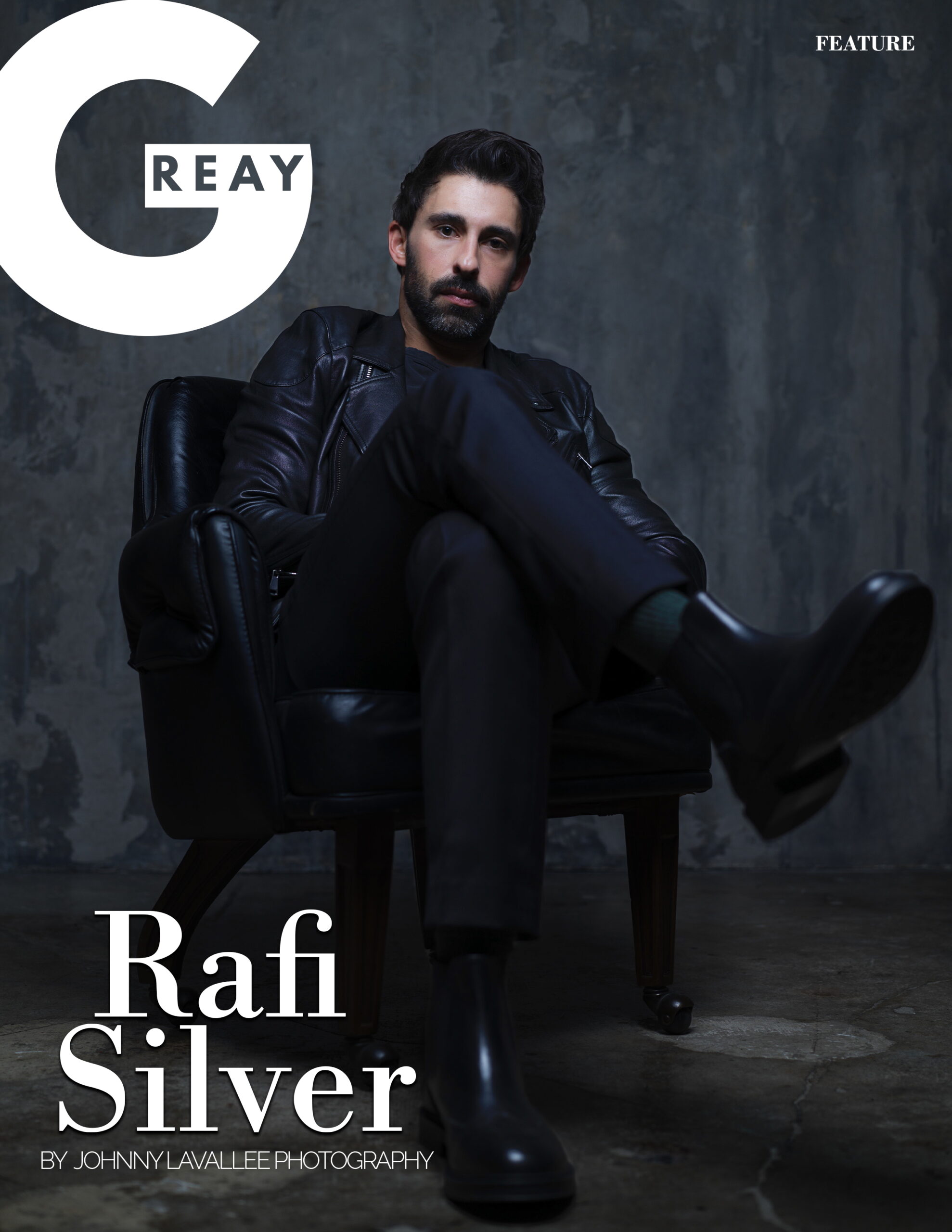
Fallout’s Hidden Layers Belong to Rafi Silver
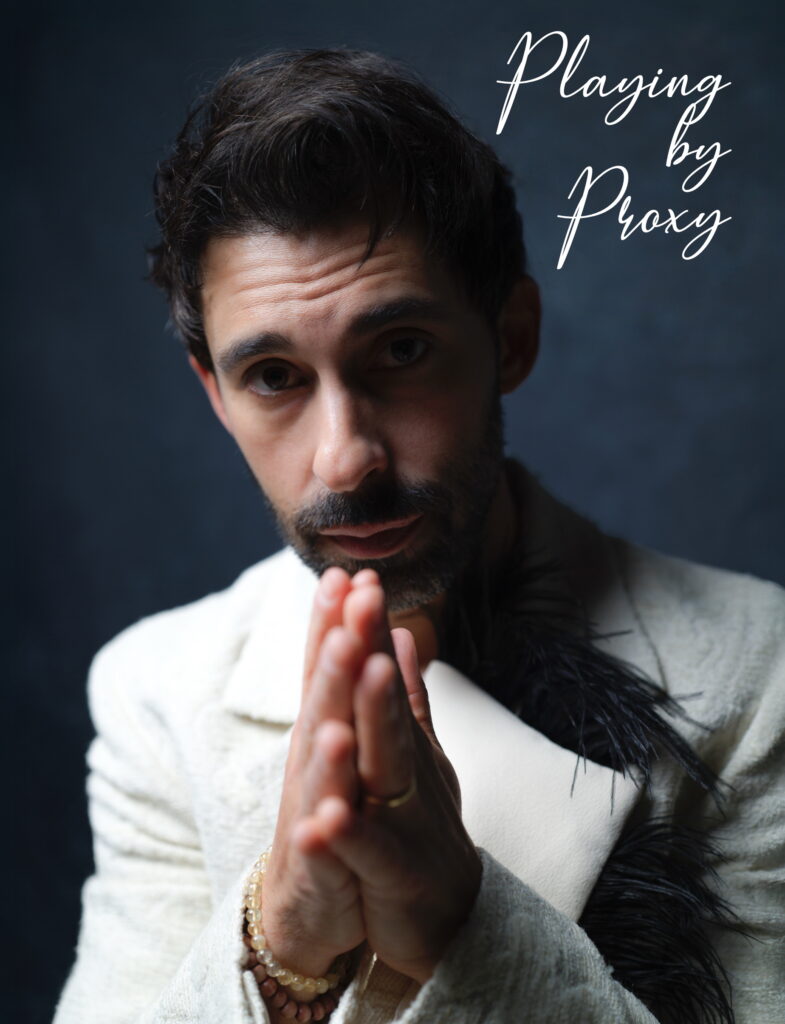
From the moment Fallout quietly reframes its mythology, Rafi Silver steps forward as one of the series’ most intriguing revelations. What begins as an Easter egg evolves into something far more layered: a man performing power, identity, and illusion in plain sight. Sharing the screen with icons like Walton Goggins and Justin Theroux, Silver delivers a performance rooted not in spectacle, but in precision—where stillness, intention, and inner authority do the heavy lifting. It’s a turn that reshapes Robert House’s legacy while revealing Silver as an actor deeply attuned to both story and self.
Sharing the screen with Walton Goggins’ Ghoul and Justin Theroux’s Mr. House in Season 2—delivering lines like “Mr. House wants to meet with you”as the public-facing stand-in—sounds thrilling. How did you prepare for that high-energy crossover moment?
That was actually my first day on set for Season 2, so I had a little bit of that nervous anticipation, knowing it was a big reveal with major implications for the history of Robert House.
But more than anything, I was excited to be back. It had been almost two years since I wrapped Season 1, and going in, I knew most of my work this season would be with Walton and Justin, two of my absolute heroes in this business. They both have an effortless ability to move between comedy and drama, and no matter how subtle or broad the moment is, there’s never a hint of inauthenticity in their work. On top of that, they’re incredibly generous and unselfish actors.
That first day, the Lucky 38 was packed with background actors, and when there’s that much energy in the room, it can feel distracting or nerve-racking. Walton, being who he is, cut through that completely. Even though we had never met, he pulled me aside, gave me a big hug, told me how excited he was to have me there, and made it crystal clear that we were all ambassadors of the story. That moment was incredibly inspiring. I had never had an actor of that caliber do something like that for me, especially someone I admire so deeply.
Without realizing it, he gave me permission to slow down, trust myself, and be as good as I could be in service of the story. That tone carried with me through the entire season. Little gestures like that go a long way, and Walton and Justin remained generous every single time I worked with them.
Working opposite Goggins’ iconic Ghoul must have been a wasteland highlight. What was the vibe on set during your face-to-face encounter, and how did it build on the billboard/public image layers of your character?
I actually never worked with Walton as the Ghoul; I only worked with him as Cooper Howard. Though I would absolutely love to share a scene with the Ghoul someday. I’m a huge fan of that character.
The vibe when working with Walton as Cooper Howard was intentional, yet he kept it fluid and loose. Walton brings a level of authenticity to every breath he takes on camera, and he naturally elevates everyone around him. He’s truly an actor’s actor, on and off screen.
One of the fun things Geneva and I talked about while preparing for Season 2 was how Cooper Howard and my character share a similar trait: we’re both performers who end up playing public-facing versions of ourselves. There’s a really juicy layer there: two people pretending to be someone else in the public eye, while knowing they’re doing it. I had a lot of fun exploring that, especially in the elevator and penthouse scenes.
This twist elevates you from a Season 1 Easter egg to a narrative key player alongside Theroux’s House. How does embodying the “visible proxy” change fan perception of Robert House’s enigmatic lore?
I think the short answer is: it changes everything.
For fans of New Vegas and Robert House, this twist opens the door to a whole new level of mystery. It invites people to revisit the game with a different perspective and ask new questions. If he isn’t Robert House, then who is he? When did he become the proxy? What’s his story?
That’s what excited me most about the role. I wasn’t just playing Robert House; I was really playing two characters. When I was first cast, I jokingly said to Geneva, quoting Tropic Thunder, “I’m just a dude playing a dude disguised as another dude,” not realizing Justin Theroux would actually be the actor I’d be doubling.
But seriously, that complexity, the guy behind the guy, offered so much room for creativity. I spent countless hours watching New Vegas playthroughs, doing deep dives into Robert House’s history and lore, and studying inspirations like Howard Hughes and Walt Disney. There’s an enormous amount of source material, including René Auberjonois’ incredible original voice performance.
I tried to approach the role as if I were a CIA operative tasked with becoming someone else, because the stakes are that high, and that’s exactly what I think this character would do in the world of Fallout.
Scenes with both Goggins and Theroux scream New Vegas chaos. Did you draw from game lore or real Vegas history to infuse your delivery with that pre-war glitz amid post-apocalyptic tension?
The penthouse scene with Walton and Justin was the one I was most excited about. Not only because I got to spend the day working with two of my heroes, but because it was the first real opportunity for my character to pull back the curtain and reveal who he actually is.
Everywhere else in the world of Fallout, my character has to fully embody Robert House. But in the penthouse, alone with the robots and the real House, he finally gets to relax and breathe. That was such a fun contrast to play. Who is this guy when he isn’t being watched? It felt like an actor stepping backstage between scenes, or a spy dropping their cover for a moment.
What made it even more exciting was the juxtaposition: for my character, the stakes are relatively low in that scene, while for Walton and Justin, they couldn’t be higher. I wanted the audience to feel that tension and ask, “Wait… who is this guy, really?”
And I’d be remiss not to mention the set itself. The production team built what felt like an exact replica of Robert House’s penthouse on the volume stage in Culver City. After doing all that research, stepping into that space was genuinely jaw-dropping.
As a Columbia MFA teacher, how will these multi-star interactions—Goggins’ intensity, Theroux’s gravitas—inform your classes on ensemble dynamics and meta-character work?
At Columbia, I teach a course called The Mindful Actor, which I created based on my experience as a professional actor and a practicing Buddhist. The class integrates mindfulness and loving-kindness meditation to help young artists develop tools for presence, focus, and generosity, especially in high-stakes environments.
Working with Walton and Justin reinforced something I already deeply believe and teach: great acting is rarely about dominance or control, it’s about service. Both of them lead with presence, curiosity, and generosity, creating a ripple effect across the entire ensemble. I’ll absolutely bring those real-world examples into the classroom, especially when we talk about leadership on set, holding space for scene partners, and navigating layered characters without ego getting in the way.
Peak Mind Performance equips actors and athletes with mindfulness for peak presence. How has navigating Fallout’sstar-powered scenes shaped your techniques for performers under spotlight pressure?
Whether you’re an actor, athlete, or anyone under the spotlight, we’re all chasing that state of flow, that feeling of being fully present. Yet when perceived pressure rises, we often fall out of presence. Actors sometimes call this “being in your head,” which is really just heightened self-consciousness.
In Buddhist teachings, mindfulness helps us see that this sense of self is not fixed; it’s an illusion. On a film set, actors often spend long stretches alone in trailers, preparing in isolation, which can send that self-conscious mind into overdrive.
I noticed that happening for me from time to time. But instead of feeding the inner critic, I recognized what was happening. I took a few deep breaths, acknowledged those thoughts as thoughts, and allowed them to pass. Creating that space between stimulus and response reconnected me to my purpose and ultimately helped alleviate the pressure.
Share a client example where your fearlessness training echoed the poise needed for Ghoul–House proxy moments.
It’s difficult to speak directly for any one client or student because everyone has a very personal relationship with this work. What I consistently see, whether with actors in callbacks or athletes in competition, is that fearlessness doesn’t come from eliminating fear; it actually comes from learning how to be with it. One of the reasons I became an actor in the first place was that storytelling offers a unique mirror into the human experience. Having a tool to help with that awareness and constantly reminding myself of why I choose to perform allows me to show up even when the stakes are high.
Your Dharma Moon and Tibet House certification blends acting roots with mindfulness. What performer insights drove you to specialize in creatives facing twists like Fallout’slayered role?
One of the most exciting parts of blending mindfulness and acting for this role was exploring identity, who we are versus how we present ourselves to the world. That’s a question I sit with constantly in my personal practice, my teaching, and my acting.
In Buddhism, the idea of a fixed self is considered an illusion. We’re always playing roles depending on context. My character in Fallout exists directly in that tension—presenting a version of himself that isn’t entirely true. That’s also what actors do: we fully believe in imaginary circumstances. In many ways, that’s what all humans are doing all the time.
There were so many layers to explore there, and I loved diving into them.
Prepping for the 2025 Masters CrossFit Games, how do you customize tools for athletes’ endurance versus actors channeling authority in scenes with Goggins and Theroux?
I emphasize to all of my clients that mindfulness isn’t a quick fix. It’s a daily practice of learning how to bring attention to the present moment without bias or judgment, regardless of the discipline. I often encourage what I call “mindfulness in the wild,” where the practice isn’t reserved for the cushion alone, but fully integrated into everyday life. The Buddha taught that mindfulness means to be reminded. The more reminders we create throughout the day, the stronger and more reliable the practice becomes.
For actors, presence is the job, and mindfulness is the secret sauce for sustaining that presence. But whether you’re preparing for a role or training for the CrossFit Games, the principle is the same: it requires consistent, daily reps. The more you practice, the more flexible, resilient, and available you become when it matters most.
Amid Falloutbuzz, teaching, and Peak Mind growth, how do your own practices keep you balanced—and what’s next for expanding to more entertainment professionals?
My personal practice is the foundation of everything I do. Daily meditation, exercise, and time with family and community keep me grounded. When things get busy, that’s usually a signal to me that I need to simplify, not to do more. Returning to the basics keeps me present and connected to why I do this work in the first place.
Looking ahead, I’m excited to continue expanding Peak Mind Performance and The Mindful Actor into new avenues, whether that’s in university settings, live courses, one-on-one work, or the app I’m currently building. The throughline in all of it is community. I want to help foster spaces where people feel supported, where resources exist to remind us that suffering is universal, and where mindfulness is understood not just as a technique, but as a way of life.
Ultimately, my intention is simple: to be of benefit to all beings in whatever ways I can. Whether that’s through acting, teaching, coaching, or just showing up with a little more presence and humility, I see it all as part of the same practice.
For Silver, the role is inseparable from practice. As an actor, educator, and mindfulness specialist teaching at Columbia University, his work lives at the intersection of performance and presence. Whether navigating Fallout’s high-stakes mythology, mentoring emerging artists, or expanding Peak Mind Performance, Silver approaches each arena with the same guiding principle: service over ego, awareness over armor. In a world obsessed with control and projection, his work reminds us that the most compelling authority on screen—and off—comes from knowing when to step back, breathe, and simply be. In Fallout’s vast wasteland of power and illusion, Rafi Silver proves that clarity may be the rarest resource of all.
Photo credit: Johnny LaVallee Photography @lavalee.l.a
Grooming: Courtney Housner @chousner
Styling: Ananda Rose @anandarose
PR: TFG PR @tfg.pr
Related Posts
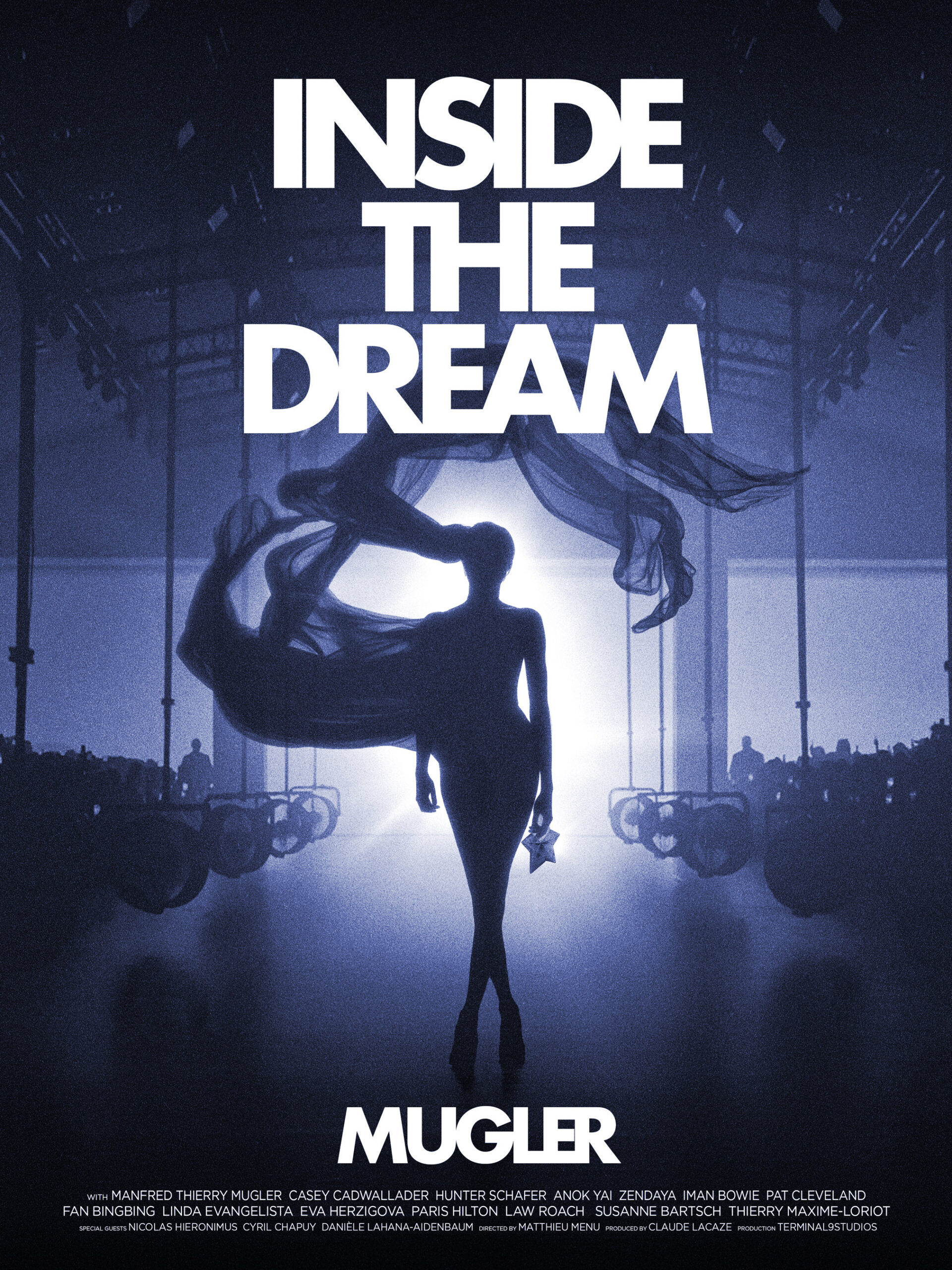
Mugler Unveils Inside the Dream: A Documentary Exploring the French Fashion House’s 50th Anniversary
INSIDE THE DREAM: MUGLER, THE NEW DOCUMENTARY

Fate Takes a Turn: Jackpot and Black Cat Unveil Their Luckless Alliance in a Fresh Team-Up Series
Marvel’s Unluckiest Pair
The Dance Is the Intellectual Property
Choreography Is the New Rights Layer
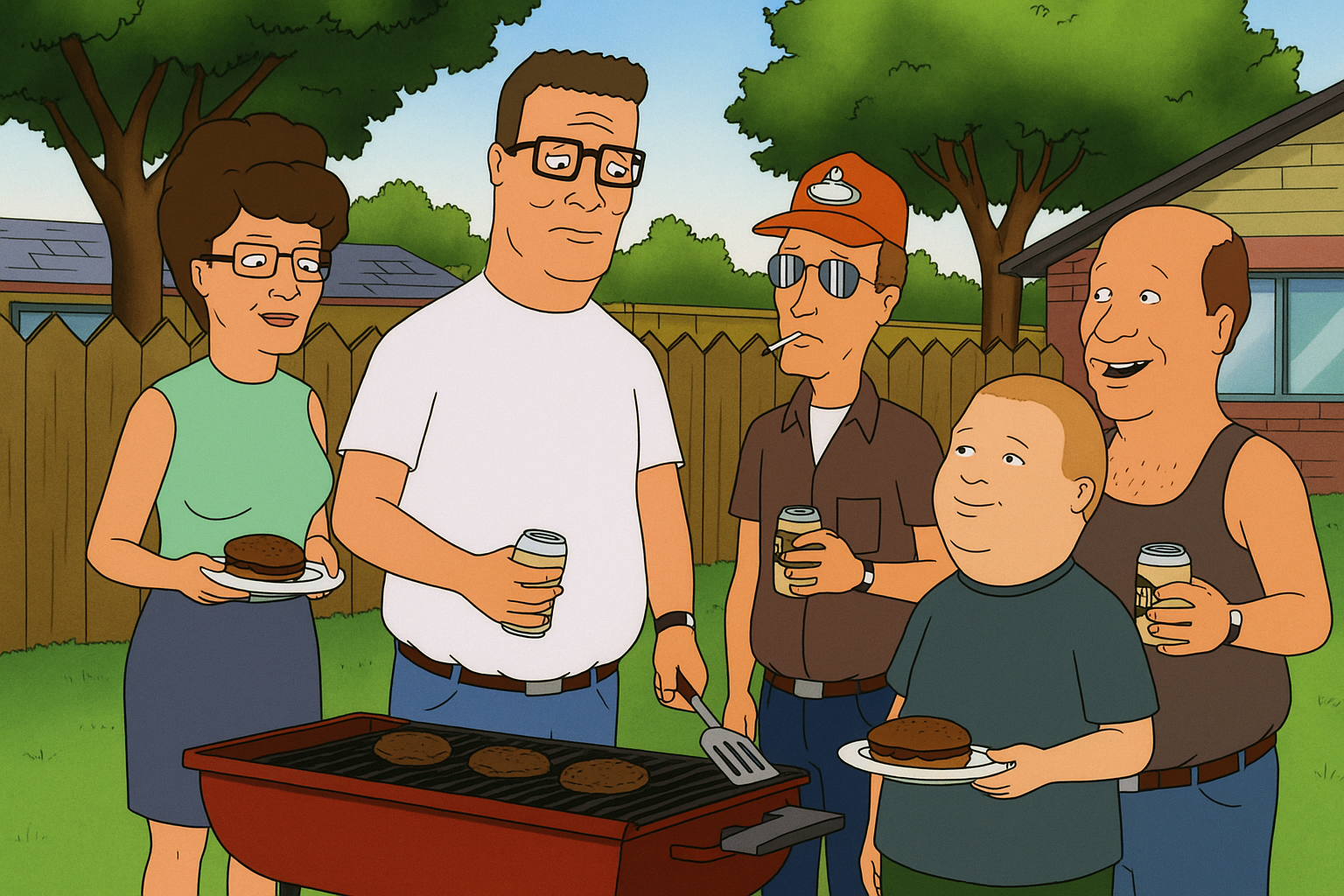
Long Live Arlen: Hulu Extends King of the Hill Through Seasons 16 and 17
Propane and Perseverance

Clase Azul México Unveils Exclusive Limited Edition Tequila: The Loft Brooklyn Collection I
Clase Azul Tequila Pays Homage to New York City.

Netflix Drops New Teaser for Highly Anticipated ‘Squid Game’ Season 2
Watch the New 'Squid Game' Season 2 Teaser