

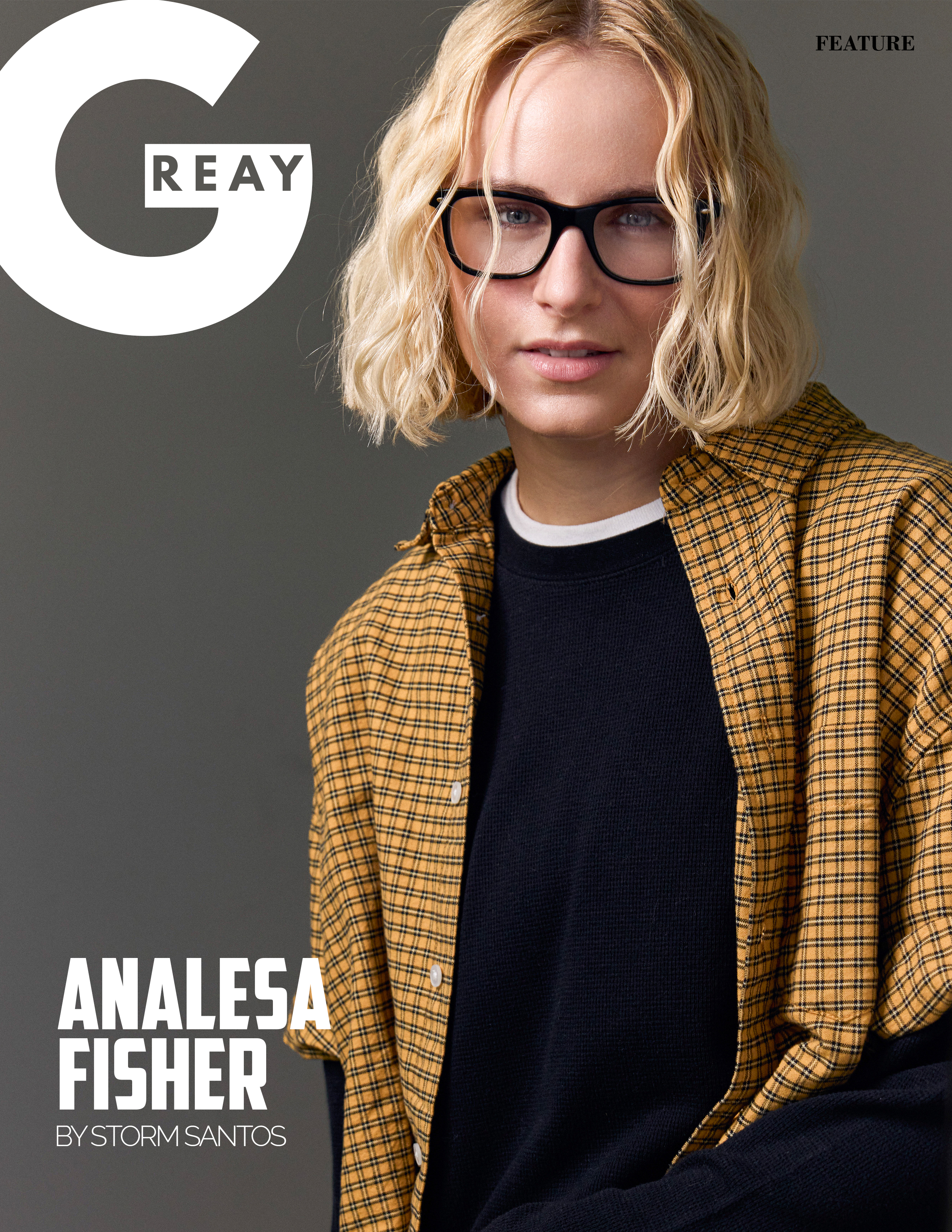
Analesa Fisher Tells the Truth in Saving Buddy Charles

By Kyra Greene
Analesa Fisher speaks with a level of honesty that feels both disarming and deeply intentional. Growing up on screen, she’s become a familiar presence for audiences navigating their own coming-of-age moments, yet her relationship with visibility remains complex, tender, and evolving. In this conversation with Greay Magazine, Fisher reflects on insecurity, creative growth, and learning from her younger self—while opening up about the emotional gravity that draws her to stories rooted in grief, resilience, and truth. From her fiercely personal connection to Saving Buddy Charles to her commitment to authentic representation and storytelling that holds space for young people finding their way through the mess, Fisher emerges not just as an actress in transition, but as an artist grounded in empathy, courage, and purpose.
You’ve grown up on screen in a way that audiences feel deeply connected to. When you look back at your early roles, what do you recognize now about yourself that you couldn’t see then?
I am a deeply insecure person. I hate looking at myself on screen, in pictures, and I still run away whenever a camera is pulled out, but honestly? The more distance there is between me and my projects, the more I look back at clips and just think– wow, look at that BABY. They’re really doing it, and they’re putting themselves out there, and they don’t care. So I’m trying to learn from my younger self, and continue just putting myself out there in hopes that future Analesa will look back and be proud of what I’m doing.
Many actors who start in family-friendly or youth-focused projects reach a moment where they redefine themselves creatively. Do you feel like you’re in a transition phase right now, and what kinds of stories are you craving next?
I feel like it’s happened fairly naturally. From Crazy Fast, which was a bonafide kids show, to Metal Lords, which was this raunchy, coming of age movie, I feel like I’ve grown with the content. As far as stories I’m craving, I’m really enjoying this coming of age genre right now. There are so many stories to tell about young people going through shit, just trying to find a way to get to the other side. Especially for young girls. Those kinds of movies got me through my teen years, and I want so desperately to be a part of giving those back to the younger generation.
Your performances often carry a natural warmth, but also a quiet emotional intelligence. How intentional are you about balancing relatability with emotional depth in your work?
Oh my gosh, that’s so nice. First of all, thank you. Second of all, I’m not sure if this is a good thing or a bad thing, but I keep finding myself with characters who are constantly surrounded by death. It’s an honor and privilege, and I take my job with that very seriously. From Firefly in Honkai: Star Rail to Clara, each individual circumstance requires their own kind sensitivity. My only job is to make it real. As real and as authentic as possible, because there are people out there right now who are living these stories, and this is for them.
Comedy has played a major role in shaping your career. What has working in comedy taught you about timing, vulnerability, and truth that you now carry into more layered or dramatic moments?
I think very similar to how important it is to play these very dramatic circumstances as honestly as possible, every bit of comedy comes from truth. In the case of Saving Buddy Charles, the comedy comes from the drama. We like to say this entire film is about crying through the laughter, and laughing through the tears. That’s real life. You’ll be bawling your eyes out in a Taco Bell parking lot one second, and cracking up with your friend about something insane your ex posted the next.
Saving Buddy Charles blends humor with the emotional messiness of friendship and growing up. What drew you to this story, and how did it stretch you creatively compared to previous projects?
From the second I read the script, I went on an absolute rampage to book this role. I was checking in with my reps every two days, asking if they watched my tape, what they thought, begging to know who else was in the running for the role. I instantly connected with the script. It made me laugh, it made me cry, and it was the first thing I had read in years that felt truly authentic. It wasn’t easy, obviously, it took me months to work up the script, and even then, showing up to set every day, I was pissing my pants just hoping I was able to pull these harder moments off. It was the hardest job I’ve ever had, and definitely the most fulfilling.
Indie projects often require a different level of trust and collaboration than larger productions. What did working on Saving Buddy Charles reveal to you about creative risk-taking or your own instincts as an actress?
Our amazing director, Grace Wethor, really encouraged us to make these characters as much of ourselves as possible. We did a TON of improv, and anytime there was a line, or a direction I wanted to go in with Clara, Grace was very receptive to it. She said I knew her better than anyone else, and that kind of trust is something that I’ve never had before. Not only that, but the entire set was collaborative. You know everyone loves the movie they’re working on when people start throwing out ideas for jokes, or things we can be doing in the background of a scene. We added shots, lines, background direction, so much stuff the day of, and it was so fun just getting to play with everyone and be creative.
When you’re preparing for a role, what do you usually connect with first—the emotional core, the physicality, or the psychology of the character—and how does that process evolve once you’re on set?
The emotional core one hundred percent. When I read a script, I pretty much know right away if I have empathy for a character. If I can find a way in where I understand what the character is doing and what their motivations are, I am instantly hooked. Doesn’t matter if they’re the villain, the hero, or just misguided, everyone has their reasons for doing something, and the second I read Saving Buddy Charles I knew exactly why Clara was so hellbent on making this happen. Every single decision she made became so clear, and so heartbreaking, I just wanted to hug her from the start.
Are there small, quiet moments on set—ones the audience never sees—that have fundamentally changed how you approach acting?
Having an incredible scene partner, one that you have insane chemistry with, changes everything. From the moment I did my chem read with Jillian, it became so clear that this was going to work on a level that I didn’t think was possible. Seeing her heart break for Clara made my heart break, hearing her laugh made me laugh, it was the first time in my entire career that after action was called, I didn’t notice the camera was there. It really felt like it was just Jillian, the cold night air, and a confession that changed everything.
The other one was just having a really strong connection to this piece. My sister will kill me for talking about this, but she’s been battling heart disease since she was born. She’s my hero, and watching her fight every single day like it’s her last was something I tried to bring to Clara. I just wanted to make her, and all the other heart kids out there, proud. I wanted to do it right. Part of why we partnered with Make-A-Wish for this film was to get the word out that they’re not just an organization for kids battling cancer. It’s for every single kid who’s fighting a battle they shouldn’t have to be fighting.

Social media allows audiences to grow alongside actors in real time. How do you stay open and connected with fans while still protecting your inner life and creative boundaries?
My community has a really strong tie to chronic illness, grief, and unfortunately, trauma. I hold a lot of space for that with them. Not only do I have personal ties to it, but I find that the characters I play are a great outlet for them to express their emotions through. When Firefly or Clara goes through something, they see themselves in her, and so do I. I share a lot of that with them. I let them know that the characters I play mean as much to me as they do to them, with a promise that I’ll continue to do my best to take care of them at every turn. Maybe I don’t share every moment of my waking life, but the things that matter? I know I have a safe space with them.
You’re part of a generation of performers deeply aware of representation and authenticity. How do you think about the responsibility that comes with visibility, especially for younger viewers watching your journey?
I think something the younger generation is yearning for is non-preaching content. Content where gay, non-binary, autistic, disabled characters just exist in the fictional world the exact same way they do in the real world. Which is just that, existing. We aren’t making these facets of their characters the entire part of their journey. We all have hobbies, likes, crushes, and lives outside of that. We’re past the age of token characters, there’s no reason not to show actual, authentic representation in film, and I hope Saving Buddy Charles is the first step in that.
Is there a type of character or genre you haven’t been offered yet that you feel deeply drawn to, even if it feels unexpected or risky?
I would LOVE to do something in the superhero universe. I love the idea of an overpowered human who has the same everyday trauma as you or me. I’ve read every single comic that Gwen Stacy / Spider Gwen has ever appeared in, seen every movie and TV show, and I would die to get to play her someday. I think the Spiderman universe is so special because they’re showing an average, everyday kid just trying to do right by their community. Kids watch that go– wow, I could just throw on tights and do that. That’s possible. I love what Tom Holland and Shameik Moore have done for young boys everywhere, and I really really hope that Gwen gets a chance to do that for young girls, too. I think there’s a huge space for it, a space that hasn’t been filled. If I’m lucky enough to step into it, it would be a dream come true.
When you imagine the next five years of your career, what would success actually look like for you beyond credits, followers, or headlines—and what do you hope audiences understand about who you’re becoming in this chapter?
Like I said before, my only real goal is to tell the right stories. To highlight stories about young people going through a shit time, and helping them find their way through it. Whether through the video games I voice in, the movies I’m in, what I write, or even just what I post on social media, I want people to know that just like them, I’ve been through hell, but I’ve found a way out, and they can too.
For Analesa Fisher, the work has never been about being fearless—it’s about showing up anyway. Whether she’s voicing characters that carry immense emotional weight or stepping into roles that mirror real-life grief, growth, and resilience, her choices are guided by empathy and intention. As she looks ahead, success isn’t measured in visibility, but in impact: in the young people who see themselves reflected, in the stories that help someone feel less alone, and in the quiet hope that future Analesa will look back and recognize the courage it took to keep going.
Photo By Storm Santos @Stormsantos
Words By Kyra Greene @Noteasybingreen
Related Posts

Netflix Didn’t Enter Vertical Video—It Moved the Beginning of the Story
You Don’t Start the Story Anymore
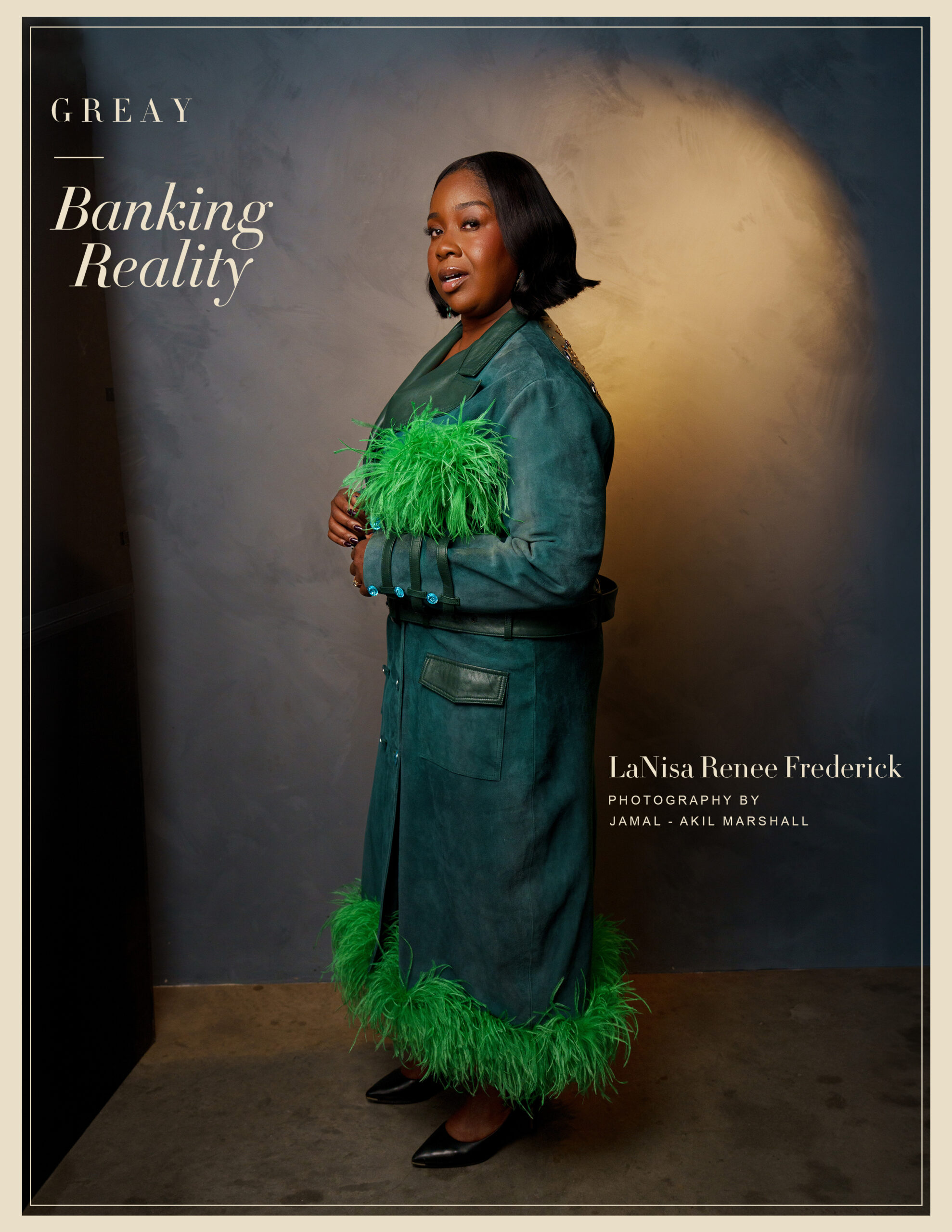
LaNisa Renee Frederick Is Interested in the Person Behind the Performance
Finding truth beneath the role
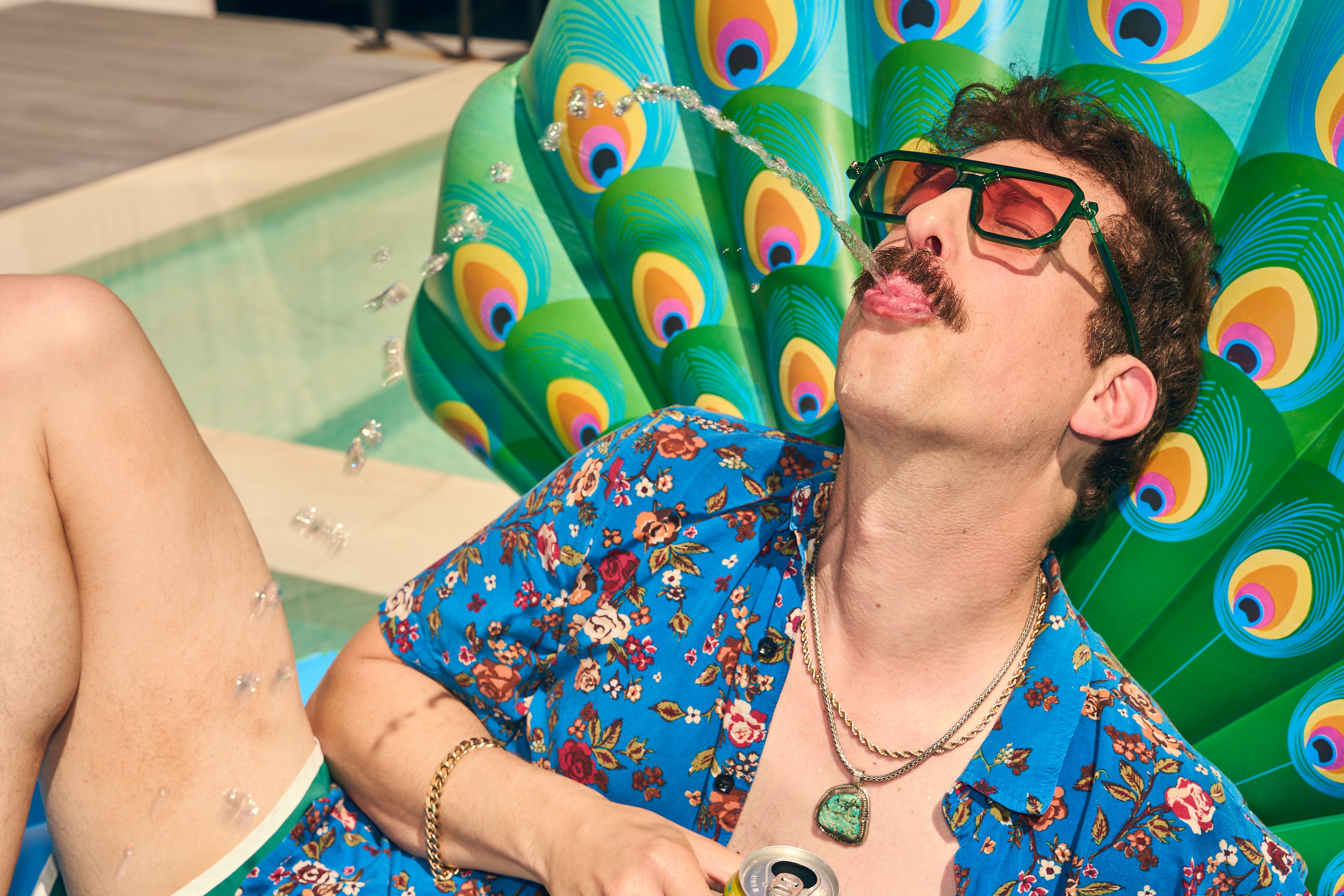
Back in Blood: David Magidoff Talks Dexter, Love Stories, and Staying Grounded
David Magidoff is the kind of performer who makes chaos look charming.
The Evolution of Fashion in Sports: Athletes as Icons of Style and Influence
Evolution of sports
Darwin Del Fabro on Presence, Vulnerability, and Living Fully in the Now
Not Reinvention, But Emergence