

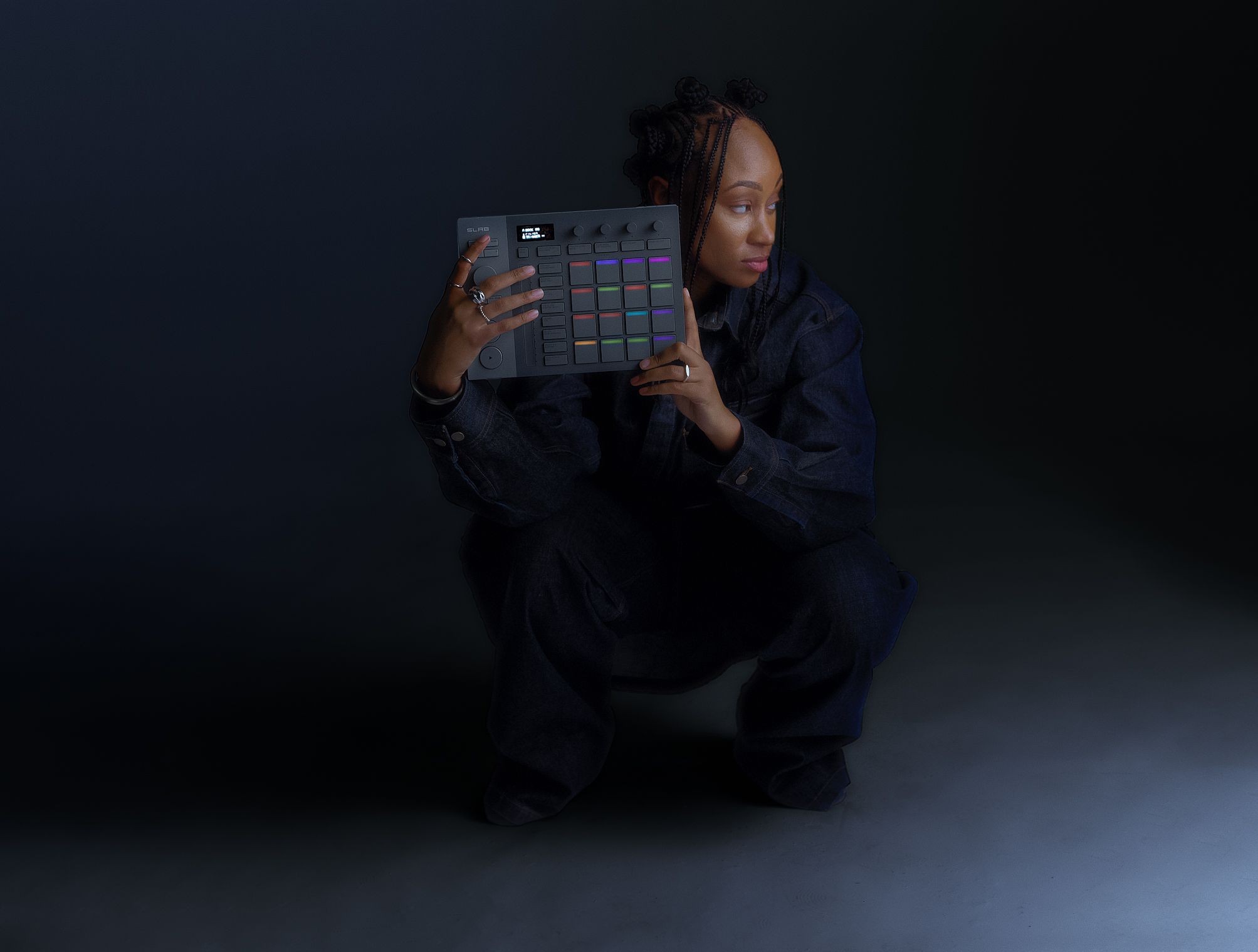
Serato Reimagines Beat Creation With Its First Hardware Device
By Brian k. Neal
For years, Serato has been synonymous with DJ culture — a trusted digital backbone for turntablists, club selectors, and touring performers who rely on precision, speed, and musical instinct. With the debut of SLAB, Serato is making a deliberate and confident move beyond the booth and into the hands of beatmakers, signaling a new chapter for the company’s creative ecosystem.
SLAB is Serato’s first purpose-built hardware device designed specifically for beat production, developed in collaboration with AlphaTheta Corporation, the parent company behind Pioneer DJ. Rather than chasing the all-in-one workstation race, Serato takes a more focused approach: build a tactile, intuitive controller that mirrors how producers actually work — fast, instinctive, and loop-driven — while staying deeply integrated with software.
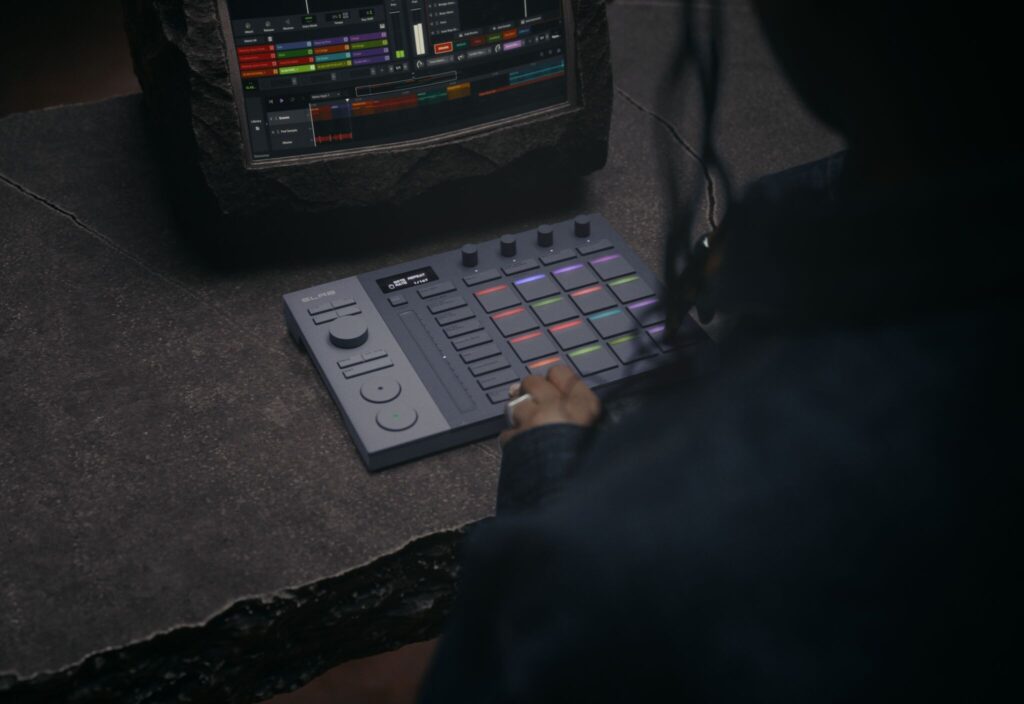
At its core, SLAB is designed to unlock the full potential of Serato Studio, the company’s sample-based production platform. The hardware feels intentionally stripped back, but not minimal to a fault. Sixteen velocity-sensitive RGB pads dominate the surface, inviting finger-drumming, sequencing, and live performance gestures without intimidation. This isn’t a controller trying to replace creativity with complexity; it’s one that encourages experimentation by staying approachable.
A large multifunction rotary dial anchors the workflow, allowing users to browse sounds, adjust parameters, and navigate sessions without breaking momentum. Paired with additional encoders and a responsive touch strip, SLAB transforms traditionally mouse-heavy actions — pitching samples, shaping filters, adding swing, or tweaking effects — into fluid, hands-on movements. The result feels less like operating software and more like playing an instrument.
What makes SLAB particularly compelling is its philosophy. Unlike standalone production boxes that attempt to do everything internally, SLAB embraces the reality of modern workflows. It’s USB-powered, compact, and designed to live comfortably on a desk, in a backpack, or next to a DJ setup. By remaining tethered to a computer, Serato ensures faster updates, deeper software integration, and a lower barrier to entry for creators who may already be producing on laptops.
Beyond Serato Studio, SLAB extends its usefulness through compatibility with Serato Sample and Serato DJ Pro, subtly reinforcing Serato’s vision of a connected creative pipeline. A beat can begin as a rough idea, evolve into a polished loop, and later be triggered or remixed live — all within the same ecosystem. For DJs transitioning into production, or producers stepping into performance, SLAB acts as a bridge rather than a leap.
There’s also a broader cultural signal embedded in SLAB’s release. Beatmaking has never been more accessible, yet the tools often feel either too basic or overwhelmingly technical. SLAB positions itself in the middle — a device that respects beginners without underestimating them, and supports professionals without drowning them in features. It reflects a growing shift in music technology toward empowering creativity first, and letting complexity remain optional.
In many ways, SLAB feels less like a product launch and more like a statement of intent. Serato isn’t abandoning its DJ roots; it’s expanding them. By translating its understanding of rhythm, timing, and performance into a beatmaking device, the company reinforces its role not just as software provider, but as a creative partner in the modern music landscape.
For artists who value immediacy, tactility, and flow, SLAB doesn’t try to reinvent the wheel. Instead, it refines the ride — proving that sometimes the most impactful innovation is simply making creation feel natural again.
Related Posts
Safe-Living Introduces the Pioneering Plug & Play Contactless Home Emergency Detection System at ces2024
Incorporating cutting-edge AI technology and a proprietary radar desig

LG Just Introduced the World’s First Native 1000Hz Gaming Monitor
Where Speed Meets Lifestyle

Instagram Is Expanding Beyond Social Media Into a Viewing Platform
Where Attention Is Going Next
TikTok Expands Audio Sharing: New ‘Share to TikTok’ Feature Brings Music, Podcasts, and Audiobooks to the Platform
TikTok’s New Feature Lets You Share Music From Spotify and Apple Mus

BRINC Unveils First-Ever Drone Designed for 911 Emergency Response
BRINC Unveils Revolutionary Drone as First Responder System
Disney+ Shows What Vertical Has Become: A Gateway, Not a Teaser
From Scroll to Story in One Tap